
Gibraltar border
Removal of border fence heralds new era for Campo de Gibraltar
The agreement signed on Tuesday in Brussels between the European Union and the United Kingdom came into force this Wednesday

Jesús Mejías
La Línea
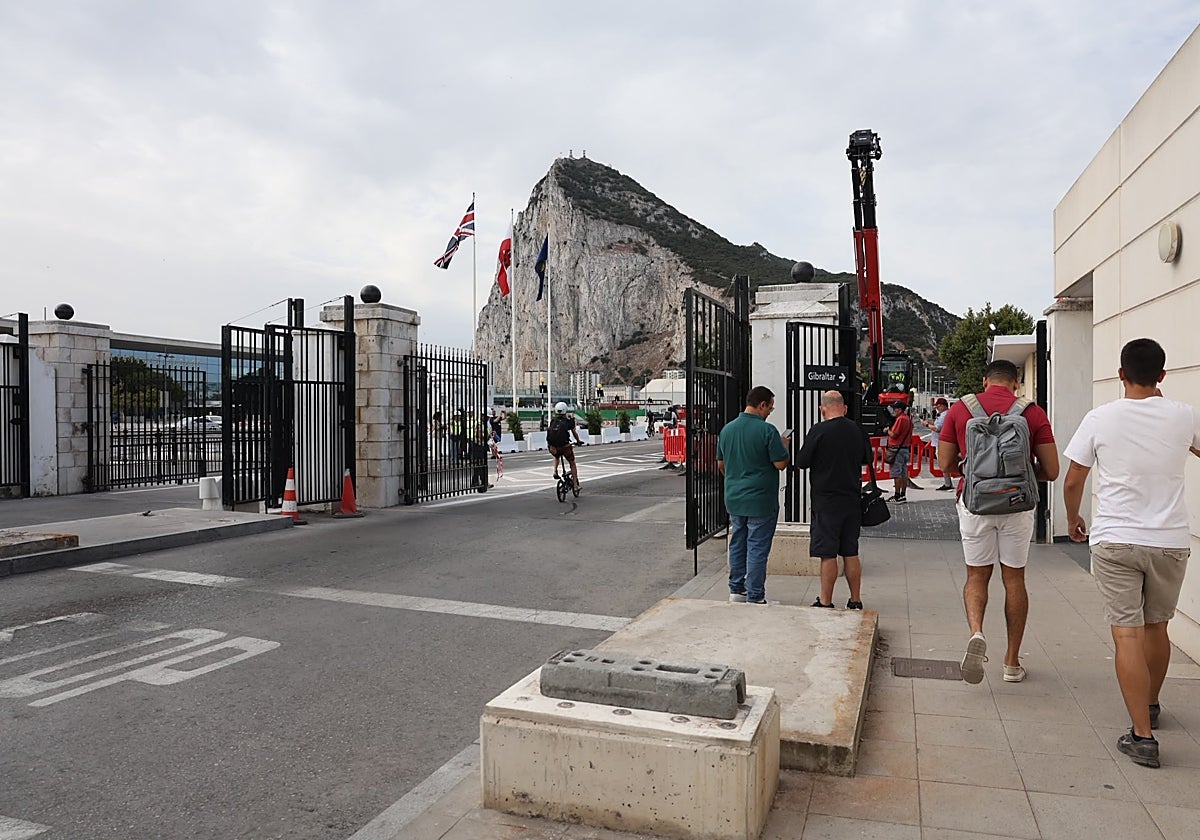
Dawn breaks in La Línea de la Concepción. At first glance, this Wednesday, 15 July, begins with the same calm and natural rhythm as any ... other summer’s day. Children are making the most of their holiday sleep, while the adults set off on their daily commute to work under a sun that is already beginning to warm the air from the early hours. It seems like a routine midweek day, just another page to tear from the calendar, but normality, today, is nothing but a mirage.
This 15 July is a date that will remain etched in the memory of the residents of the Campo de Gibraltar. This Wednesday, the new treaty on the Rock, signed on Tuesday in Brussels by the European Union and the United Kingdom, has provisionally come into force.
The agreement marks the definitive end of the border fence, the last remaining physical border in Europe, and removes all controls and checks on people and goods between the Rock and Spain. This barrier was erected in 1909 on the orders of the British government and has historically separated the British overseas territory from the province of Cadiz.
Related story
-
 Sergio García
The history that both unites and divides the province of Cadiz and Gibraltar is marked by dates written in red. The first major physical barrier was erected in 1909 with the construction of the border. Sixty years later, on 8 June 1969, Franco’s regime dealt a severe blow by ordering its complete closure; a shutdown that tore families apart and cut off the livelihoods of thousands of workers on both sides of the border. For years, people had to take a ferry to Tangier and then another to La Línea or Gibraltar to see their families, despite being separated by just a few metres.
It was not until 15 December 1982, with Felipe González already in office at La Moncloa, that pedestrian access was permitted once again, and then, in February 1985, the road was reopened to vehicles. Finally, following the United Kingdom’s departure from the European Union, the new treaty on Gibraltar was signed on Tuesday, marking a turning point in the lives of the people of Gibraltar and Cadiz.
First day traffic
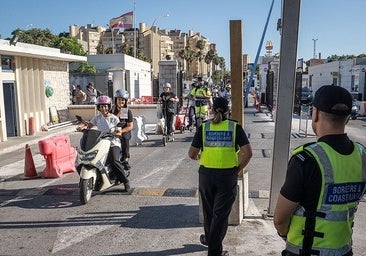
This Wednesday, 15 July, is therefore not just another day in the history of La Línea and Gibraltar. From the early hours of the morning, there was a heavy flow of people at the border between the municipality in Cadiz and the Rock, including both workers and tourists. It is estimated that 15,000 people cross daily to the other side of the former border fence to get to their place of work.
Gone are the long queues that would sometimes form at the police checkpoints on both sides. A new era is beginning for the Campo de Gibraltar region, the province of Cadiz, Spain and Gibraltar. Optimism and joy are the prevailing sentiments among Spaniards, whilst Gibraltarians remain rather sceptical about the agreement.
![[]](http://static.vocstatic.com/voc26/latest/assets/images/favicon/surinenglish/apple-touch-icon-57x57.png)