
Nature
The Granada village that's home to a unique 1,500-year-old carob tree
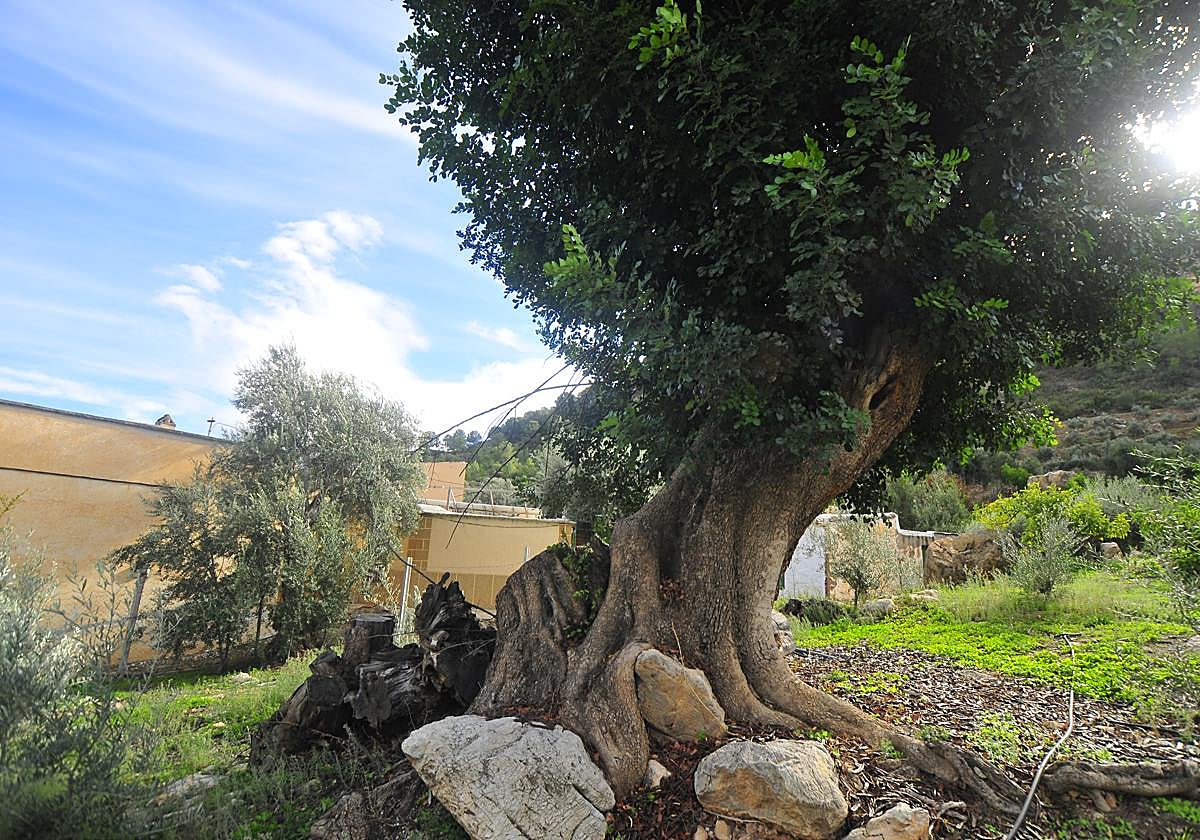
In Los Acebuches, a hamlet in the municipality of El Pinar, in the Lecrín Valley, there is a carob tree which, in its heyday used to produce several hundred kilos of excellent-quality fruit every year

Rafael Vílchez
The small village of Los Acebuches in the Lecrín Valley in Granada province is home to a carob tree said to be well over 1, ... 000 years old. In fact El Algarrobo de Los Acebuches (the carob tree of Los Acebuches), according to some experts, was planted in the mid-fifth century. Los Acebuches is a hamlet in the village of Ízbor, which, together with the village of Pinos del Valle, belongs to the municipality of El Pinar.
The carob tree of Los Acebuches still produces many kilos of carob pods every year and the fruit is used to make a variety of food products and industrial derivatives including: carob flour, chocolate-style bars and sweets, syrups, carob gum (a thickening agent), drinks and liqueurs; it is also incorporated into spreads, nougat, vinegars, aioli and savoury dishes or haute cuisine desserts. Furthermore, the pulp and crushed pods are traditionally used as livestock feed.
The carob tree of Los Acebuches is one of the most endearing trees in the area. It is a true natural monument, an ecological treasure, because of its history and its presence beside the bridle path leading to the village of Ízbor. The tree has grown to an impressive size and some of its thick branches rest on the ground due to their weight. However, this has not prevented this imposing carob tree from continuing to grow and spread outwards and just a few years ago one of its branches had to be cut back.
In days gone by, the carob tree at Los Acebuches, with its twisted branches, provided food in the post-war period, when the resulting famine forced people to pick the fruit. The food for the animals saved the lives of their owners and others. In days gone by, it also provided shade and shelter for lovers. In ancient times, the seeds of the carob fruit served as the original standard for the carat, the unit of weight used in jewellery to weigh gemstones and jewellery, owing to the seeds’ remarkably uniform size and weight.
Depopulation
Once Los Acebuches was home to a number of families, but now there are only a few residents left. It once had a school, shops and taverns. Before the school was built, the children used to walk to Ízbor to learn to read, write and do arithmetic. In days gone by, the locals would travel to other places on foot or on mules. Many people emigrated to Catalonia, France and other countries in search of a better life.
In Los Acebuches there is a beautiful scenic viewpoint from which you can see, among other things, the Puente de los Arrieros, the Puente de la Antigua N-323 and the modern A-44 viaduct. The Ízbor tunnel and a splendid fountain are also very close by. There was also, near this spot, the Fuente del Miriñaque, situated on the left-hand side of the road to Motril, coming from Granada city, just past the Ízbor tunnel.
It used to be an almost obligatory stopping point in days gone by, when journeys took a long time and followed winding routes.
Los Acebuches gradually developed around an old farmhouse known as Los Acebuches, situated at a strategic point and a key stop on the historic Camino Real, which linked Granada with Motril. The hamlet’s most significant growth began following the construction of the historic Isabel II bridge in 1860. Now it is home to just a few remaining residents and a centuries-old carob tree.
