
Gibraltar
Spain’s foreign minister visits towns across border with Gibraltar and heralds new era of cooperation with the Rock
Speaking in Algecrias, José Manuel Albares stressed that the aim of the negotiations had always been to treat Gibraltar and the Campo de Gibraltar as a single, shared area with “shared prosperity”
Neil Hesketh
Malaga
With the countdown to land-border controls between Spain and Gibraltar disappearing on 15 July, the Spanish foreign minister, José Manuel Albares, continued his week of charming those affected with a visit to towns in the Campo de Gibraltar area on Thursday 23 April.
The mayors of the area across the border from Gibraltar, where thousands of Spanish workers on the Rock live, have been critical of Madrid up to now on, what they said was, a lack of details on the border dismantling deal between the EU and Britain.
On Wednesday (22 April), Albares had met with Gibraltar chief minister Fabian Picardo in Madrid, in a move to show harmony between the two sides as the treaty conditions are provisionally rolled out in the coming months.
Speaking on Thursday in Algeciras, the foreign minister said that the relationship between Gibraltar and the surrounding Campo de Gibraltar area is being “transformed in practical and technical terms” and evolving into a “new model of coexistence”, with what he expects will be “more meetings” both formal and informal with his “good friend” Fabian Picardo of Gibraltar.
Albares added that both sides are now “walking hand in hand towards a shared future” after previously being “back to back”. He stressed that regular contacts and exchanges at all levels are now “standard”.
The minister underlined in Algeciras that the aim of the negotiations had always been to treat Gibraltar and the Campo de Gibraltar as a single shared area with “shared prosperity”, assuring residents that improvements on one side would benefit the other.
He said workers crossing the border were a “key concern”, but insisted their rights are fully guaranteed, including future protections, and that no discrimination would exist on employment, social security, unemployment benefits or pensions.
He also highlighted the creation of a “financial cooperation mechanism” focused on training and employment, aimed at supporting workers and regional development, as well as tax coordination and environmental rules aligned with EU standards.
According to Albares, the agreement marks an “historic step” that eliminates inequalities and ensures free movement of people and goods, while strengthening stability, development and opportunities for the 300,000 residents of the area. He said it is expected to come into force on July 15, with border infrastructure changes progressing as planned, including preparations for Schengen and customs controls.
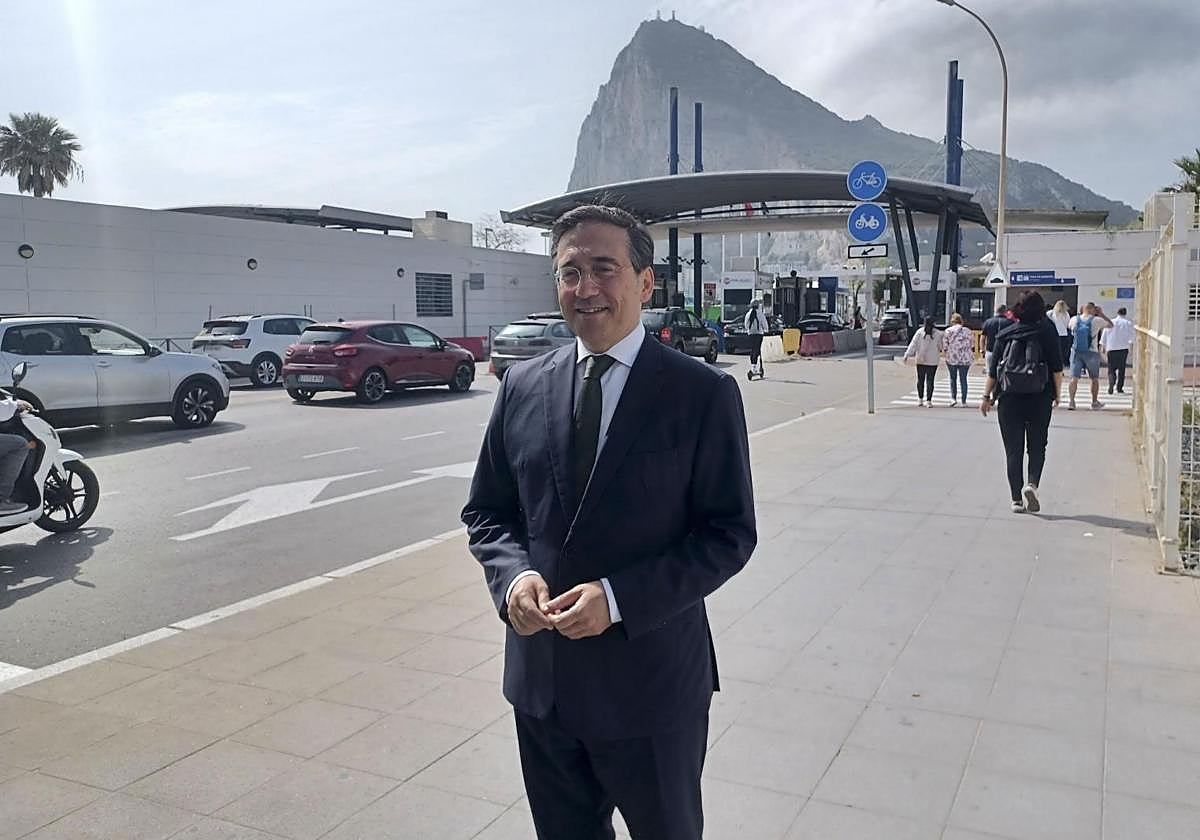
Earlier in the day, the foreign minister had met with the mayor of La Línea, the town on the border that is set to change the most with the disappearance of land-border controls, and paid a visit from the Spanish side to the soon to be dismantled border controls.
The treaty between the EU and UK has still to be ratified by their respective parliaments but will provisionally come into effect on 15 July. It sees the end of passports and ID checking between Gibraltar and Spain as now, with a two-stage passport control between both sides moving to Gibraltar’s airport and port for incoming passengers. Arrivals will be cleared for entry into Gibraltar and the Schengen area, with residents and visitors now able to move unchecked by land between both sides. Gibraltar will impose a new import tax on goods and increase tobacco duties in a move to bring its traditionally low tariffs closer to the higher EU tariffs.
Following Wednesday’s meeting in Madrid between Spain’s Albares and Gibraltar’s Picardo, the Gibraltar government confirmed that the process of elimination of all physical barriers will begin before 15 July, to ensure Gibraltar fully complies with the obligations set out in the treaty.
In response to the foreign minister’s visit to the Campo de Gibraltar on Thursday this week, hard-right Spanish political party Vox has registered in the Spanish parliament a proposal to force a vote in the joint committee for the EU, made up of MPs and senators, to reject the agreement reached between the UK and the EU on Gibraltar, as it considers the treaty “damaging” to Spain’s interests.
![[]](http://static.vocstatic.com/voc26/latest/assets/images/favicon/surinenglish/apple-touch-icon-57x57.png)