
Crime
Andalucía demands EU recognition as southern border amid fleet of 600 drug boats and rising migratory pressure
Regional government calls on central authorities and Brussels for official border status to secure funding against drug trafficking, people-smuggling and security risks

J. J. Madueño
Málaga
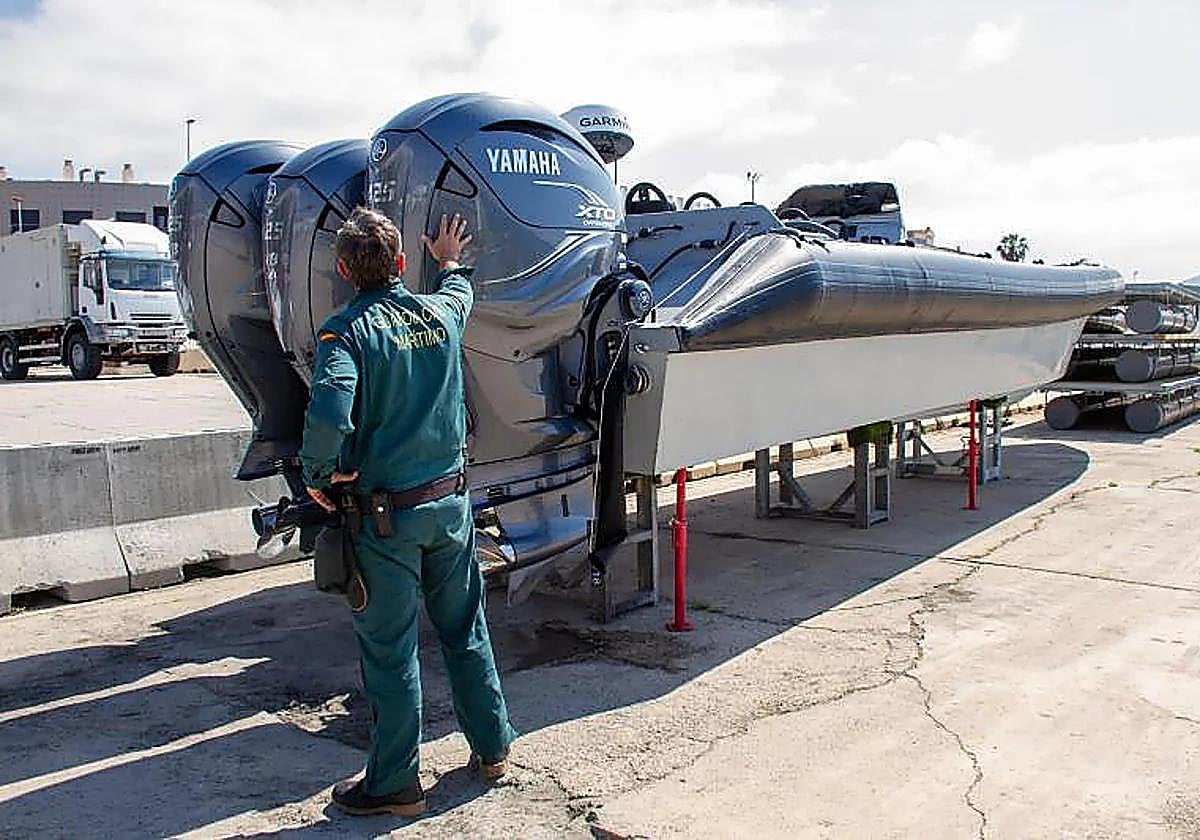
Andalucía has renewed its push to be officially recognised as Europe’s southern border by both the Spanish government and the European Union, citing the ... presence of an estimated 600 drug speedboats operating along its nearly 1,000 kilometres of coastline facing Africa.
The latest National Security Report published by the Ministry of the Interior identifies this fleet of high-speed narco-boats (narcolanchas) as a primary vulnerability for continental security.
At the same time, Red Cross data shows that 4,700 irregular migrants crossed the Alboran Sea into Andalucía during 2025 alone, contributing to more than 60,000 recorded arrivals in the region since 2019.
During the recent Andalusian Migration Forum, the regional ministry for social services formally requested that Pedro Sánchez's government grant Andalucía official status as a "southern border territory." Regional officials argue that the designation is essential to access EU crisis funding and state resources under the same terms as the Canary Islands, Ceuta, and Melilla.
Funding imbalances and reception resources
The Junta de Andalucía maintains that the lack of official border status creates an unfair funding disparity compared to other Spanish regions, such as the Basque Country and Catalonia, which receive specialised border considerations despite facing far fewer maritime entry pressure points.
Currently, the central government maintains over 11,000 emergency reception places for migrants in Andalucía, alongside 1,200 places managed by the regional government for unaccompanied minors. Regional authorities point out that when border areas become overwhelmed, central protocols allow for migrant transfers to other parts of Spain; however, Andalucía is frequently required to absorb arrivals from overloaded regions without receiving proportional funding.
The regional administration further highlighted that during the previous year, the central government transferred 700 minors to Andalucía who were initially classified as adults without proper age-assessment testing, forcing regional social services to assume full legal guardianship.
Security threats and military drills
Beyond human smuggling and drug trafficking, National Security reports explicitly warn that irregular maritime routes along the Strait of Gibraltar risk being exploited by individuals linked to organised crime and jihadist terrorism, particularly given proximity to instability in the Sahel and the Horn of Africa.
While naval vessels collaborate with the Intelligence Centre against Terrorism and Organised Crime (CITCO) to intercept suspect craft, local enforcement encounters severe resource shortages. The battle against drug cartels at sea has claimed four law enforcement lives in Spain over the past two years, including two Guardia Civil officers killed when their vessel was rammed by a narco-boat in Barbate.
In response to these growing vulnerabilities, the Spanish Armed Forces conducted joint land, sea, and air maneuvers this week based out of Malaga Air Base. The drills focused on continuous surveillance operations to safeguard sovereign airspace, territorial waters, and maritime approaches across the Strait of Gibraltar.
![[]](http://static.vocstatic.com/voc26/latest/assets/images/favicon/surinenglish/apple-touch-icon-57x57.png)