
Andalusian regional government trials climate-resilient Spanish fir plantings in Cortes de la Frontera
A 480,000-euro programme will test whether the endangered tree can establish itself in carefully selected mountain locations across the region
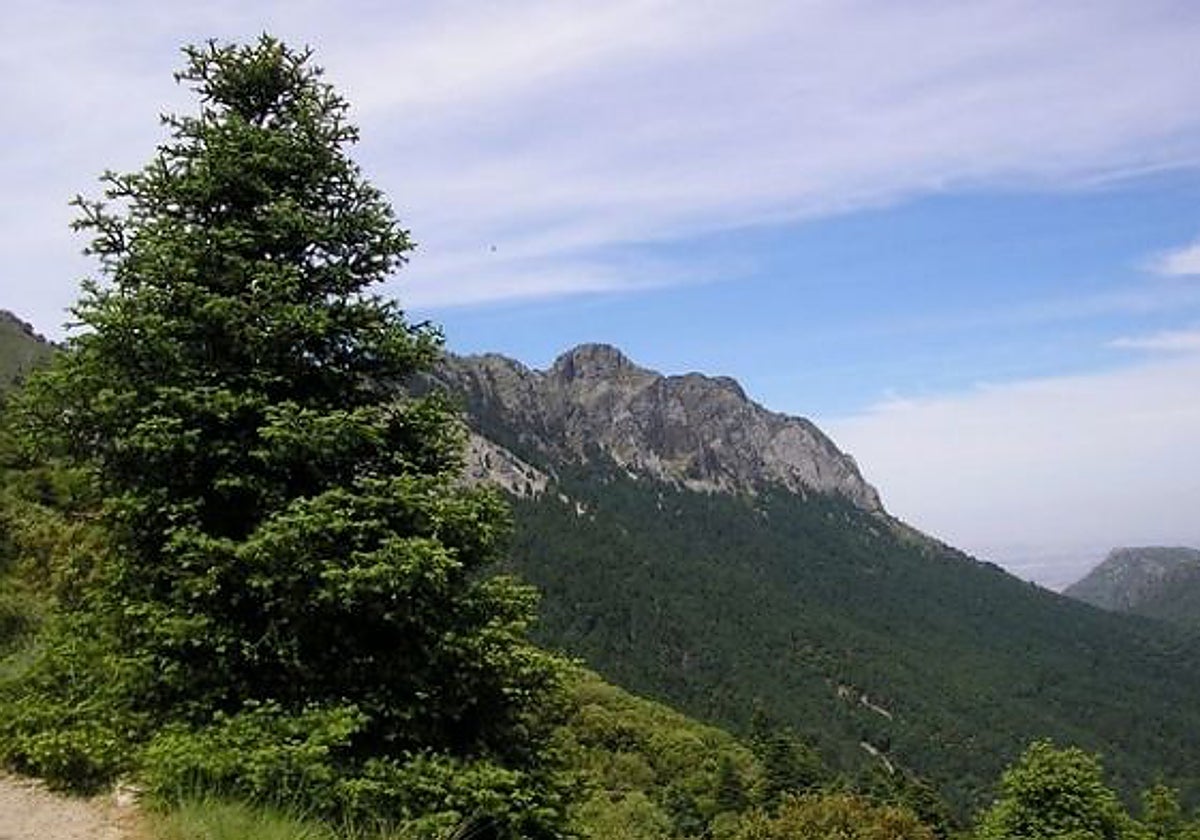

The Andalusian regional government is to trial new Spanish fir plantings in Cortes de la Frontera as part of a 480,000-euro project aimed ... at protecting one of the region's most endangered tree species from the effects of rising temperatures and prolonged drought.
The Spanish fir, or pinsapo, is one of Andalucía's most distinctive native species and is largely confined to mountain ranges such as the Sierra de las Nieves and Los Alcornocales. However, its restricted distribution and sensitivity to drought and higher temperatures have made it an important indicator of the vulnerability of Mediterranean mountain ecosystems.
The project therefore has a dual objective: strengthening existing Spanish fir populations and testing new locations that could support the species in future. Researchers will assess the tree's ecological viability in areas offering favourable conditions and use the findings to guide future conservation measures.
The initiative, led by the Regional Ministry of Sustainability and the Environment, will test whether the Spanish fir can survive in five carefully selected mountain locations considered potential climate refuges.
Cortes de la Frontera, in Malaga province, is one of five sites chosen for the scheme. The others are Algodonales and Villaluenga del Rosario in Cadiz province, Lanjarón in Granada province and Bacares in Almeria province.
Officials hope the project will help identify areas where the species can continue to thrive as climate conditions become increasingly challenging across southern Spain.
Selection criteria
The five sites were selected using ecological, scientific and technical criteria. Officials analysed geospatial data from the Andalusian Environmental Network alongside regional climate projections.
All five locations are situated above 900 metres and share characteristics including shaded orientations, limited exposure to direct sunlight, high humidity, frequent fog and suitable soils.
Many of the selected areas also form part of the Natura 2000 network. As a result, planting work will be carried out under strict ecological restoration and scientific monitoring criteria designed to minimise environmental impacts.
The programme will include experimental planting and direct seeding. Planned works involve manual ground preparation, digging planting holes, subsoil drilling and creating small water-retention basins to improve infiltration. Protective guards against grazing animals will also be installed, alongside initial maintenance measures.
Broad strategy
Two planting models will be tested. Existing populations will be reinforced at a density of 100 trees per hectare with full mesh protection, while new planting areas will be established at 200 trees per hectare using varying levels of protection.
The regional government says the project will help improve woodland ecosystems, boost biodiversity and strengthen resilience to warming temperatures. It also aims to reduce erosion and surface runoff while supporting specialist employment linked to forestry management and environmental monitoring.
The contract is expected to run for 20 months and forms part of a broader Andalusian strategy to look beyond the Spanish fir's traditional range and prepare for the long-term effects of climate change on one of the Mediterranean mountains' most fragile species.
![[]](http://static.vocstatic.com/voc26/latest/assets/images/favicon/surinenglish/apple-touch-icon-57x57.png)