
Health
Another four-day doctors' strike in Andalucía: here's the info on minimum service coverage this week
The medics are being called upon to support further strike days from today against the Spanish government's framework statute, then more days in May and June if no settlement
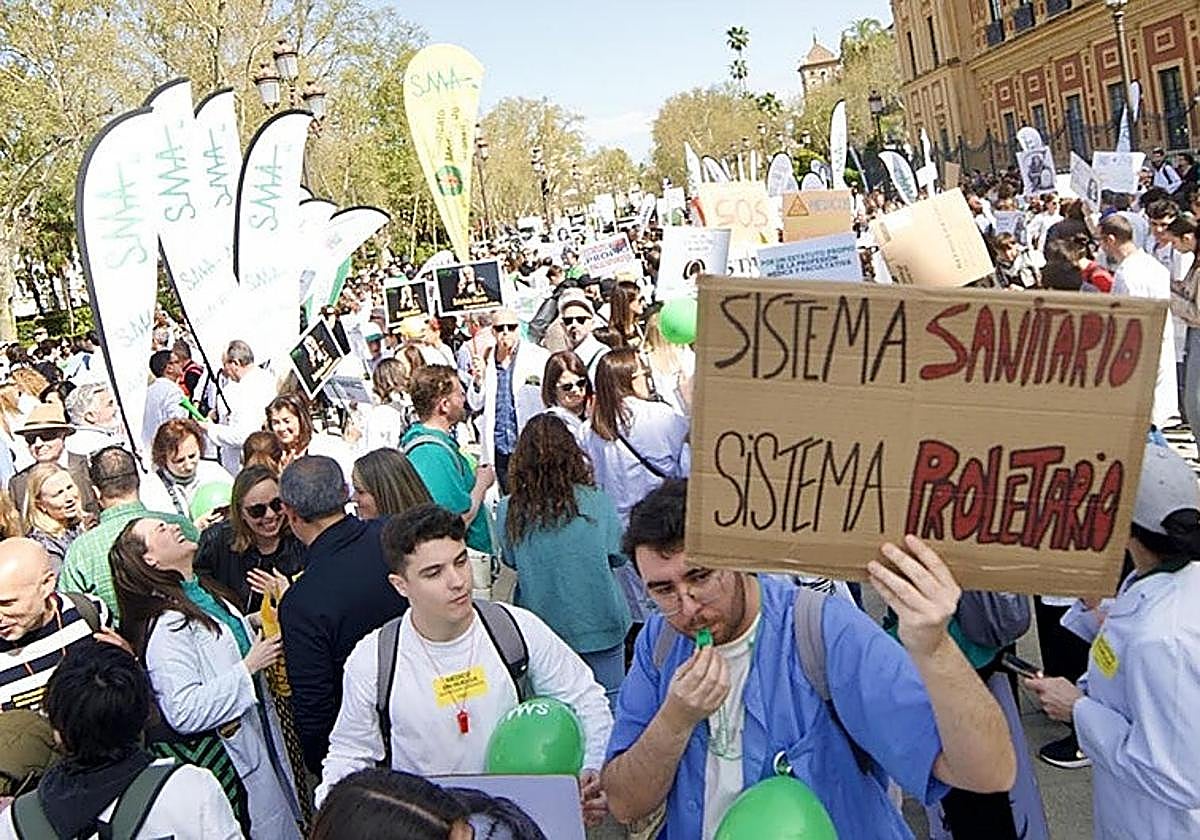

Another week begins with a doctors' strike across the Andalusian health service (SAS) from today, Monday, until Thursday 30 April. Following the last strike by medics back in March, doctors have decided to strike again in the ongoing protest against the framework statute being pushed by central government. This statute will regulate doctors' working, social and salary conditions.
The March strike left more than 256,000 healthcare services unattended, representing a total economic impact - together with December and February data - of more than 111 million euros and more than 767,000 suspended appointments, according to SAS data.
Doctors are facing this new working week of strike action with the same demands they've been making since the last walkout, namely improved working conditions, recognition of the profession's inherent dangers and risks , regulation of on-call shifts, 35-hour working week, job security and their own negotiating body. President of the Andalusian medical union (SMA), Rafael Ojeda, points out that "until there's a change in leadership, I'm afraid we won't be able to reach an agreement and find a way out of the conflict".
"This [Health] Minister (Mónica García) has shown herself incapable of resolving the conflict and negotiating", asserts Ojeda, noting that the strike committee has called for her resignation. Under these circumstances, "we have to continue with strike action and demand a professionsl statute and our own negotiating table, because we certainly cannot continue working under the current conditions, with shifts that constitute a form of labour exploitation and a proposed classification system that doesn't properly reflect our training and qualifications".
Related story
According to SAS figures, the strike participation rate has hovered around somewhere between 20 and 30 per cent, affecting primary care the most, with over 150,000 appointments not attended to in March.
In response to this situation, the regional health minister Antonio Sanz stated that "the Andalusian government is understandably concerned about the repercussions of the strikes called against PM Pedro Sánchez's government regarding the negotiations around the new framework statute". He added that: "Doctors have every right to demonstrate, but these protests create a very serious problem for the Andalusian public healthcare system, the consequences of which, once again, are ultimately borne by the people. We want to convey our support and understanding to the medical professionals".
"It is inconceivable the contempt and disregard to which they are being subjected by the Ministry of Health, as it continues to be unable to provide any solutions. It is clear that Minister Mónica García is unconcerned about this state of affairs, because it is the Spanish regions and, in this case, the people of Andalucía, who are bearing the cost of her lack of dialogue and mismanagement."
More strike days planned
Following this week of strike action, doctors have already planned further action should the conflict remain unresolved in the coming months. Therefore, there will be strike days from 18-22 May inclusive, then 15-19 June inclusive.
Minimum service cover
1. Primary care
All primary care centres (CAP) where a SUAP (for medical emergencies - Urgencias) is located and the CAP's hours of operation coincide with those of the SUAP, will not have assigned minimum services, given that any emergency activity will be covered in the SUAP, as is done on Saturdays, Sundays and public holidays.
In the CAPs that are health centres or local clinics without a SUAP and in those where there is a SUAP, but the operating hours do not coincide with those of the CAP, a doctor will be assigned to provide minimum service cover for emergency care only during the CAP's regular opening hours.
Any CAPs that are auxiliary clinics will not have any assigned minimum services and patients should go to their designated CAP or SUAP, as is done on Saturdays, Sundays and public holidays.
2. Hospital care
All services normally provided on Sundays and public holidays will be maintained. Emergency, critical care and maternity services will be guaranteed at the same level they would be on Sundays and public holidays. Diagnostic tests and urgent procedures that would be carried out on a Sunday or a public holiday are 100 per cent guaranteed to still happen on strike days.
Procedures such as ovarian puncture for oocyte retrieval, haemodynamics, dialysis, radiotherapy, chemotherapy, oncological surgery and, in general, all healthcare and support activities that guarantee continuity of care for this type of patient will be guaranteed.
In inpatient care, treatment must be guaranteed for hospitalised patients with conditions requiring immediate attention due to their severity, without disrupting continuity of care, should be guaranteed. The number of staff present will not exceed 50 per cent of a typical workday between 8:00am and 3:00pm.
The regular operating theatre schedule must be maintained to avoid rescheduling surgical procedures and to mitigate the effects of the strike.
Hospital emergency departments
Minimum services will be provided by the usual number of doctors assigned to hospital emergency departments on weekends or public holidays. Staffing levels may be increased by up to a max of 50 per cent more physicians typically on duty in these departments on a weekend or holiday. Hospital emergency departments with fewer than three resident interns on call will not require any additional staff cover.
Medical emergency services 061
For the 061 medical emergency services, emergency coordination centres, air ambulance teams and critical patient transfers: holiday-level services will be provided during each shift.
![[]](http://static.vocstatic.com/voc26/latest/assets/images/favicon/surinenglish/apple-touch-icon-57x57.png)