
Poverty
Social exclusion in Andalucía affects 23 per cent of the population
The latest study by a regional charitable association warns of the "chronic nature of inequality through social fragmentation", even for those in work with a roof over their heads
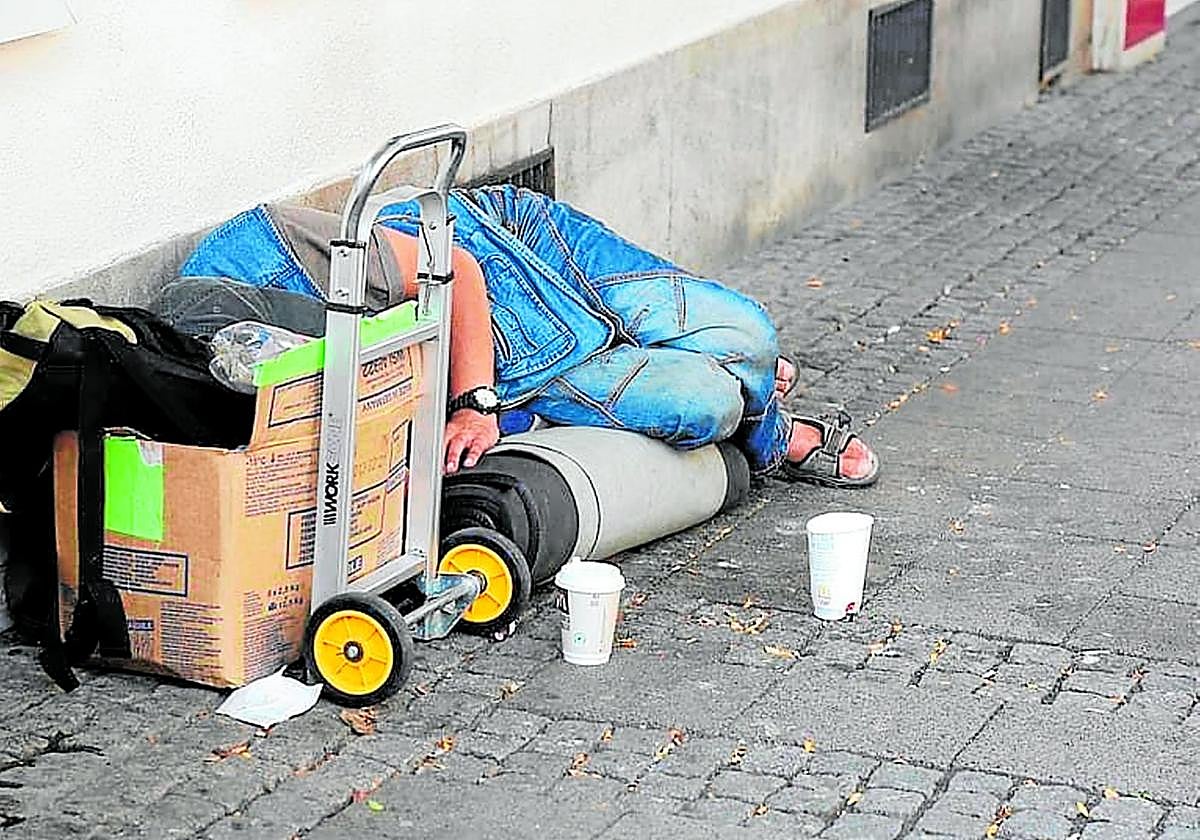

According to the latest report on poverty and social exclusion by Cáritas Andalucía, 23 per cent of the population of Andalucía (nearly two million people) currently live in social exclusion. Even more concerning, 10.2 per cent live in what is known as severe social exclusion.
This report by the ecclesiastical non-governmental organisation (NGO), prepared by the Foessa foundation on social exclusion and development in Andalucía, warns of "the chronic nature of inequality in a profound process of social fragmentation" in the region. The study highlights housing and employment as the main factors driving the population towards social exclusion.
The document notes that "Andalucía is experiencing a profound and persistent process of social fracture, the result of more than two decades of interconnected crises of an economic, healthcare, inflationary and housing nature, whose recovery phases have failed to close the gaps that were opened."
The headline news in this report is that almost two million people living in Andalucía - 23 per cent of the population - have difficulty participating normally in social life for several, or many, linked reasons. This percentage exceeds the national average of 19.3 per cent.
Cáritas raises its concerns over the increased proportion of the region's population that is now suffering from severe social exclusion. This figure has increased by 270,000 more people than in 2018. Furthermore, "those affected are immersed in increasingly long and difficult-to-reverse processes". The report indicates that only 40 per cent of Andalucía's population currently shows no signs of social exclusion.
The study reflects a profound process of "social fracture" with 10.2 per cent of the population already experiencing severe social exclusion.
This report focuses on the serious impact of housing prices on the rise of social exclusion in Andalucía, which affects nearly one in four people. Housebuying prices have continued to rise in recent years, increasing by 65 per cent since 2018, a situation that causes "a housing burden that pushes more than 400,000 households in Andalucía to live below the severe poverty line after paying for housing and utilities". Rent prices, (15 per cent of the region's population rent the roof over their heads), also directly impact this exclusion, with 43 per cent of tenants at risk of poverty.
Other problems
Other housing-related problems include residential insecurity due to a lack of resources and stable income, affecting half a million people, and people living in inadequate housing (overcrowding or unsanitary conditions), affecting 1.2 million people residing in Andalucía.
This NGO maintains that, unless housing truly becomes a pillar of the welfare state in Spain, economic improvement will continue to fail to translate into social integration.
After housing, employment is the next determining factor in social exclusion. The report stresses that "now there are more jobs and people are working more, but having a job is no longer a guarantee of avoiding this situation". In Andalucía, the average salary is 7.6 points lower than the national average in Spain. Also, more than one in ten households has a primary breadwinner in a situation of serious job insecurity.
The study further indicates that almost half of the region's households cannot cope with unexpected expenses, one in five cannot keep their home at an adequate temperature and 16 per cent are in arrears on housing-related payments (mortgage or rent and utilities).
"The system fails, not the people".
Caritas Andalucía is clear that in this problem of social exclusion "it is not the people who fail, but the system", as they state that in 75% of households affected by severe exclusion, reversion strategies are activated, but these people find themselves with fragmented mechanisms, insufficient resources and responses that are poorly adapted to their real trajectories. In this way, exclusion is the result of a context that makes integration difficult even when people do everything in their power to try to get out of this situation. The coordinator of the Andalusian Feos report for Caritas, Daniel Rodríguez de Blas, stated that "social exclusion is the expression of the deep cracks in the current development model". He also asserted that "housing is the great bottleneck to social integration and today it is a fake right, together with employment, as having a job reduces the risk but does not eliminate it". Exclusion in Andalusia affects almost half of the people with foreign nationality (48%), which is more than twice as many as those with Spanish nationality, which is 20%. In addition, almost three out of ten minors live in exclusion, 29%, and this situation affects more those living in female-headed households. Difficulties in buying medicines or following treatment due to lack of resources have doubled in recent years, affecting more than 1.3 million people. Finally, 6% of Andalusian households have no one to turn to in the event of serious difficulties.
![[]](http://static.vocstatic.com/voc26/latest/assets/images/favicon/surinenglish/apple-touch-icon-57x57.png)