
History
Granada’s forgotten hospitals: from the incurable diseases of the Alhambra to destitute women
People with Leprosy were sent outside the city walls, children with ringworm underwent treatment and prolonged stays in the Albaicín, the 'Moriscos' had their own hospital, Santa Ana took in men suffering from fevers and Las Angustias maintained seven beds next to its church

Álvaro de la Torre Araus
Granada
There are stories about Granada's Alhambra palace that do not appear in photographs and are not usually included in guided tours. One of these ... is located next to the former San Francisco convent, where the Parador now stands. There used to be a hospital there for the poor, the terminally ill and the disabled who had served the Crown. It operated for just over twenty years and then disappeared almost entirely.
It was not the only one. Granada city was full of small hospitals. There were hospitals for those suffering from leprosy and ringworm, Moriscos (Muslims who were made to converted to Christianity after the Reconquista), destitute women and men with fevers. Some were built outside the city walls for fear of contagion. Others were housed inside the Alhambra palaces or were attached to churches that are still open today. There was even one with just seven beds next to the Virgen de las Angustias church.
There, attempts were made to cure the sick, even though remedies were often in short supply. Food was also provided, a bed was offered and the sick were prepared for death. The doctor, where one was available, shared responsibilities with the chaplain. Diet and medicine were just as important as confession and the sacraments.
Much of those hospitals have disappeared. A convent replaced the Morisco hospital; the Santa Ana convent was lost during the redevelopment of Plaza Nueva; San Lázaro lives on in the name of a street. The Hospital de la Tiña, on the other hand, still stands within an Alhambra palace, through whose gates many residents of Granada pass without realising what once took place within its walls.
This guide does not set out to reconstruct the entire history of healthcare in Granada. Two key chapters are omitted: the work begun by San Juan de Díos (Saint John of God) and the Royal Hospital. Their significance warrants a separate account. Here, the focus is on other, far less well-known institutions, some of which are now reduced to a single address, a façade or a few lines in the archives.
A hospital within the Alhambra
The Catholic Monarchs founded the Royal Hospital of the Alhambra by means of a charter dated 15 May 1501. It was an act of Christian gratitude for the recapture of Granada and received an annual income of 170,000 maravedíes to fund its operations.
It probably opened in the summer of 1504 next to the San Francisco convent. It was intended to take in the poor suffering from any illness, although its founders reserved special care for the incurably ill and the disabled who had served the Crown. Its premises could accommodate at least fifteen people.
The way it was organised gives an insight into how healthcare was understood at the time. The doctor prescribed medicines and diets. The chaplain checked every day to ensure that these instructions were being followed, but he also said Mass, heard the patients’ confessions and administered the sacraments to them. A steward kept the accounts, while several inspectors carried out weekly checks to ensure that the patients were receiving the prescribed care.
The hospital was not originally established as a simple infirmary for soldiers, nor as a temporary solution. However, it was short-lived. While it was caring for its patients, construction of a much larger building was under way next to the Puerta de Elvira. On 6 December 1526, the patients left the Alhambra to move into the new Royal Hospital. Along with them went some of the staff, the income and the obligations of the former foundation.
The Royal Hospital would eventually become one of Granada’s great monuments. Its earlier facility was left behind, lost amid the changes to the citadel.
The care of the sick, however, had not begun with the Catholic Monarchs. Near the River Darro, in the lower Albaicín, Muhammad V had built the Maristán during the second half of the 14th century. Organised around a courtyard with a large pool, it cared for the poor and sick in rooms spread over two floors.
After the Reconquista, it was converted into a mint and underwent centuries of alterations and neglect. The restoration of its portico and part of the pool has, in recent years, made it possible to recover an essential chapter in the history of healthcare in Granada.
The hospital that only had one bed left
To find one of the most forgotten sites, you don’t need to look for an imposing façade. You simply need to make your way to the Placeta del Abad. There is nothing to suggest that the General Hospital of the Moriscos once stood there. Not a single door, inscription or recognisable remnant remains.
Its very existence speaks of a Granada in which healthcare was also divided along the lines of patients’ origins and religions. The Moriscos had their own hospital until 1569, when relations with the Christian authorities had reached one of their most difficult periods.
That same year, the Alpujarras uprising began. The hospital was demolished and the convent of the Discalced Augustinians was later built on the site. The city continued to occupy that space until its original function was almost completely obliterated. At the Placeta del Abad, it's impossible to see the building, but rather the site left behind by an institution that has disappeared, alongside the community for which it had been created.
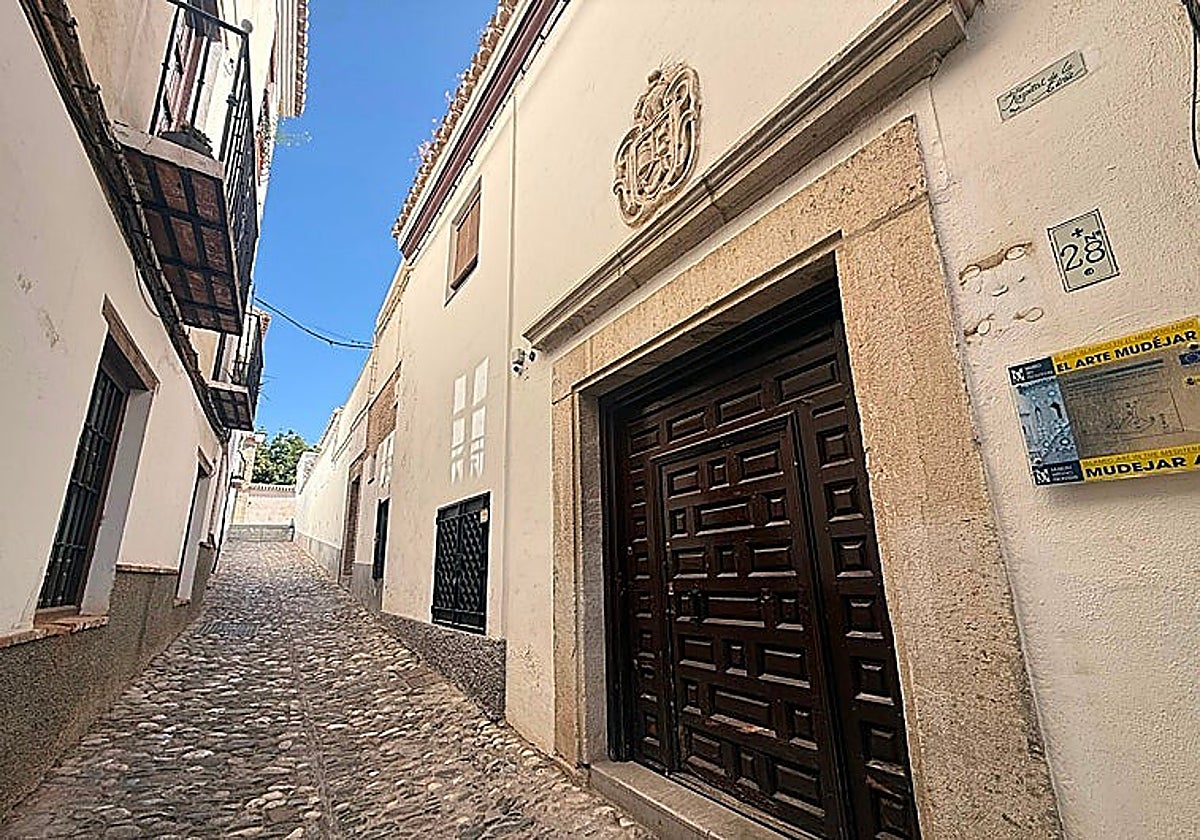
A different story can be found nearby. At number 28 Calle Tiña stands one of Granada’s most unique hospitals. It was officially called the Hospital de Nuestra Señora del Pilar, although the name of the disease eventually took precedence over that of Our Lady.
José de la Calle y Heredia, a knight of the 24th order of Granada, founded it in 1662 as a token of gratitude for having been cured of ringworm. The disease, caused by fungi, mainly affected the scalp, causing lesions and leading to hair loss or breakage. As it spread easily among children, it was necessary to keep them apart for long periods.
Harsh treatments
The treatments historically used against ringworm could be almost as harsh as the disease itself. Before effective medicines were available, a cure involved removing the infected hair. The hair was pulled out with tweezers or using the so-called ‘calota’, a resinous paste that was firmly stuck to the scalp and which, when removed, took away both the diseased and healthy hair.
An attempt was also made to induce suppuration to facilitate hair loss. In addition to the pain, the procedure could leave scars and cause permanent hair loss. The hair affected by the parasite broke easily, and any remaining strands could lead to a relapse. The hair removal had to be repeated, and the period of isolation could last for months.
It was mainly children and people whose families could not afford treatment who were admitted to those wards. Behind the hospital’s name lay painful recoveries, long separations and an illness that left visible scars on those who suffered from it.
The building adds another layer to the story. The centre is housed in a former palace where, according to the city hall's heritage records, Boabdil was proclaimed King of Granada for the second time in 1487. The courtyard still features columns, a pool and other objects from that residence. The very same place went from being associated with the court of the last Nasrid kingdom to, almost two centuries later, taking in children suffering from ringworm.
Those who were meant to live abroad
While the Hospital de la Tiña was situated within the Albaicín, San Lázaro had to be located some distance from the town. It was founded in 1496 to care for leprosy patients and was built outside the city walls, near the Puerta de Elvira and one of the roads leading into Granada city.
The location was no mere coincidence: Leprosy aroused fear and revulsion, and medicine offered little hope of a cure. The solution was to isolate those who suffered from it. Admission to San Lázaro meant receiving food and shelter, but it also meant being cut off from ordinary city life.
Its first patients came from a Moorish hospital situated in the vicinity of the old Bib-Rambla. Following the conquest, they were transferred to the new facility as part of a reorganisation in which patient care went hand in hand with Christianisation.
The building has disappeared, although its presence lives on in Calle Hospital de San Lázaro and in the name of the surrounding area. In this case, Granada has preserved the address better than the hospital itself.
Calle de los Hospitales
Near Plaza Nueva, among shops and tourist accommodation, stands the Church of Corpus Christi, popularly known as ‘Los Hospitalicos’. Its name reflects the history of one of the main charitable institutions on the former Calle Elvira. The Corpus Christi brotherhood ran one of those small hospitals there. Construction of the complex began in the mid-17th century and, although its charitable activities have ceased, the church remains open.
There is a broader explanation for the name ‘Hospitalicos’. Opposite Corpus Christi stood the Hospital de la Caridad y Refugio, which mainly treated women. The presence of both institutions led to this stretch of road becoming known as ‘Calle de los Hospitales’ (Street of the Hospitals).
Caridad y Refugio had begun operating in 1532. By the 18th century, it had thirty beds: twenty for the sick and ten for those recovering from illness. It took in women from Granada and the villages of La Vega, many of whom came from working-class families who could not afford to pay for their own treatment.
The brotherhood did not confine its activities to the hospital wards. It helped prisoners, provided assistance for orphans and buried those who had been executed, drowned or died without relatives or the means to pay for a funeral.
The building was demolished in 1915 and the institution moved elsewhere. The main remnant of that charitable complex is the Los Hospitalicos church, whose name still tells the story of what once stood around it.
Thirty beds in Plaza Nueva and seven next to the Patrona
Plaza Nueva also had its own hospital. Opposite the Royal Chancery stood the Hospital Mayor de la Encarnación, better known as the Hospital de Santa Ana. It was founded in the early 16th century by the first Archbishop of Granada, Fray Hernando de Talavera, with the support of the Catholic Monarchs.
At its peak, it had a capacity of thirty beds and admitted men only. Many were admitted with ‘fevers’ – a term which at the time covered various illnesses accompanied by a high temperature. The wounded and those suffering from contagious diseases had to seek treatment elsewhere.
The process for being admitted didn't begin with a visit to the doctor. Except in the most urgent cases, the patient was required to go to confession and receive Holy Communion first. Caring for the body was inconceivable without preparing the soul.
The building’s proximity to the River Darro ultimately made it unsuitable. The damp, lack of light and cramped rooms led the Archbishopric to seek alternative premises. In the last quarter of the 18th century, it acquired the former Mendoza Palace – now the higher technical school of architecture – in order to relocate the hospital there.
Its original building was lost amidst the redevelopment that transformed Plaza Nueva. Thousands of people now pass through the space it once occupied, with no clear indication that for centuries the sick men of Granada were treated there.
The final stop is next to the Virgen de las Angustias. When Philip II granted the brotherhood the land of the former Tinajerías – where the basilica and its outbuildings now stand – he did so so that they might build a church and found a hospital.
It took some time for the project to become a reality. It began operating on a provisional basis in 1645 and was formally established from 1674 onwards. It had just seven beds, spread across a two-storey building with its own chapel. It admitted patients from Granada as well as people from other towns. Its modest size and the care provided meant that it was held in high regard by the people of Granada.
Maintaining it required a constant financial outlay from the brotherhood for around a century and a half. That activity eventually ceased, but it did not disappear entirely from the building. The former hospital ward has been preserved within the basilica complex and forms part of its permanent exhibition.
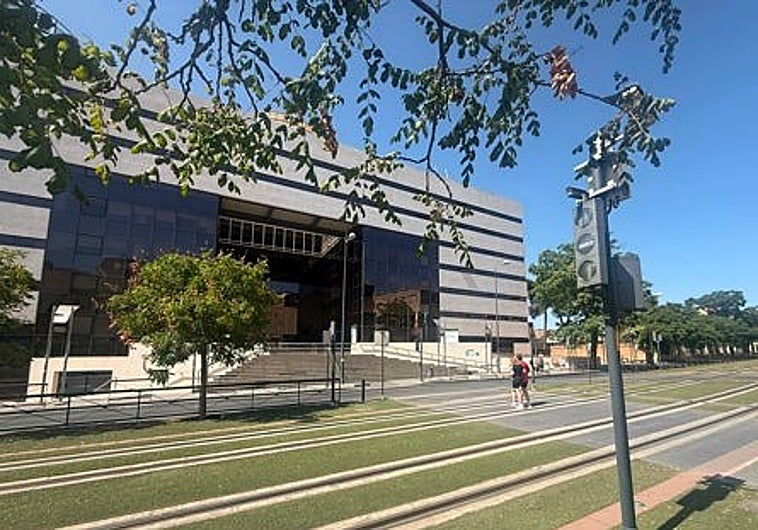
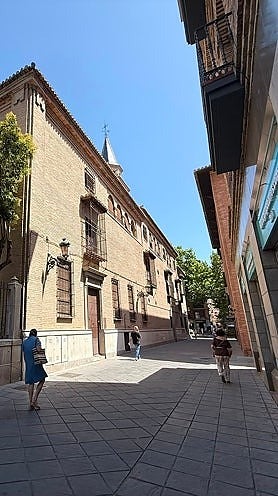
The network was much more extensive. There was also a Pilgrims’ hospital, the location and history of which remain unclear, as well as other smaller institutions that closed down, moved to new premises or were eventually absorbed by larger organisations.
Each one responded to a particular need and to the way in which that society dealt with illness and poverty. People with Leprosy were sent outside the city walls; children with ringworm underwent treatment and prolonged stays in the Albaicín; the 'Moriscos' had their own hospital; Santa Ana took in men suffering from fevers and Las Angustias maintained seven beds next to its church.
All that remains of that network are courtyards, churches and names preserved in the street names. In other places, nothing visible remains. This is the Granada of epidemics, isolation and poverty, when the healing of the body and the salvation of the soul shared the same room.
![[]](http://static.vocstatic.com/voc26/latest/assets/images/favicon/surinenglish/apple-touch-icon-57x57.png)