
Lifestyle
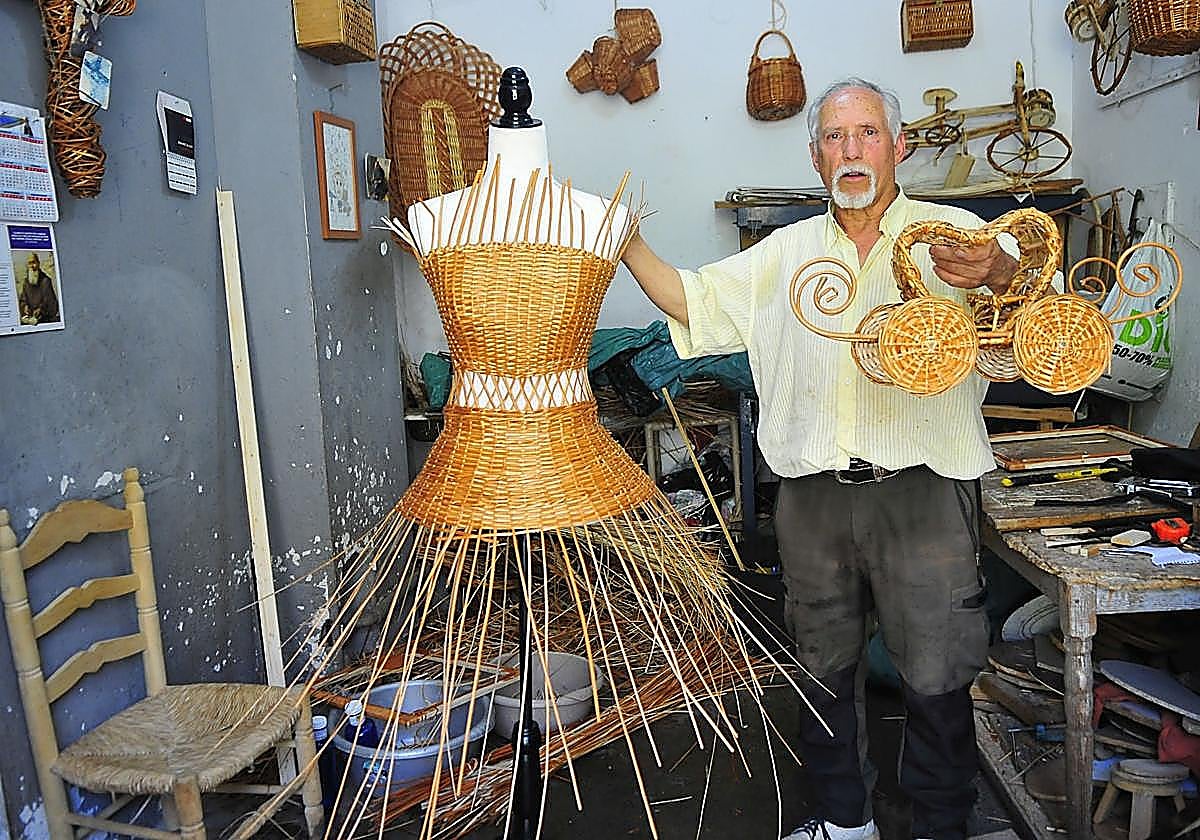
The weaver from Granada's Alpujarra commissioned to make a wicker dress
Javier Bermúdes began weaving at the age of five in his village of Lanjarón, a craft that has been passed down through his family

Rafael Vílchez
Weaving used to be a popular trade in the town of Lanjarón in Granada province's Alpujarra and many families earned a living from making wicker products. However now Javier Bermúdes Heredia and his brother Juan are two of just a handful of people who continue to weave. They were taught by their parents, Manuel and Francisca who in turn learnt from their parents.
Sixty-four-year-old Javier, who has three brothers and a sister, explains that he started weaving when he was just five years old. "My father was a great master of wickerwork and so was my grandfather. Now I am teaching my two grandsons, Manolo and Javi, so that they can learn the trade. I am also making a dress with this vegetable fibre for a woman to wear at a fashion show in Granada city."
"In my village we have the best material in the world. These fibres can be found in the area of Tello y adelaños. This valuable plant can be recovered so that the artisans can work it as it was done in the past. Now the wicker comes from Cuenca and the price has gone up a lot," he highlights.
Hundreds of artisans
Javier says that "in Lanjarón when I was a boy there were a hundred artisans. For example, my uncle 'El Chato', who lived in Melegís and had eleven children, came to Lanjarón every summer to sell his wicker products. And like my uncle, other artisans did the same. Everything made by the 'canasteros' was sold on Avenida de Lanjarón".
He goes on to say, "They made headboards, bedside tables, armchairs, tables, mirrors, bread baskets, baskets for the fruit, lamps, vases, etcetera. I continue with this tradition and make everything that people ask me to make. Recently I have made a witch with her broom measuring one metre and eighty centimetres high for the municipal water museum in Lanjarón", he says.
Javier makes his products in the workshop attached to his house in the Variante de Lanjarón. He also sells his work in front of the Balneario, next to the tourist office and even gives classes to people who want to learn how to weave. This artisan has also given classes in schools, in the library and in the old people's home in Lanjarón.
Javier remembers "I used to go with my father and grandparents to the fields. They would cut the wicker and I would peel it. My brothers and cousins also did this work. The wicker was bought by my family from the owners of the farms. It was common for the farmers to be paid, not with money, but by giving them, for example, a basket".
A craft dating back to prehistoric times
Nowadays he says "one of the things people ask me for most are baskets with lids in different sizes. Magazine racks are also very popular. People order a lot of things made to measure from me. Apart from wickerwork, I also like reading in general".
The use of wicker dates back to prehistoric times, when our ancestors used it to make tools, vessels and other structures. The earliest evidence of wickerwork dates back more than 10,000 years and has been found in places such as Egypt, Mesopotamia and Europe. In Spain, wickerwork has been an integral part of rural life.
Regions such as Castilla-La Mancha, Andalucía and Galicia have stood out for their tradition of wicker production, taking advantage of the abundant wicker crops. Spanish crafts people developed unique techniques that combined functionality and design. Wickerwork is much more than a simple craft technique; it is a cultural heritage that connects generations and respects nature. Each wicker basket tells a story of tradition, sustainability and dedication.
![[]](http://static.vocstatic.com/voc26/latest/assets/images/favicon/surinenglish/apple-touch-icon-57x57.png)