
Food and drink
Staff shortages force Costa Tropical beach bars to cut back on services
Granada province's hospitality sector has highlighted the difficulty in finding qualified staff and is calling for a hospitality college to train professionals

MJ Arrebola
Granada
Beach bars along Granada province's Costa Tropical are being forced to cut their services this summer due to a lack of waiting staff. With ... more than 70 beach bars (chiringuitos) along the coast operating at full capacity' bar owners are confident of a successful season following a difficult winter, explains Francisco Trujillo, president of the Costa Tropical Beach Business Owners’ Association.
Behind the positive figures, however, lies the same headache that has been plaguing the sector for some time: ensuring that there are enough qualified staff behind every bar, as the shortage of such staff is now beginning to compromise the service provided.
Gregorio García, president of the Granada provincial federation of hospitality and tourism, confirms that the main challenge remains finding experienced staff, particularly at a time when bars and restaurants need to recruit immediately for July and August. The sector’s concern is not so much a lack of people interested in working, but rather the absence of professionals qualified to fill the roles.
With summer well and truly underway, some business owners are still looking for staff and agree that every year it is becoming "more difficult" to recruit waiters, chefs, kitchen assistants, dishwashers and people qualified to grill the 'espeto' sardines. They say they receive CVs every day, but a large proportion of those who apply have never worked in the hospitality industry or are unfamiliar with the trade, which means they have to train people who, in many cases, are only looking for a summer job.
This is not a problem specific to the Costa Tropical; the federation explains that this situation is being repeated along virtually the entire Mediterranean coastline.
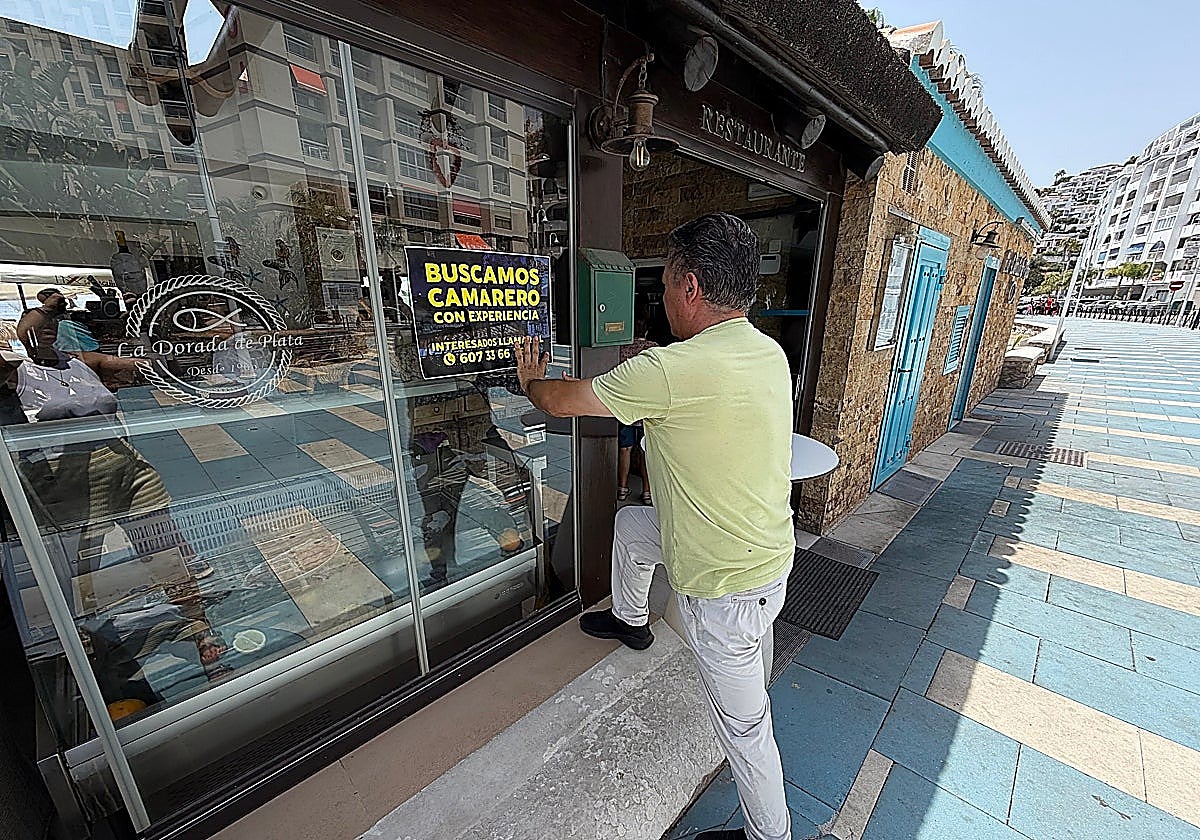
Francisco Mingorance, owner of the beach bar La Dorada de Plata in Almuñécar, describes the reality facing many businesses. “I’m not looking for staff; I’m looking for waiters.” He explains that many people consider waiting tables to be a "simple" job, when in fact it is a role that requires experience and a specific approach to customer service. “When I need a waiter, I need a proper waiter; someone who knows how to serve a table correctly, lay out a meal, bone a fish in front of the customer, recommend a wine or serve a paella as it should be served. Not just anyone will do.”
In his view, the lack of training is behind many of the problems facing the sector. “People aren’t being trained, and it’s very difficult to find waiters,” he says. Although his beach bar employs a permanent staff of around 15 people all year round, during the summer he needs to take on around 25 more workers to cope with the large number of bookings.
However, he acknowledges that finding the right people is “an ordeal”. This year, he admits, he is still looking for staff even though he already has a full team he needs additional staff to be able to cover when others are on leave. The problem, he points out, is that often staff who have worked with him all winter disappear just as summer arrives because they decide not to continue. “Finding replacements is becoming increasingly difficult,” he explains.
The staff shortage is having a major impact on the chiringuito’s services. During May and June, he was forced to leave between ten and 12 tables unseated because he simply did not have enough waiters to serve them. The situation has now improved in July, when, as he explains, he was fortunate enough to have three new staff members join the team, who also turned out to be highly skilled professionals: “We couldn’t have any more tables because there was no one to serve them. In the end, you’d rather remove tables than provide poor service.”
Germán Mingorance, owner of the Piliki beach bar, also acknowledges that staff cuts have forced them to reorganise their service. This summer they have cut back by around seven tables compared to last year because they do not have enough staff to cover them. He explains that expanding the terrace would overburden staff who already face demanding working hours: “We’d rather serve customers well than fill the restaurant and be unable to offer quality service. If we add more tables and then can’t serve them properly, customers end up getting annoyed. It’s better to have a smaller capacity, but ensure that everyone who comes leaves satisfied,’ he says.
The staff shortage is also affecting the 'espeto' sardine cooks (espetero): “What prospects can an espetero possibly have?” asks Francisco Mingorance. “You’re going to be boiling hot for three months, putting up with the heat, only to find yourself out of work in October.” This lack of stability is one of the reasons why it is becoming increasingly difficult to find people willing to take up this trade and on top of that, many traditional trades are gradually disappearing because nobody wants to learn them.
In their case, they say they are lucky enough to keep the espetos going all year round and have a permanent espetero, but expanding the workforce to take on an extra person during the peak season, they admit, "is almost impossible".
Added to this situation is another problem that is causing concern among business owners: fewer and fewer young people are seeing the hospitality industry as a career with a future, while 20 years ago, it was common for them to work in the hospitality industry during the summer.
Antonio Martín, owner of the Mariano beach bar, explains that many of the young people who come to work there during the summer are simply looking to earn some money while they study or look for a job in another sector.
Very few people regard the hospitality industry as a stable career path. As a result, every year the number of inexperienced people trying to enter the sector increases, under the impression that waiting tables is an easy job. “Many people think this is simply about serving food and drinks, but a waiter needs knowledge, organisational skills, good customer service and a lot of training.”
For this reason, the sector believes the Costa Tropical should have a hospitality college where future professionals can train before entering the labour market. "We depend on tourism and we need to train our own professionals. Just as there are schools for other professions, there should be specific training for the hospitality sector, as there is in other parts of the Andalusian coast,” they emphasise.
They also propose setting up a school for espeteros to prevent the disappearance of a trade that very few people are familiar with. Germán believes that training is "essential" to prevent the disappearance of traditional professions linked to the culinary identity of the Costa Tropical.
He points out that both his father and his brother have spent their whole lives cooking espetos and could pass on that knowledge to new generations. This is an idea shared by the Dorada de Plata, where the veteran espetero José Ortuño says he would be happy to teach any young people keen to learn. The problem, he admits, is that nobody is knocking on that door.
Housing ‘through the roof’
The high cost of housing is another problem holding back people from working on the coast. Antonio Martín explains that there are many unemployed people in Granada province who are willing to work but cannot afford to live on the coast during the summer because the rent is more expensive than the wages they would earn.
Martín has even rented a property himself where several of his staff stay and share a flat throughout the summer. Without that solution, he says, it would be impossible to attract people from Granada or other inland areas, because "they cannot commute every day or afford to pay the rent themselves during the peak season".
Martín points out that this situation has become particularly acute since the pandemic, when rents along the coast skyrocketed. He recalls that, in the past, many people would come down from Granada to work during the summer and share a flat between two people, even if that meant paying a rent of one thousand euros a month between them.
![[]](http://static.vocstatic.com/voc26/latest/assets/images/favicon/surinenglish/apple-touch-icon-57x57.png)