
Water
Granada province's water supply guaranteed for at least two years
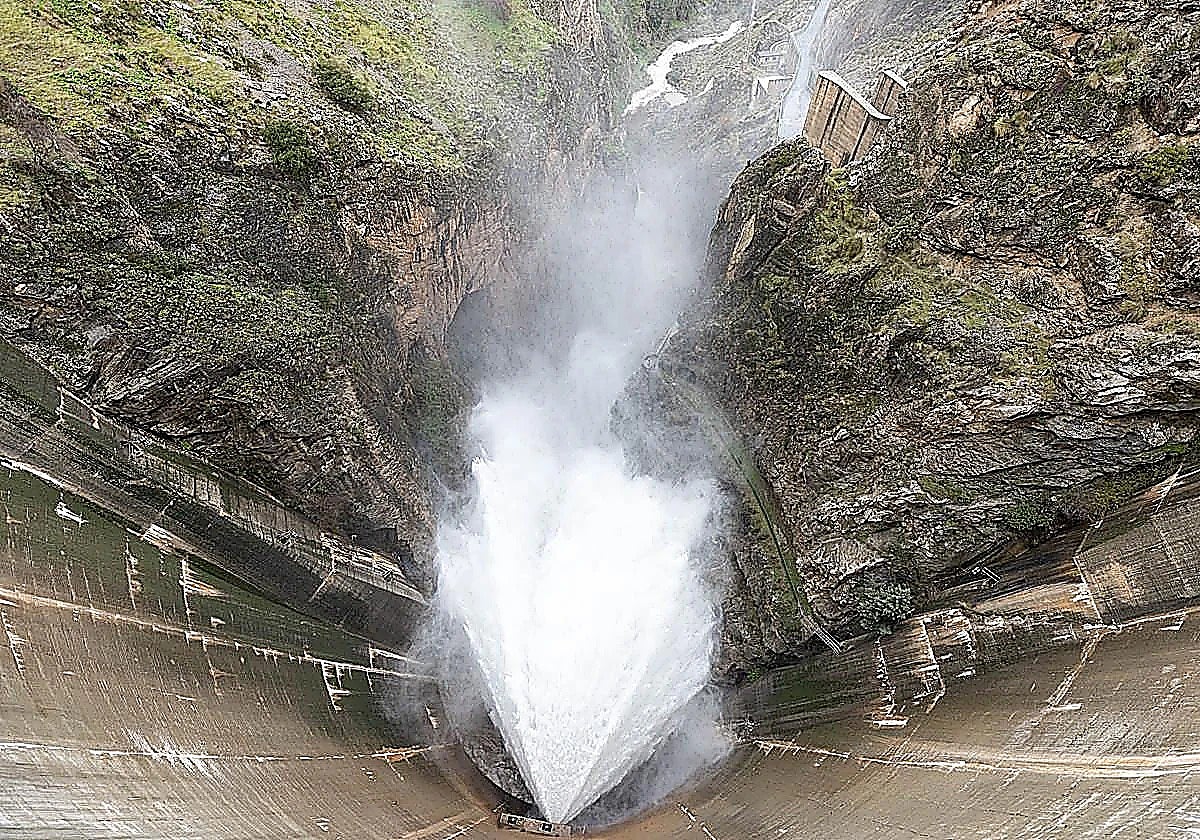
The province's reservoirs are at around 65 per cent of their capacity, almost double the level of a year ago and data shows that lack of water is not going to be an issue in the coming months

Rebeca Alcántara
Granada
In the first week of February, heavy rains left unusual images all over Granada province. The storms had many negative consequences. Fields flooded, bridges and roads destroyed, residents isolated and evacuated from their homes for safety reasons or due to damage to their houses.
Those affected are now processing the aid they are entitled to, to be able to move on and the authorities are working to repair the affected infrastructure. But there is another, more positive side to these days of heavy rain: the end of the drought and the guarantee of water for at least two years and even three in many areas.
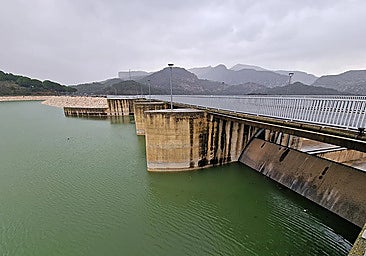
The province's reservoirs are at around 65 per cent of their capacity, almost double the level of a year ago and data shows that water is not going to be an issue in the coming months; the endless grey days have their positive effects.
The drought reports of the Guadalquivir Hydrographic Confederation (CHG), the basin to which most of the province belongs, clearly show the evolution that has taken place. If we compare the situation on 30 January with that of 28 February, the differences are evident.
Almost the entire basin is now at a normal level What does this mean? That three years' supply is guaranteed. However, despite everything the CHG has not reached the green level that indicates that everything is under control. It is in what the Confederation calls "pre-alert", a term which, despite how it sounds, is not excessively worrying.
These are the Vega Alta, Vega Media and Hoya de Guadix. The CHG explains that this designation, the second step of four (the first being the best situation), means that the service is guaranteed for at least two years. What is more, it asserts that the melting snow of ice on the Sierra Nevada will also bring water to the area and therefore back to normal levels. Only the Hoya de Guadix would remain yellow. Even so, its situation is much better than at other times, despite being an area which traditionally suffers from drought.
The forecast is that when the snow and ice on the Sierra Nevada melts, the guarantee will be three years.
What are the real effects of this improvement in water resources? One of the most important will be for farmers. Last year in the Vega de Granada they had to prohibit the second crop because the water shortage meant that the authorised discharge allocations, i.e. the water allowed to be used for irrigation, were low. Now, pending the first meeting (which will probably be in April), everything indicates, according to the CHG, that there will be no restrictions for the countryside.
Just a year ago alerts and even drought emergencies dominated the map. and the entire confederation was in a pre-alert situation and in the case of La Hoya, the driest area of the province, it was in emergency, i.e. there were not enough resources to cope with the demand.
What is happening in the Guadalquivir basin is also being repeated in the Mediterranean basins, including other areas of Granada such as the Alpujarra, the Lecrin Valley and the Coast. There, a couple of weeks ago, the drought commission also decreed a situation of normality. So, it seems that in 2026 the lack of water will not be a problem to worry about.
La Hoya de Guadix, the driest area in the whole basin.
Despite the rains, in the Hoya de Guadix area the situation is in pre-alert. The melting snow and ice will take the Vega Alta out of this warning, but not this other area. This time last year La Hoya was in emergency. What is happening? The atlas of desertification in Spain drawn up by the Spanish National Research Centre (CSIC) and the University of Alicante, with the support of the Biodiversity Foundation of the Ministry of Ecological Transition, shows that this is a particularly arid area. Rainfall is lower. This creates a spectacular landscape, but also a drier climate than in other parts of the province. In the data of the historical series it can be seen that only in March 2019 (the first year in which the record can be consulted) the situation of water shortage was better than the current one.
![[]](http://static.vocstatic.com/voc26/latest/assets/images/favicon/surinenglish/apple-touch-icon-57x57.png)