
Food and Drink
The secret behind the success of Granada's custard apple: 'We’ve extended the season from two months to nine'
Two brothers from the Costa Tropical demonstrate the meticulous process they use to produce 98 per cent of Spain's 'chirimoyas'

Camilo Álvarez
Granada
The chirimoya or custard apple is the jewel in the crown of the Granada province's tropical fruit production. In fact, 98 per cent of ... all national production comes from plantations along the Costa Tropical. The remaining two per cent comes from Malaga province.
However, behind every custard apple that reaches the greengrocers lies a meticulous process which allows growers to know exactly which fruit to pick today and which should be left on the branch for a further five days to reach its peak ripeness.
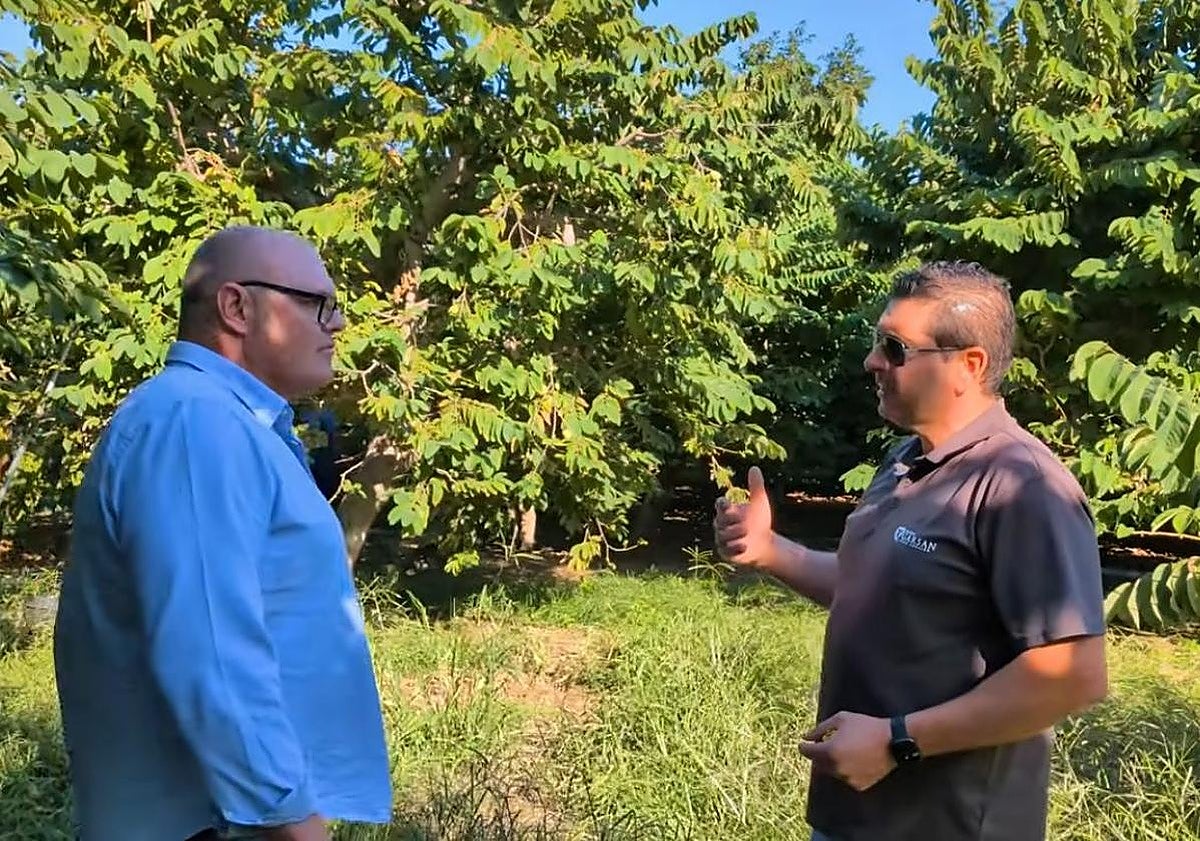
This is how Israel and Arturo, two brothers from Almuñécar, have explained it. They, along with the rest of their family, are keeping alive the agricultural legacy their father began. In an interview with the Frusur Group’s podcast 'Desde la Raíz' (from the root), the brothers revealed the secrets of a crop that requires as much patience as it does precision.
Pollination
The success of the harvest begins long before the fruit is picked, with the delicate process of hand-pollinating each flower individually. “Each person picks between 1,500 and 2,000 flowers over the course of the morning,” explains Arturo, standing among the trees on his plantation in Almuñécar.
In the past, the entire pollen extraction process was carried out by hand, although today they use a small machine with a motor and a blade that separates the petals from the flower head and isolates the stamens. "It’s the stamen we need. We mix it with talcum powder or flour to dry it out, because if it’s damp, it doesn’t pollinate properly,” explains the grower.
This care is vital for the commercial quality of the product. Good pollination ensures that the flower’s corolla absorbs all the pollen it needs; otherwise, the fruit grows misshapen. With the pollen extracted from a single flower, these growers are able to pollinate another three or four.
Extended season
Thanks to their mastery of this technique, they have managed to completely transform harvesting times for the custard apple. “We’ve managed to extend the season from two and a half months to nine months,” says Arturo, recalling that decades ago the season only lasted from late September to early January.
Today, on the same tree, there are chirimoyas ready for picking alongside others that will remain on the branch until May. It is during this final stage that the farmer’s expert eye makes all the difference: knowing which fruit is ready to be picked and which needs another five days on the tree, or checking how a fruit with a slightly darker skin still has an intact and sweet inside.
This careful handling continues during the post-harvest stage. The family takes care to transfer each piece by hand from the bucket to the crates to prevent any knocks that might damage the fruit’s delicate skin, bringing months of hard work to a close before the produce reaches the markets and the farmer can, at last, see the fruits of their labour.
