
Agriculture
Granada province growers bring forward watermelon harvest due to threat of Tobacco Thrips pest
Farmers who lost their peppers in the autumn harvest due to the same problem are hoping to recoup some of the losses through sales of the popular summer fruit

MJ Arrebola
Granada
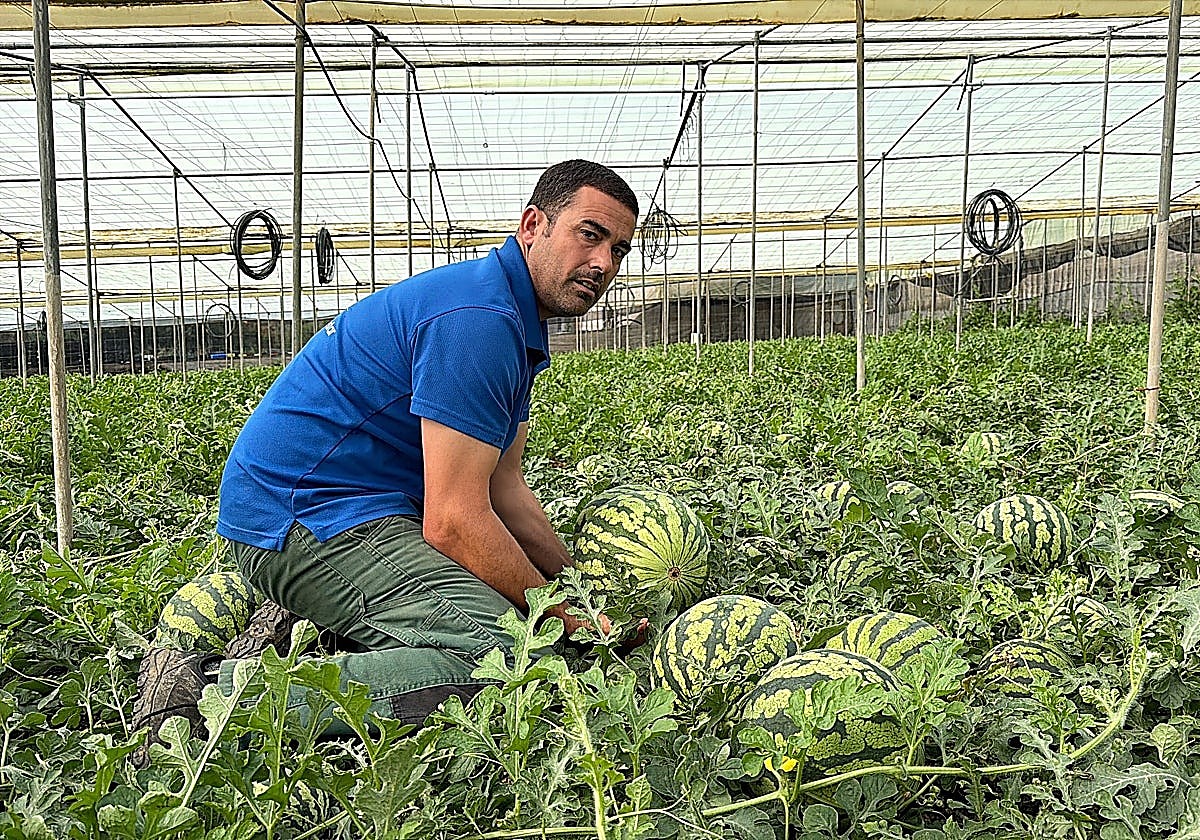
Thrips Parvispinus, also known as Tobacco Thrips, which devastated the pepper harvest in Castell de Ferro and Motril on Granada province's Costa Tropical last autumn has meant that the watermelon harvest has been brought forward by two months this year. Some growers have already started cutting fruit when normally they would not do so until June.
Thrips arrived on the Costa Tropical at the end of last summer, causing panic among pepper growers. The insect not only damages the plant but also transmits a virus that can ruin the crop. When it enters a greenhouse, it spreads very quickly and is very difficult to eradicate. It attacks the flowers, eats the buds, and prevents the fruit from growing.
According to data from the Junta de Andalucía, the coast has around 540 hectares of pepper crops, although the real surface area is around 270 hectares due to double harvesting. Around 70 per cent of the coastal greenhouses detected the presence of the insect at some point during the season. Around 12 hectares were lost.
José's story
José Villegas, a farmer from Castell de Ferro, is one of those who has experienced it first-hand. He had three pepper greenhouses with a surface area of around 7,500 square metres. He sowed them at the end of July, as he does every year. However, as the plant started to grow, the thrips spread and there was no way to stop it. He tried everything: predatory insects, phytosanitary products, integrated control treatments, but nothing worked. The peppers that came out were damaged, which meant that the product did not have the same market value as one that arrived undamaged.
Related story
At the beginning of December he disinfected the soil, treated the structure with different products such as sulphur, diatomaceous earth, paraffin oil, and prepared the land to start from scratch. His losses are in the region of 10,000 euros.
With the greenhouses empty and his finances badly affected, Villegas did what many other farmers in the area did: he turned to watermelons. He sowed on the first day of January, in the hope of recovering some of his losses with the peppers. It is normal to sow between February and March to harvest at the end of May and in June, but those who were forced to pull up the peppers early had no choice but to bring the calendar forward. "I had to bring it forward a few months because of the plague and I am going to harvest at the beginning of May", Villegas admits. He is not the only one. In the Pinar area there are farmers who even sowed before him and who were already cutting last week.
Attention is now focussing on price. The first watermelons of the season were paid at around one euro per kilo, but the price has already started to fall. Last week it was between 85 and 90 cents and the trend is downwards as the season progresses and supply increases. "If it is still selling at this price, it is something that is profitable," explains Villegas. The grower expects to make around 50,000 kilos. It's not a fortune, but with a reasonable price it could help to plug part of the hole left by the pepper: "We are going to try to balance out the losses".
Lower incidence
The Junta de Andalucía explains that the pepper harvest is practically finished and the incidence of the pest is, for the moment, "very small". According to the regional government, only 12 applications for aid have been processed in Granada province, compared to 269 in Almeria which was affected more.
The Regional Agricultural Office (OCA) is preparing an information sheet with the measures to be taken by farmers who detect the pest on their farms, and is in permanent contact with the cooperatives in the area.
The Junta has launched a line of extraordinary aid aimed at farms that have suffered total losses. This aid, which will be paid this year, can reach 20,000 euros per hectare, with a maximum of 50,000 euros per grower.
![[]](http://static.vocstatic.com/voc26/latest/assets/images/favicon/surinenglish/apple-touch-icon-57x57.png)