
Guadalquivir
Cruising down the Guadalquivir on a pedal boat made from drug traffickers’ fuel containers
The environmental initiative ‘Proyecto Río Grande’, which took place earlier this month, aims to ‘reflect on the river’s ecological situation’ and the ‘problems’ it faces

Pepe Ortega
Cádiz
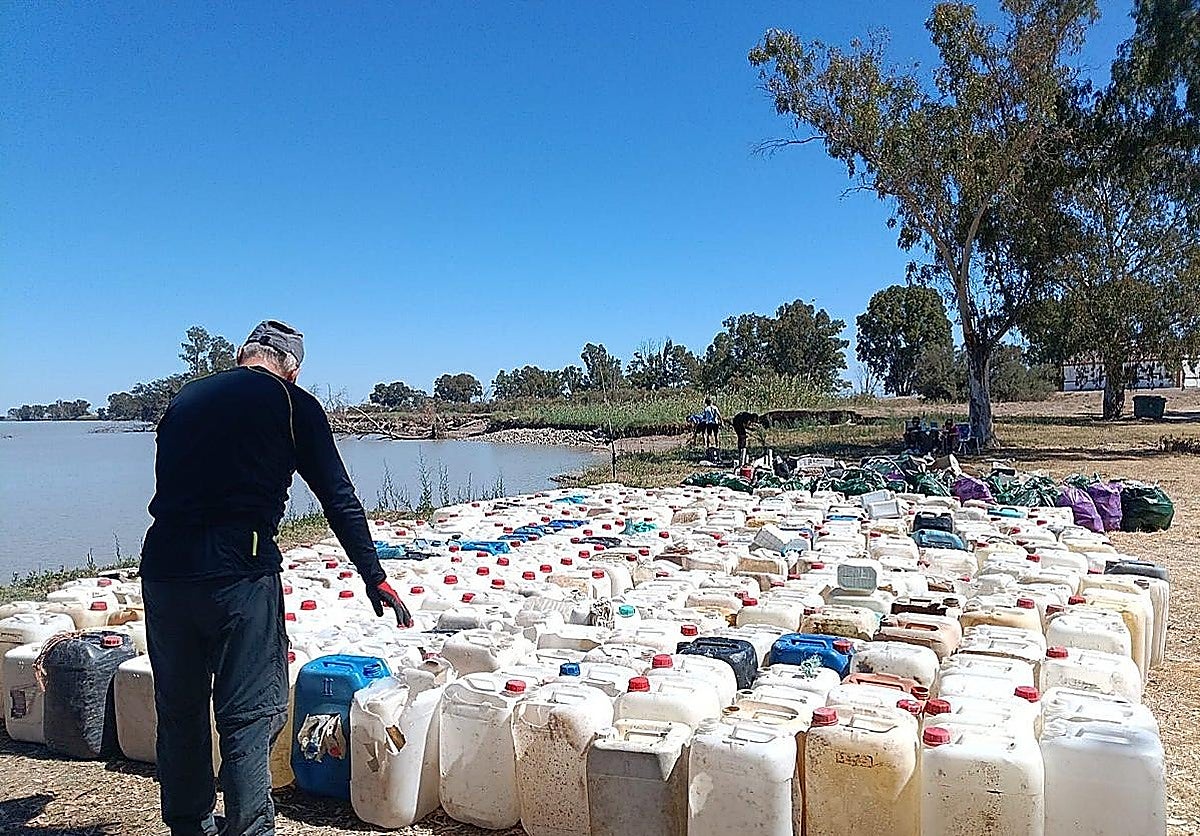
Abominable. The adjective used by Germán Martínez to describe the mark left in its wake by drug trafficking along the final stretch of the Guadalquivir ... leaves no room for doubt: in total, they have collected some 2,000 fuel containers scattered at various points around the river.
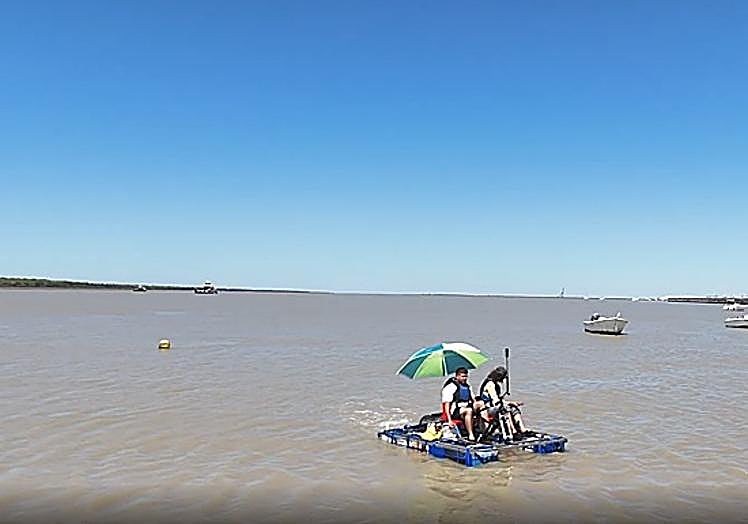
“It’s been absolutely appalling”, says the young man from Chiclana, who is one of the coordinators of the Río Grande Ecological Project, which took place earlier this September, alongside Francisco, Javi Montes, Luis, Rosa and Quique Bolsitas. Aboard a pedal boat, built from empty plastic containers abandoned by drug traffickers, bed bases, bicycles and propeller blades, they travelled along a stretch of the Guadalquivir to raise awareness of the river’s environmental situation.
Initially, the plan for the project was to travel 85 kilometres by pedal boat, from Seville to Sanlúcar; however, the tides made navigation very difficult and prevented them from completing the route as planned.
“We haven’t been able to cover the entire distance we’d set out to do. The pedal boat is quite slow and the tides are stronger than the craft’s own momentum.” But that is secondary. “We wanted to see this as a way of raising awareness of the issues affecting the river”.
In addition to the effects of drug trafficking, with the dumping of containers - in some cases still containing traces of fuel - there is also the presence of heavy metals due to mining waste, according to the project’s co-organiser. “Further upstream, we have the problem of heavy metal pollution, which is directly linked to diseases such as cancer,” he says.
The municipality of Lebrija was the location chosen for the litter-picking initiative. Around forty volunteers lent a hand with clearing away plastic bottles, and some of them were even shocked by the number of containers they found. “There were people in tears when they realised the scale of the problem,” says Germán. Some of these petrol canisters were in an advanced state of decomposition, a process which can contribute to environmental pollution.
As he pedalled along through the waters of the Guadalquivir, the reality was quite different. Germán admits that he didn’t notice the river being particularly polluted. “We didn’t see any plastic containers in the riverbed”. However, he states that one of the areas where the highest concentration of waste from drug trafficking converges is in the Huelva area.
“There’s a stretch of the Huelva coastline where a huge number of plastic containers are carried by the current, and there are many other areas along the riverbank where they’ve also ended up.”
Germán Martínez is passionate about challenges. In 2024, he took his bike out of the garage, got it ready and set off to cycle the entire EuroVelo route, from Cádiz to Athens. He documented that adventure day by day and shared it on social media; however, on this occasion, he will be releasing, alongside his colleagues - including environmental activist Quique ‘Bolsitas’ - a documentary lasting around 40 minutes summarising the progress of the ‘Río Grande’ Project, with the aim of raising awareness of the natural values and environmental issues facing the Guadalquivir and its surroundings.
“First and foremost, I’m a content creator specialising in cycle tourism, and I found it fascinating to be able to take a bike, explore and take on the challenge of building something from scratch to navigate a completely different environment,” he says.
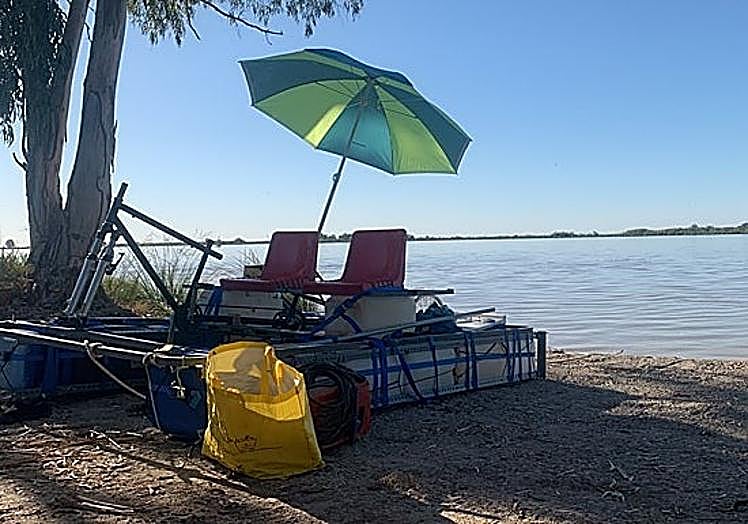
Germán admits that he has faced “quite a few challenges”, particularly in relation to “building the pedal boat”. “And, on the other hand, we were initially going to build the pedal boat using 220-litre tanks, the sort used in agriculture. But, while exploring the river area a bit by bike, we came across such a large number of plastic containers that I thought: ‘This is it. Let’s use what’s here and seize this opportunity to talk about what really matters’,” he concludes.
The images speak for themselves. Just open the boot of the van and the plastic bottles piled up inside come tumbling out. More than 2,000 bottles have been removed from a natural area that is one of Andalucía’s main green spaces. The Guadalquivir, for the time being, is not spared the collateral damage caused by drug trafficking.
![[]](http://static.vocstatic.com/voc26/latest/assets/images/favicon/surinenglish/apple-touch-icon-57x57.png)