
Tourism
Why are there so few five-star hotels in Almeria province?
Only five businesses in the province hold the highest category, although a new hotel is set to open in Mojácar in 2028, which will bring the total up to six
David Roth
Almería
Almeria province, with its unspoilt coastline, sunshine and tourist resorts, might seem an idyllic setting for those looking for luxury tourism. However, those looking for places to stay that fit the category might struggle: it has a select list of just five five-star hotels.
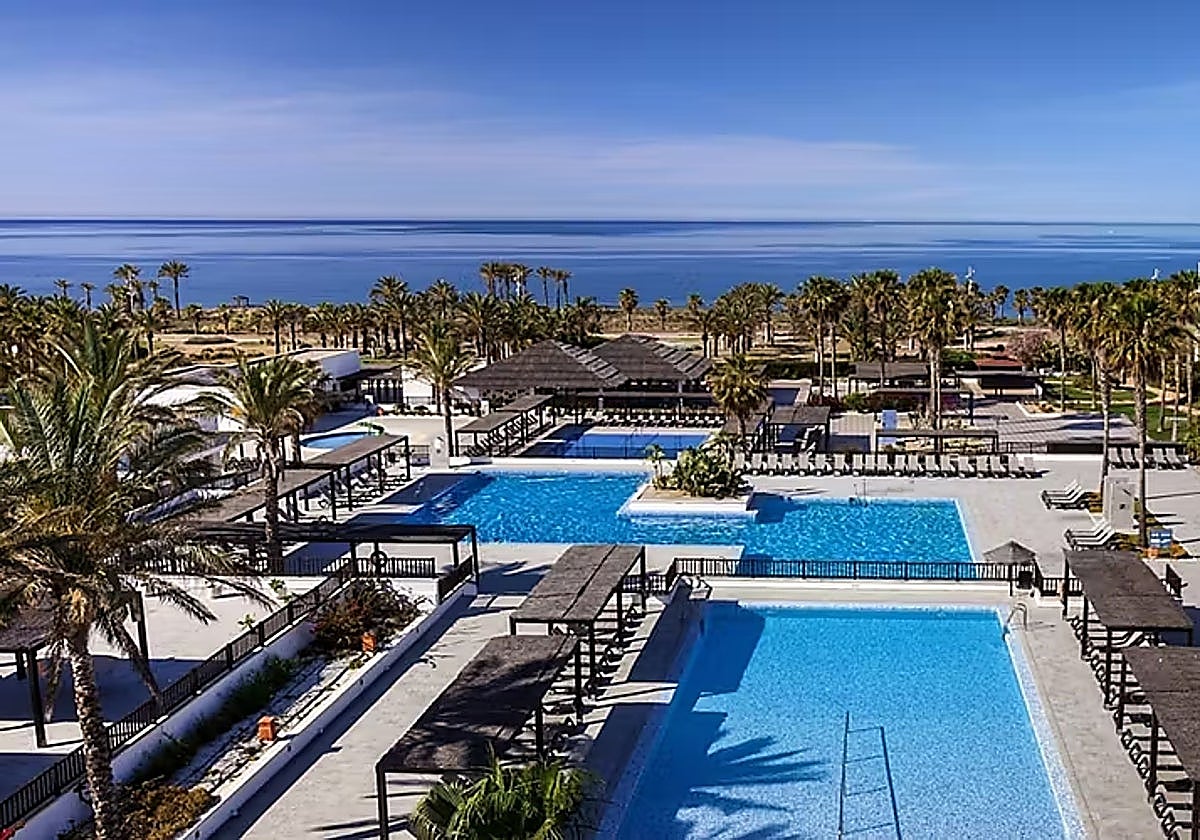
Currently, the luxury map of Almeria is concentrated in strategic areas: the Cabo de Gata Beach Hotel in Retamar, the only five-star hotel in the city; the Protur Roquetas Hotel & Spa in Roquetas de Mar; the Hotel Envía Almería Spa & Golf in Vícar; the Hotel AR Golf Almerimar, both closely linked to the golf and wellness sector and, finally, the Cortijo Media Legua in Vera.
This list will soon be joined by an ambitious project in Mojácar: the Macenas Mediterranean Resort hotel. This project, promoted by Cosentino with an investment of 40 million euros, is expected to open its doors in 2028.
But what is preventing the number of select hotels from increasing in Ameria province? The answer is twofold: the economic profitability of the initial investment and the demanding regulations of the Junta de Andalucía, which impose technical requirements of a much higher complexity than hotels with four stars.
The economic factor
The main barrier to hotels in Almeria getting the fifth star is undoubtedly financial. According to the 'Hotel Market' report produced by the real estate consultancy Tinsa, the numbers are clear and convincing. Building a five-star hotel in Spain requires an average investment of 262,000 euros per room, a figure that includes the cost of land, construction, furniture and the necessary machinery. This is almost double the cost of a four-star hotel, which averages 135,000 euros and three times the investment of a three-star hotel, which is around 89,000 euros per room.
Although the subsequent profitability is higher (a five-star hotel generates an average annual income of 29,600 euros per room compared to 14,800 euros for a four-star hotel), the risk for the business owner is very high. The average revenue per available room, technically known as RevPar, stands at 117 euros in the highest category, a figure that can only be sustained if there is a solid and constant demand throughout the year, a historic challenge for Almeria province due to the seasonality of tourism.
Legal framework and requirements
Beyond economic viability, the legal framework acts as an extremely rigorous quality filter. The public service Consumo Responde, dependent on the Junta de Andalucía, details in its regulations the minimum conditions that these hotels must meet. In terms of infrastructure and communications, a five-star hotel is obliged to guarantee a constant feeling of spaciousness and privacy. This implies having totally differentiated accesses for clients and for service or merchandise staff, as well as having a canopy or protective cover at the main entrance.
Corridors must be at least 1.75 metres wide, which is a much greater use of usable surface area than in any other category, while stairways for users must be at least 1.50 metres wide. Common areas must also be sized to avoid overcrowding, requiring a minimum of four square metres per room for these spaces, which must include a bar, cafeteria and cloakroom service.
Living space is, in this regulation, the true indicator of luxury. It establishes very demanding minimum areas: 10 square metres for single rooms, 17 square metres for double rooms, 22 square metres for triple rooms and 26 square metres for family rooms, always maintaining a ceiling height of 2.70 metres. In addition, there is a structural requirement: at least five per cent of the hotel's total capacity must be allocated to suites and it is imperative to have junior suite type units with a separate living room of at least 12 square metres.
Larger beds, effective darkening systems, individual safes in each unit and independently controlled air conditioning in each room, as well as mandatory internet connection in both common and private areas are all requirements for five-star hotels.
The bathroom represents perhaps the most demanding and technically differentiated point. The Junta's regulations for the highest category require each room to have a minimum area of five square metres where the bathtub and shower must be independent. To ensure maximum privacy for the guest, the toilet and bidet must be located in an enclosed, separate room within the bathroom itself. In addition, a double washbasin is mandatory in all rooms other than single rooms, as well as the installation of a telephone and a hairdryer.
The difference in category also manifests itself in the daily operations of the hotel. The regulations stipulate that five-star hotels must offer full availability of their services. This includes a 24-hour reception and concierge service, but also a technical maintenance and luggage storage service that is operational day and night. Unlike a four-star hotel, room service must be available 24 hours a day, ensuring that the customer can access the gastronomic offer at any time.
Category restoration
The requirements are equally high when it comes to catering. It is the only category where the menu must be à la carte and where the hotel is obliged to offer room-service breakfast if the guest requests it. Likewise, the support staff must be much more numerous, including mandatory luggage service and outside admission staff. Even in transport management, the hotel must guarantee parking spaces for 50 per cent of its rooms and if the garage is not located in the same building, staff must be available to park and pick up guests' vehicles.
![[]](http://static.vocstatic.com/voc26/latest/assets/images/favicon/surinenglish/apple-touch-icon-57x57.png)