
Urban blight
El Algarrobico demolition row: Junta and PSOE clash over hotel clearance responsibilities
El Algarrobico demolition row: Junta and PSOE clash over hotel clearance responsibilities
Raquel Pérez
Almería
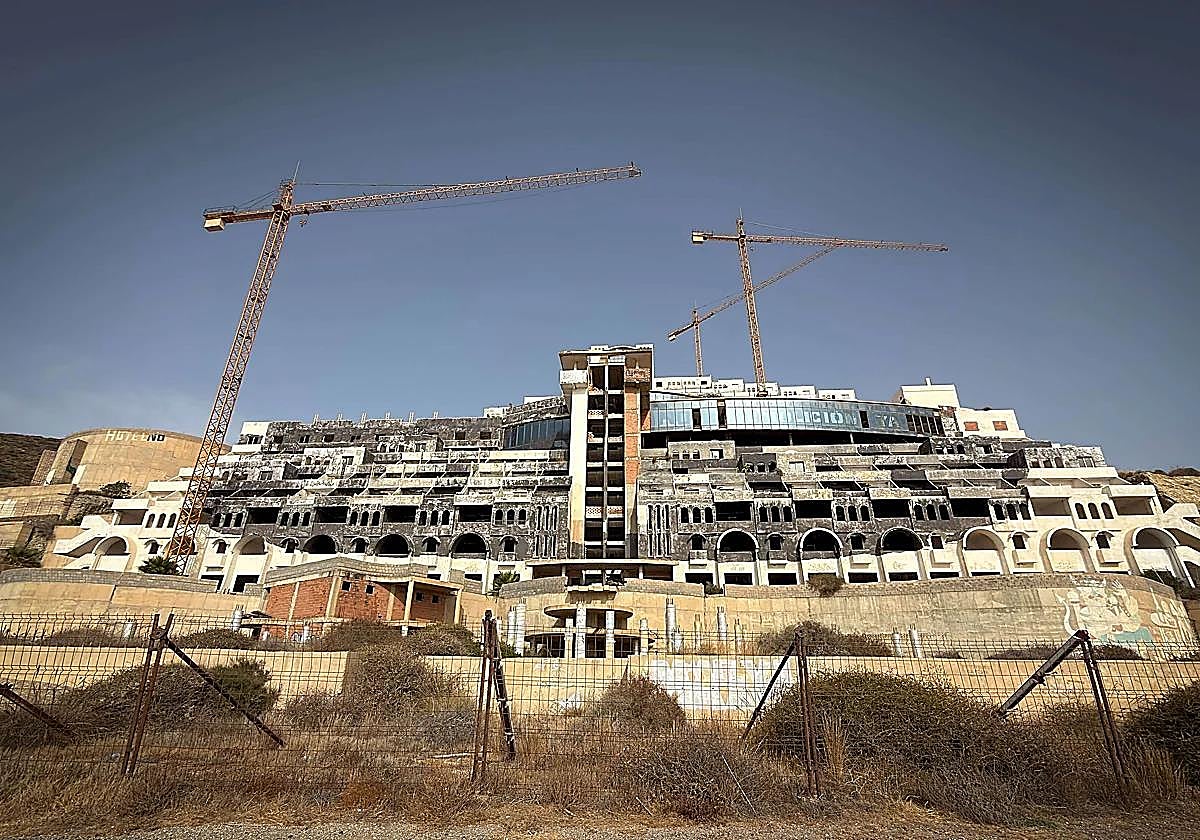
The long-running political dispute over the illegal El Algarrobico hotel in Cabo de Gata-Níjar national park has reignited, following a fresh exchange of accusations between the Andalusian regional government and the local branch of the Spanish Socialist Workers' Party (PSOE).
Rodrigo Sánchez Haro, climate spokesman for the Andalusian PSOE (PSOE-A), urged regional president Juanma Moreno to "stop looking the other way" and immediately proceed with the demolition of the hotel in Carboneras.
Related story
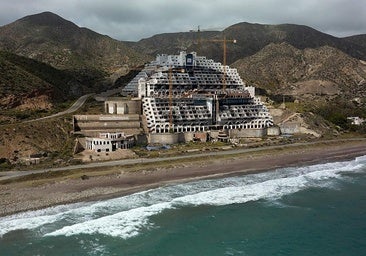
His comments followed a ruling by the High Court of Justice of Andalusia (TSJA) rejecting an appeal by developer Azata to halt the demolition. Sánchez Haro maintained that the judgment clears the path for the building's removal, noting that the original municipal building licence had already been annulled.
However, the Andalusian regional government quickly dismissed the demands. Ramón Fernández-Pacheco, regional minister for agriculture, environment, and rural development, called the PSOE's stance "absurd and ridiculous", reiterating that a binding agreement between public administrations explicitly assigns the demolition to the central government in Madrid.
Under the existing protocol, the central Spanish government is responsible for pulling down the structure, while the Andalusian regional authority is tasked with managing waste removal and restoring the beach area to its original environmental state.
Related story
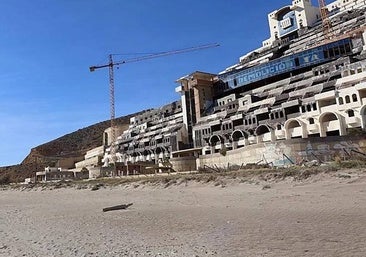
Fernández-Pacheco also pointed to broken promises made by the central government, highlighting that First Vice-President and Andalusian PSOE leader María Jesús Montero publicly pledged in early 2023 to demolish the hotel within five months - a deadline that passed over a year ago.
While Carboneras town council formally annulled the hotel's building permit in July pursuant to the TSJA's directive, unresolved administrative procedures remain before heavy machinery can enter the protected site.
![[]](http://static.vocstatic.com/voc26/latest/assets/images/favicon/surinenglish/apple-touch-icon-57x57.png)