
Amber treasure found in Roman burial tomb in Andalucía
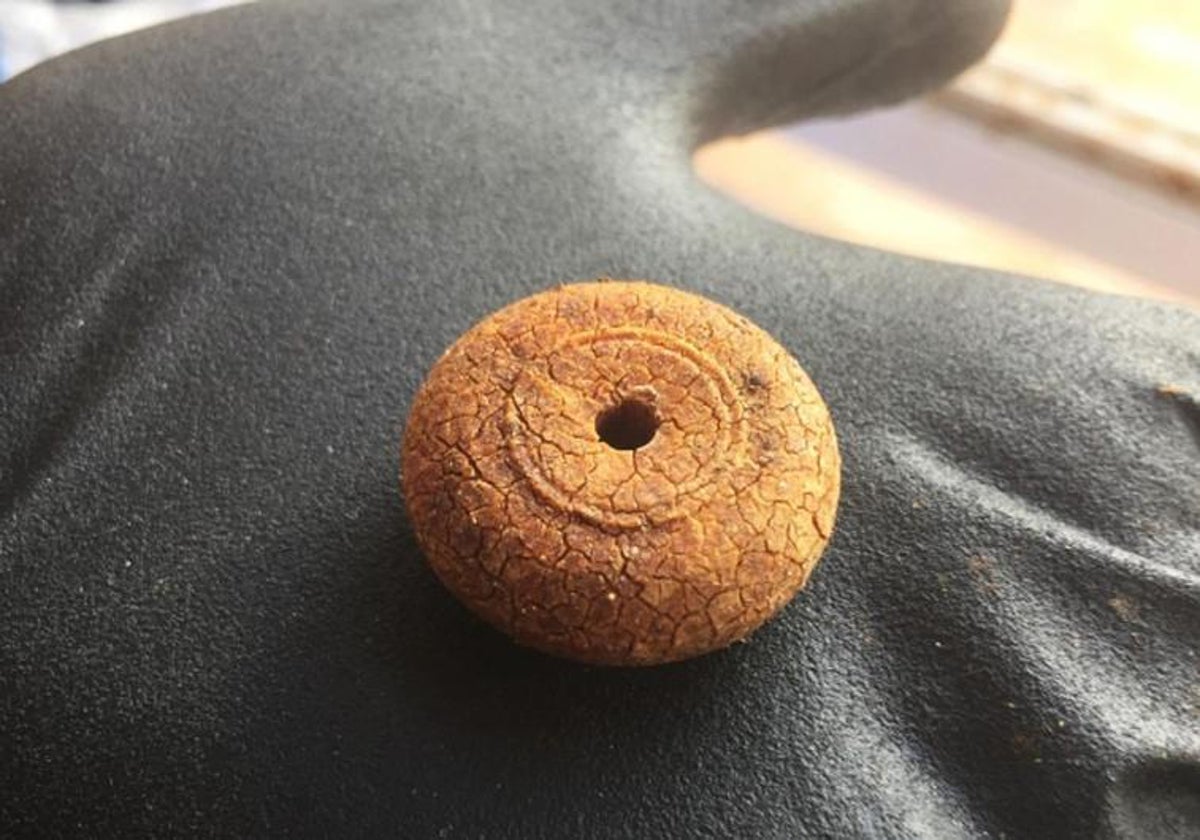
Three precious stones, possibly the beads of a necklace, were found in Carmona
Europa Press
Seville
The first century Roman tomb located in Carmona (Seville), which several weeks ago revealed that the Roman Empire smelled of patchouli, still hid one more secret. This same tomb, in which the FQM346 research team of the University of Cordoba (UCO), led by Professor of Organic Chemistry José Rafael Ruiz Arrebola, managed to "identify and characterise" a perfume more than 2,000 years old, also contained a small treasure: three precious stones, possibly the beads of a necklace belonging to the woman buried in the family mausoleum excavated by Carmona’s municipal archaeologist, Juan Manuel Román.
Ruiz Arrebola, together with UCO researchers Daniel Cosano, Dolores Esquivel and Fernando Lafont, have used organic chemistry and the most advanced analysis technology to characterise heritage remains and offer historians and curators useful information on the funerary rites of ancient Rome, the University of Cordoba noted in a press release.
As published in the journal Vibrational Spectroscopy, the challenge of this work was to confirm that the beads were amber and to determine their origin with infrared spectroscopy. The UCO research team has proved that the jewellery was preserved in a small bag probably made of linen, by identifying traces of cellulose next to the stones. The amber required comparison with those of other specimens to ensure accurate identification, the UCO explained in its press release. It was confirmed that the beads originated in the Baltic Sea. Rome created a causeway linking the Baltic Sea to the capital of the Empire to ensure the safety of this trade route, which existed since prehistoric times.
Considered a semi-precious stone, amber is the result of the fossilisation of organic remains of resins and other materials (sometimes insects), to which mankind has attributed magical and healing properties for thousands of years.
![[]](http://static.vocstatic.com/voc26/latest/assets/images/favicon/surinenglish/apple-touch-icon-57x57.png)