
History
Alhambra to carry out tests to verify whether Benalmádena key dates from the Nasrid period
The Patronato calls for "caution", while the owner of the key insists on the resemblance to a similar piece from the Torre de la Vela
Jorge Pastor
Granada
The director of the Patronato de la Alhambra y el Generalife, Rodrigo Ruiz-Jiménez, and the owner of the alleged Nasrid key found in Benalmádena, ... José Antonio Fernández Molina, held a telephone meeting on Tuesday to draw up a roadmap to establish whether this artefact once opened a door at the Alhambra.
Ruiz-Jiménez highlighted Fernández Molina's "enthusiasm", but he stressed that it is better to remain "prudent" until all the investigations finish. "We will carry out carbon-14 dating tests to determine the age," he said.
It all began seven years ago at the Benalmádena flea market, when Fernández Molina, a specialist in judicial and archaeological valuations and in unearthing treasures from flea markets, purchased an old suitcase containing a yellowed 19th-century plan of the Alhambra signed by the monument's archaeologist and restorer Manuel Gómez-Moreno.
Related story
At that time, in 2019, contact with the Alhambra was, it seems, not particularly fruitful. "Now Rodrigo has shown great interest," Fernández Molina said.
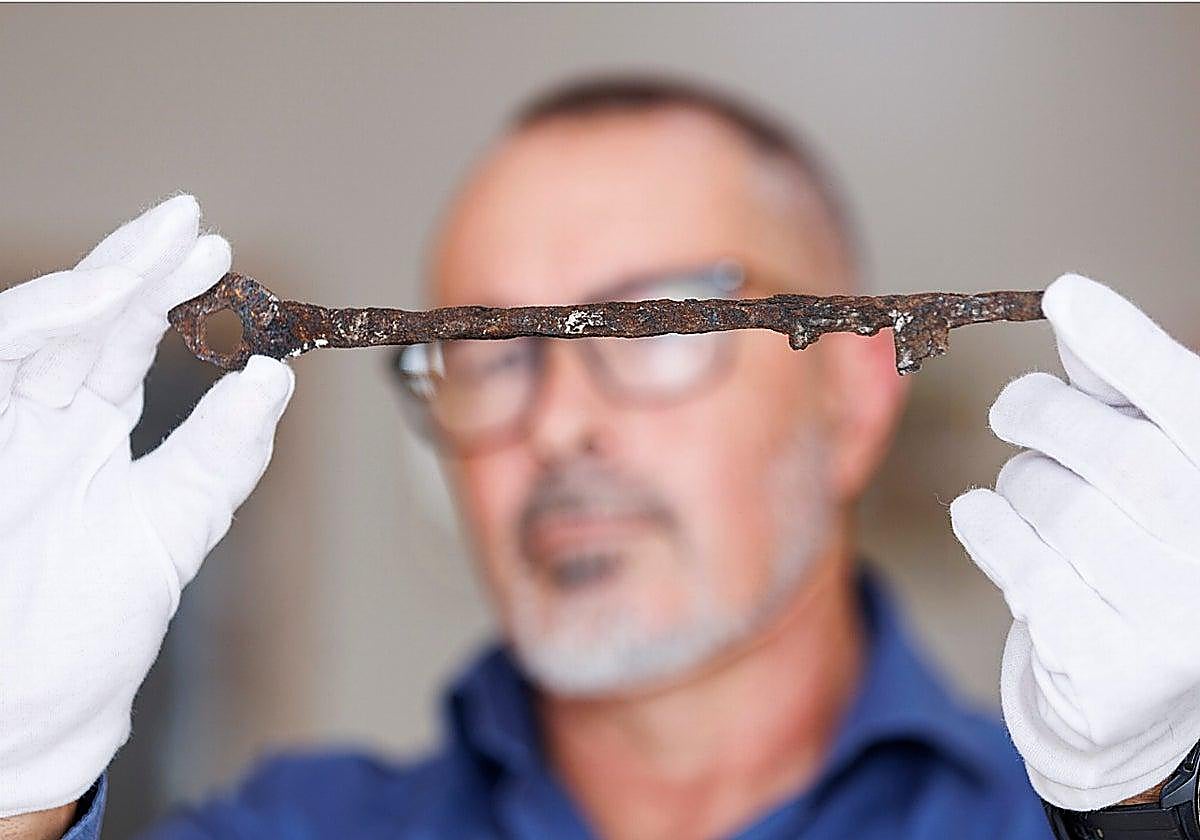
A chance fall of the suitcase while Fernández Molina was tidying his storage room revealed something else. "I heard a metallic clink," he says. In the false bottom of the lining, he found a Nasrid key.
During Tuesday's conversation, Fernández Molina urged the Patronato to undertake an investigation by checking its archives to see whether such an object might ever have gone missing and by seeking the opinions of experts.
According to him, the key dates from the period of the Nasrid Empire, which began in 1238 with Alhamar and ended in 1494 with the capture of Granada by the Catholic Monarchs. Fernández Molina insists that the key is identical to one from the Torre de la Vela, dating from between the 14th and 15th centuries.
For Fernández Molina, the two keys share the same length (27 centimetres) and shape. The item is made of wrought iron, a material less durable than bronze, and is square in shape, with a circular, hollow head and a slender, elongated body. Two prongs are missing due to rust. Even the remaining one is only partially intact.
Rodrigo Ruiz-Jiménez stated that anything to do with Gómez-Moreno is now of the utmost interest to the Patronato. The Alhambra and the Al-Andalus period were constant themes in his artistic output. As an archaeologist, he served on the Comisión Provincial de Monumentos, where he fought against the deterioration of the Alhambra complex.
He was the author of the famous Guía de Granada (1892), which includes detailed descriptions of the Alhambra and laid the foundations for subsequent research.
Speculation aside, it is impossible that Manuel Gómez-Moreno could have placed the key there. The briefcase could not have belonged to him because Fernández Molina dates it to between the 1960s and 1970s and the archaeologist from Granada died in 1918.
At some point, someone placed the papers in the briefcase and hid the key in its lining to protect it. It must have been someone very close to him, because Gómez-Moreno's obituary was found in the very same folder containing the plans.
According to what the flea market seller told him at the time, a man Fernández Molina never saw again, that lot of items had come from the clearance of a house in Granada. "We need to investigate further," the expert notes.
Fernández Molina, who is due to present the second book in a trilogy of novels, La Corona de Espinas, in Benalmádena in the coming days, brought the discovery to the attention of the regional government from the very outset, as it is the authority responsible for the protection and management of heritage in Andalucía.
![[]](http://static.vocstatic.com/voc26/latest/assets/images/favicon/surinenglish/apple-touch-icon-57x57.png)