
Sport in Andalucía
On your marks! Active holidays in excellent conditions
The region's mild climate has turned it into a year-round destination for athletes, while top-flight football and basketball give visitors something to watch once their own race is over
Daryl Finch
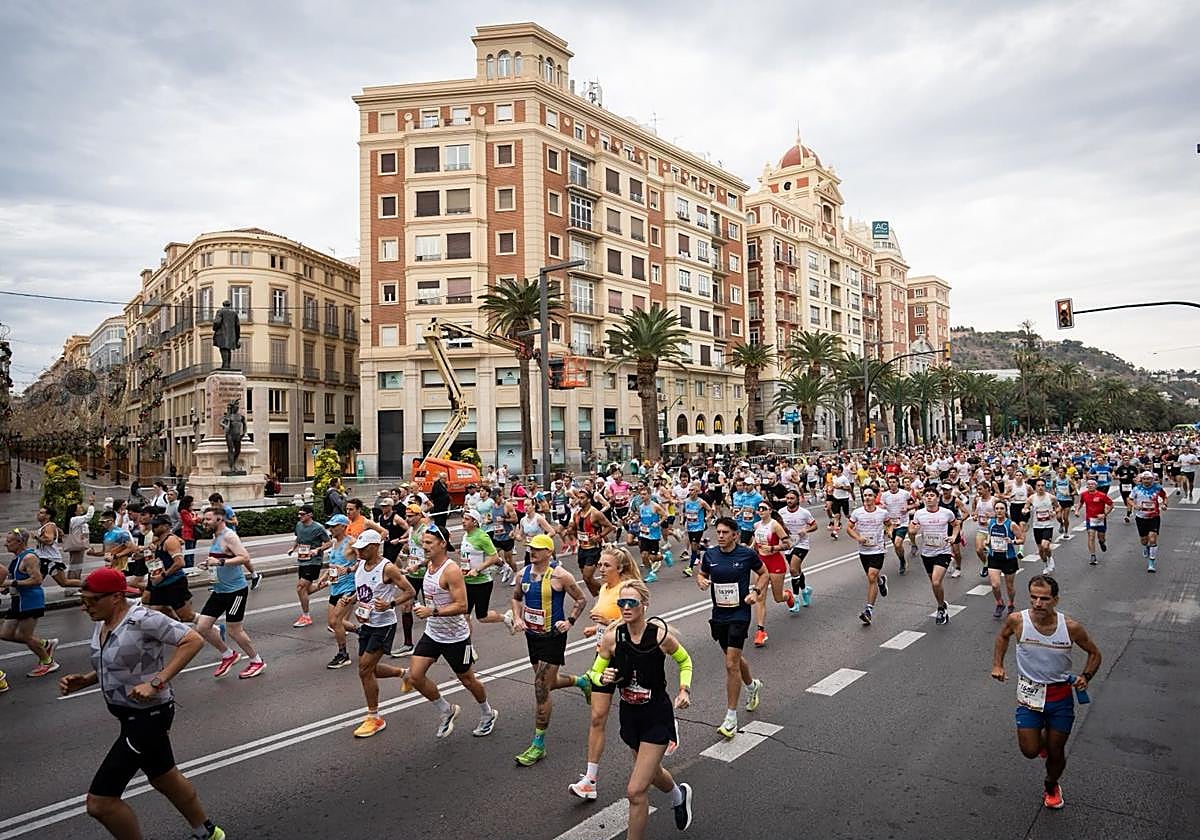
Shortly before 8.30am on a Sunday in November, Malaga’s Paseo del Parque fills with runners stretching beneath the palm trees. Some are chasing a personal best and others simply hope to reach the finish line in one piece. Almost all of them, however, have come for the same reason: while much of northern Europe is reaching for its winter coat, the Costa del Sol offers ideal conditions for running 42 kilometres.
The marathon is only one part of the story. Andalucía’s climate, which has drawn holidaymakers to its beaches for decades, also makes the region a place to get active for most of the year, whether that means racing through historic city centres or heading inland to tackle whitewater.
And when the legs finally need a rest, there is top-flight sport to enjoy from the stands.
Winter is race season
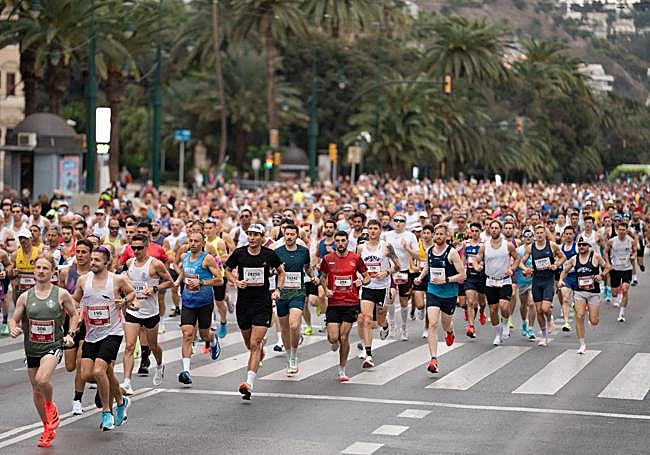
The Generali Maratón de Málaga has grown into one of the most popular events on the Spanish running calendar. The 2025 edition attracted a record of more than 22,000 entrants and both course records fell. As a result, Malaga now ranks as the fourth fastest marathon in Spain, behind only Valencia, Barcelona and Seville.
Part of the appeal is the course itself. It starts and finishes on the scenic Paseo del Parque, right in the city centre, and stays largely flat as it loops through the city. A half marathon runs alongside it, so groups of friends with different ambitions can share the same start line. Since the airport is only a short train ride from the city centre, it’s also possible to fly in on Friday and be collecting a race number that afternoon.
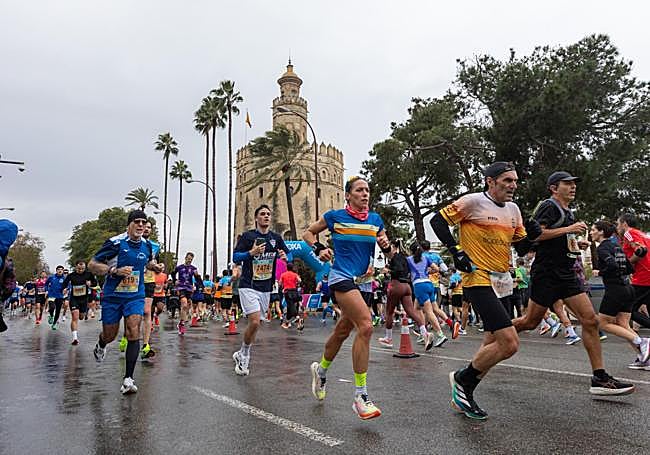
Seville, meanwhile, has built its reputation on speed. The Zurich Maratón de Sevilla, which reaches its 42nd edition on 21 February 2027, is billed as Europe’s flattest marathon. That makes it a favourite with runners chasing qualifying times. It also works as a sightseeing tour, with the route passing the Plaza de España, the Torre del Oro and the Giralda.
Back on the Malaga coast, Estepona has added a newcomer to the calendar. Building on the success of its half marathon, the town staged its first full marathon in October 2026 as a “boutique” event, with places limited to 2,000 runners. The route leaves the municipal athletics stadium for the seafront promenade and heads east along the coast, before returning through an old town famous for the flowerpots that hang from its whitewashed walls.
For those who find 42 kilometres too short, the region also has two ultras with a growing international following. Each May, more than 9,000 people take on the 101 km de La Legión, organised by the Spanish army’s Legion regiment based in Ronda, on a route through the surrounding countryside that walkers must finish within 24 hours and mountain bikers within 12.
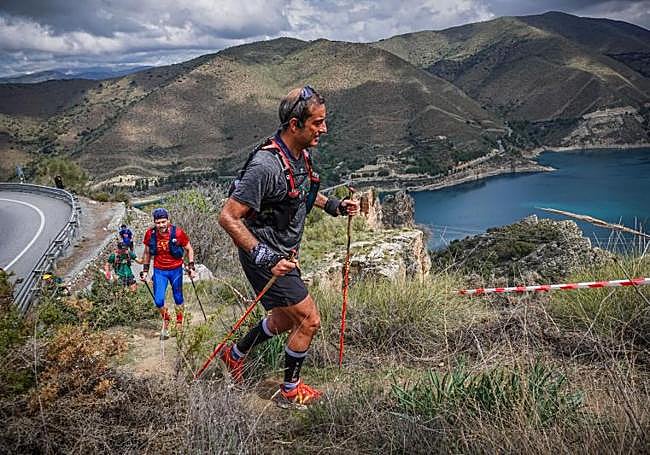
Further east, the Ultra Sierra Nevada climbs 100 kilometres from the streets of Granada to more than 3,100 metres at the foot of Pico Veleta, before finishing at the Pradollano ski resort.
Not everyone is quite as extreme, of course. Seville’s half marathon takes place on 13 December 2026, and the Torremolinos half marathon reaches its 37th edition on 7 February 2027. A month later, on 7 March, Malaga’s half marathon returns with places for 14,000 runners, while in eastern Andalucía, Granada’s half marathon is usually held in late April and takes runners past landmarks including the Alhambra and the cathedral.
Elsewhere, half marathons fill most of the year, from Marbella and Cordoba-Almodóvar del Río in September to Cadiz in November and Sevilla-Los Palacios, billed as Andalucía’s oldest race, in December. Cordoba, Jerez and Almeria also stage their own city halves.
For many visitors, though, the race is only half the attraction. A marathon weekend in Malaga or Seville doubles as a city break, with tapas standing in for the traditional pasta party and recovery taking place on a sun lounger.
Calm water on the coast
Once spring gives way to summer, attention shifts to the sea. Early mornings on the Costa del Sol often bring flat, glassy water before the afternoon breeze picks up, and paddleboards have become a familiar sight off beaches all along the coast. Most resorts have somewhere to hire a board or book a lesson.
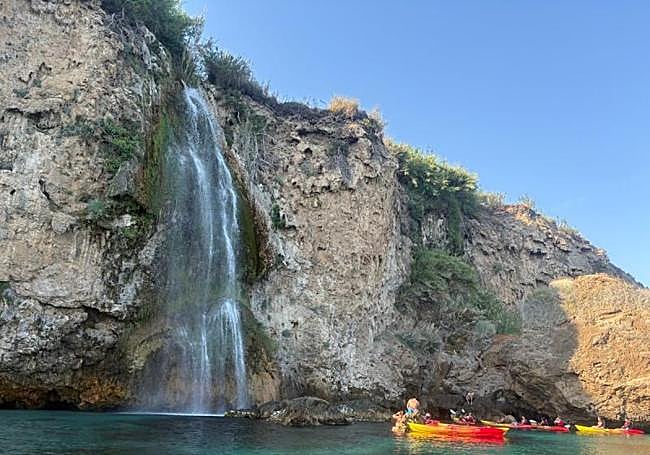
The most rewarding stretch lies east of Nerja, where the cliffs of the Maro-Cerro Gordo natural area drop straight into clear water. Guided paddleboard and kayak trips explore the coves tucked beneath them, and the route to the Maro waterfall, where a stream tumbles down the cliff face to the shore, is one of the best known on the coast. Because the cliffs are a protected natural area, activity on the water is regulated, so visitors should book with a licensed local operator.
Those who want more wind than the Mediterranean usually provides can head west to Tarifa, where the Atlantic meets the Mediterranean and kitesurfers fill the sky for much of the year.
Whitewater in the interior
Few visitors associate Andalucía with whitewater, yet some of its best adventures lie about an hour’s drive inland from the coast. The Genil, which at 359 kilometres is the region’s second longest river, winds through the countryside where the provinces of Cordoba, Malaga and Granada meet, and its rapids have made it the centre of Andalusian rafting.
The classic descent runs from Benamejí to Palenciana, a class III stretch of around eight kilometres that keeps rafters on the water for between an hour and a half and two hours. Guides provide the wetsuits, helmets and buoyancy aids, and the rafting base at Palenciana sits on the riverbank where the descent ends, so there’s a shower waiting at the finish.
The river isn’t only for thrill-seekers, though. A calmer section near Cuevas Bajas welcomes children from the age of six, while the stretch past Cuevas de San Marcos, also on the Malaga side of the river, suits complete beginners.
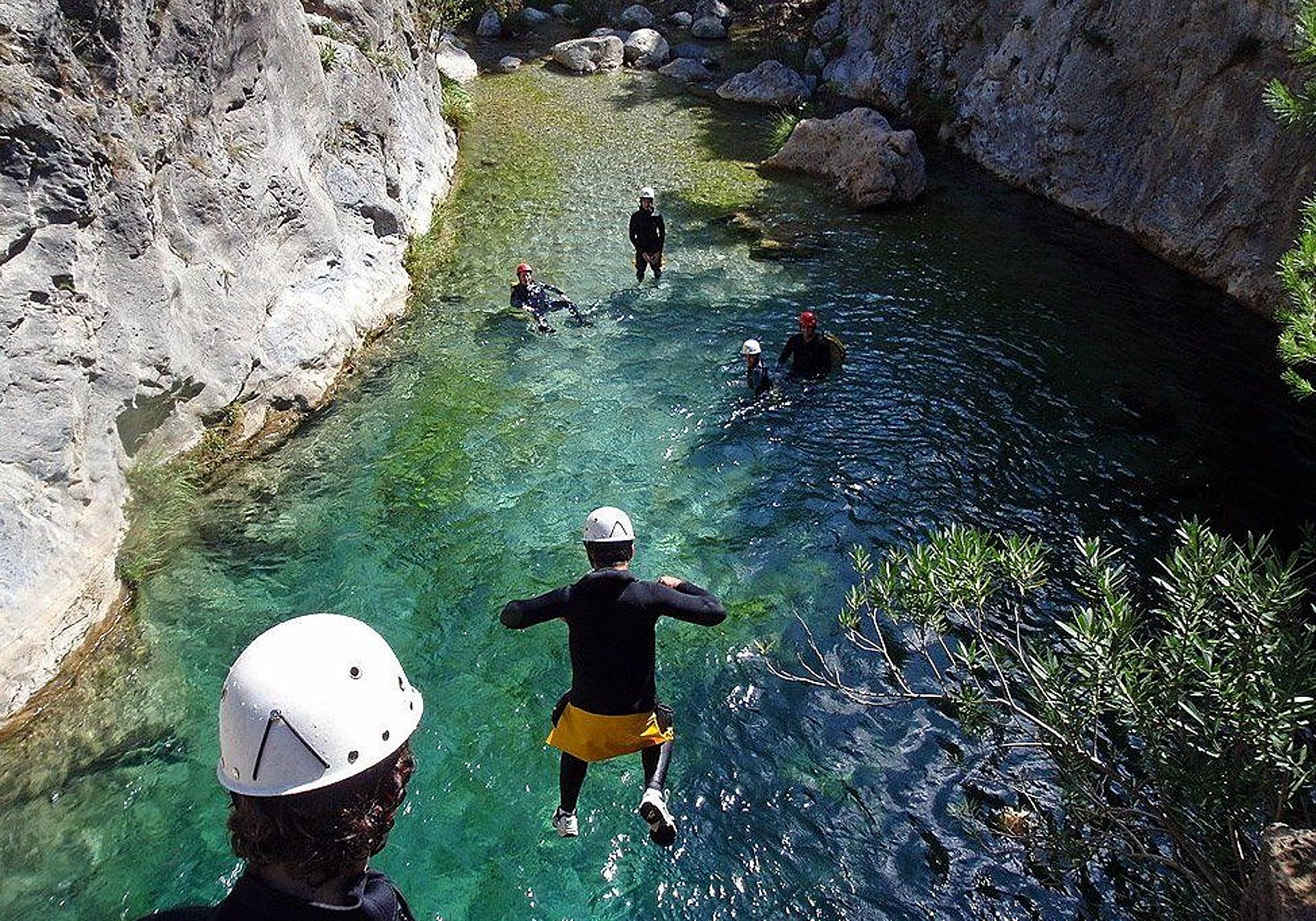
Canyoning offers a different kind of adrenaline. In Granada province, the Río Verde near Otívar carves a gorge through the mountains behind the Costa Tropical, and descending it involves sliding down smooth rock chutes and jumping into deep green pools. The nearby Lentegí river is a second option for those who want to try both.
Timing is important, however. River activities are concentrated in the warmer months and some advanced rafting trips run only from late July to the end of September, so visitors planning a trip around them should check with operators first.
Gorges and mountains
The options don’t stop at the water’s edge. The Caminito del Rey, a walkway pinned to the walls of the Desfiladero de los Gaitanes gorge in Malaga province, has become one of the most popular walks in Spain, and the limestone crags around nearby El Chorro draw climbers from across Europe through the winter.
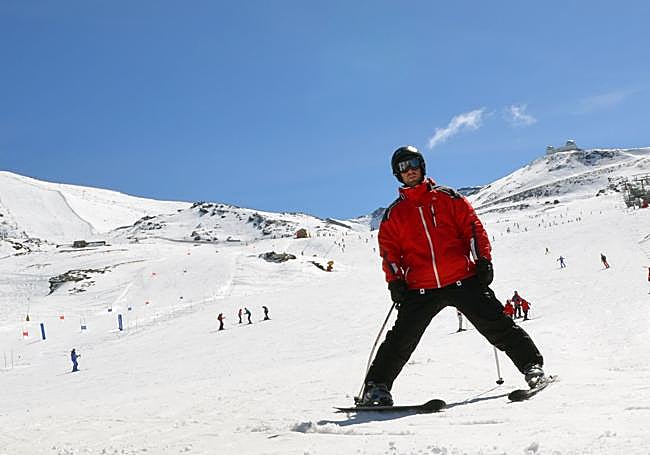
Further east, the Sierra Nevada offers skiing through the winter and into spring. Because the resort is within a couple of hours of the coast, it’s possible to spend the morning on the slopes and still sit down to a late lunch by the sea.
Walkers and cyclists can also cover longer distances at their own pace. The Gran Senda de Malaga (GR-249) circles the province in 35 stages and around 767 kilometres, passing through four natural parks, and nearly two million people walk sections of it each year.
Further inland, the Vía Verde del Aceite follows a disused railway that once carried olive oil towards the port of Malaga. Like Spain’s other vías verdes, or greenways, it has been converted for walkers and cyclists, and its 128 kilometres between Jaén and Puente Genil suit riders of all levels, crossing olive groves and a series of 19th-century iron viaducts.
Watching the professionals
When it’s time to put your feet up, Andalucía has just as much to offer from the stands. The big story this season is in the capital of the Costa del Sol, where Malaga CF are back in LaLiga for the first time since 2018.
Match days at La Rosaleda, a short walk from the historic centre along the Guadalmedina river, have taken on a new buzz now as the city gets used to welcoming the biggest names in Spanish football again. The club’s league season ends at home to Sevilla FC at the end of May 2027, an Andalusian derby that’s worth planning a trip around.
In Seville itself, both Sevilla and Real Betis are in the top flight (the latter also in the Champions League), and the derby between them is one of the most passionate fixtures in Spain. Tickets for that game are hard to come by, but even an ordinary league match shows how seriously the city takes its football.
Basketball has an equally loyal following in Malaga. Unicaja, who play at the Martín Carpena arena, have won the Basketball Champions League twice and this season are competing in both that competition and the Liga Endesa. That means a steady run of home games through the winter, which fits neatly around a race weekend.
The region also stages two very different spectacles. Each spring, MotoGP’s Spanish Grand Prix draws motorcycling fans to the Circuito de Jerez - Ángel Nieto, which has been on the calendar since 1987. In August, meanwhile, the beach at Sanlúcar de Barrameda becomes a racecourse at low tide. Thoroughbreds have raced along the shoreline there since 1845, with Doñana National Park across the river as a backdrop.
Making a week of it
For the runner who set off from the Paseo del Parque, then, crossing the finish line need not mark the end of the trip. High-speed trains link Malaga with Cordoba and Seville, and the rivers and mountains are within easy reach by car, so a few days later the same visitor could be steering a raft down the Genil. By the weekend, they might be in the stands at La Rosaleda, cheering on somebody else for a change.
