
Andalusian escapades
A subterranean oasis in Almería
Discover the Pulpí Geode: Spain’s extraordinary underground wonder lined with massive, ancient crystals
Tony Bryant
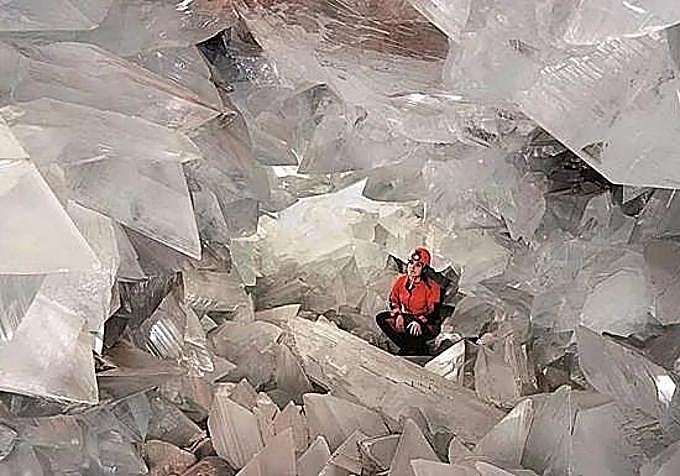
For those seeking an unusual and adventurous escape this summer, a visit to Mina Rica in the municipality of Pulpí (Almería) is an unforgettable experience. This historic mine, situated on the eastern slope of the Sierra del Aguilón mountain range (an area rich in mineral deposits), is internationally renowned for housing the spectacular Pulpí Geode, one of the largest and best-preserved accessible gypsum crystal cavities in the world. Widely regarded as one of Spain’s most extraordinary natural attractions, the geode measures approximately eight metres in length and is lined with stunning transparent gypsum (selenite) crystals, some of which reach nearly two metres long. Exploring this remarkable underground wonder offers a truly unique adventure.
This is the largest geode discovered to date. Although the cave of crystals in Naica, Chihuahua, Mexico, contains much larger crystal formations, it is not considered a true geode in the strict sense because its cavity is not completely lined with crystals. Selenite is a mostly clear, transparent variety of the sulfate mineral gypsum, and the cavity of the Pulpí Geode is completely lined with these crystals.
Geological discovery
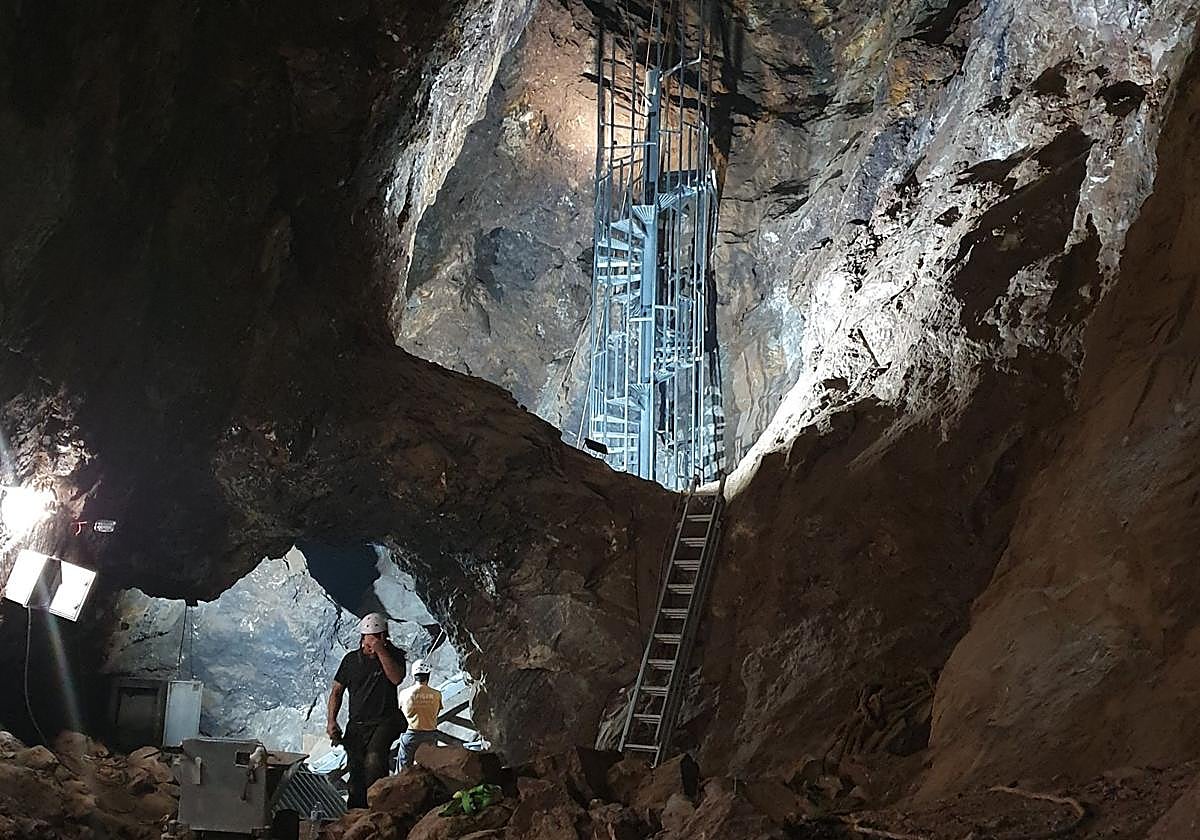
Mining began in the 19th century, with the extraction of iron ore, later followed by lead and silver. After mining operations ceased in the late 20th century, the tunnels were abandoned until mineral collectors and geologists began to explore them. The cavity was discovered in 1999 by members of the mineralogist group of Madrid while exploring the abandoned mine.
In 2010, preliminary studies for the restoration of the mine were completed. However, the main rehabilitation work took place between 2018 and 2019, when the galleries were cleaned and restored, and new structures were built to improve access to the lower levels. The geode was opened to the public in August 2019, together with a temporary visitor centre. In May 2020, a new hydraulic lift was installed to transport visitors from Level 1 to Level 2 of the mine. Subsequently, in March 2023, a new permanent visitor centre was officially inaugurated, offering larger, more modern facilities.
The geode formed through a combined karst–hydrothermal process. During the initial phase, the dolomite was dissolved, creating the cavity that would later become the geode. In the subsequent phase, gypsum crystals grew within this cavity as a result of several factors, including the injection of hydrothermal waters associated with the residual volcanism of Cabo de Gata, a spectacular coastal region in the province of Almería best known for the Cabo de Gata-Níjar natural park - the largest protected coastal natural park in Andalucía.
A natural monument
The geode, one of the most unique geological sites in Europe, is protected as a ‘natural monument of Andalucía’ because of its exceptional geological importance. The university of Almería dated the crystals to between 165,000 and 60,000 years old, indicating that their growth began during the Pleistocene epoch of the Quaternary Period.
Before reaching the geode, visitors take a guided tour through the mine, descending approximately 45 metres via 164 steps and a spiral staircase. Along the way, knowledgeable guides explain the area’s geology, mining history and the minerals found within the mine. The full tour lasts about two hours and because of the descent, a moderate level of mobility is required. Group sizes are limited to around 15 people to help preserve the site. It is generally open year-round, Tuesday to Sunday (closed Monday) between 8am and 8pm. Those planning to visit the mine are advised to reserve tickets a few weeks in advance, especially during summer and holidays, when tours often sell out.
If the geode sparks your interest in geology, be sure to visit the Sala Negra luminescent minerals museum in the centre of Pulpí, a fifteen-minute drive from the mine. Home to one of Europe’s largest collections of fluorescent minerals, visitors can learn about and observe the differences between these various types of crystals.
![[]](http://static.vocstatic.com/voc26/latest/assets/images/favicon/surinenglish/apple-touch-icon-57x57.png)