
Explore Andalucía
Granada, dreams that come to life
Beyond its Nasrid heritage, the province is home to the desert landscapes of the Geopark, the ski slopes of Sierra Nevada and the beaches of the Costa Tropical
SUR in English
Granada province changes character quickly as you travel through it. A journey that begins among the red hills of the north can end on a Mediterranean beach, crossing fertile valleys and passing beneath snow-capped peaks along the way. Wherever visitors go, history and culture are part of the landscape.
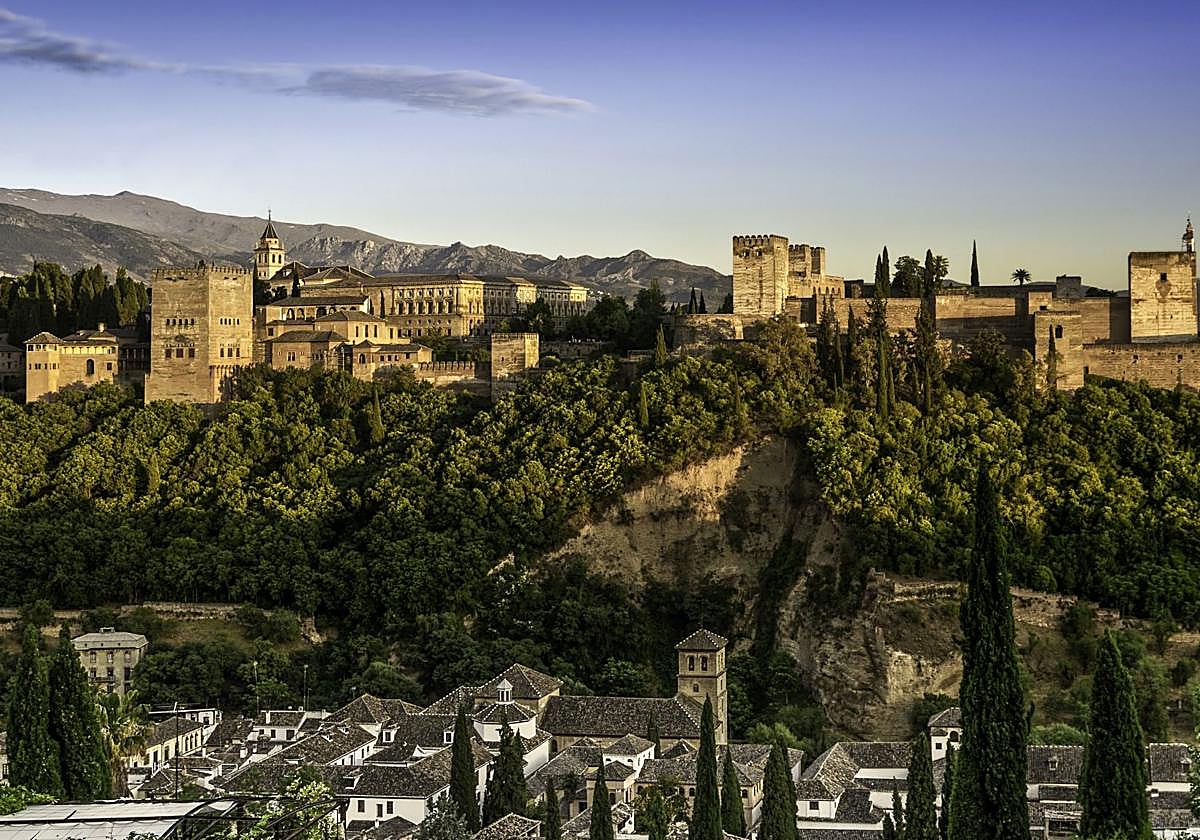
Most visits begin in the city, and in particular on the Sabika hill. This is where the Nasrids, the last Muslim dynasty to rule in Spain, built the Alhambra, mainly during the 13th and 14th centuries. It served as both fortress and royal palace until Granada fell to the Catholic Monarchs in 1492. Now a UNESCO World Heritage Site, it is one of the most visited monuments in Spain.
Just beyond it stands the Generalife, the summer palace where the Nasrid rulers escaped to gardens filled with fountains. From the Alhambra’s walls, visitors can look across to the Albaicín, the old Moorish quarter on the opposite hillside, whose narrow streets still have an Arab feel. Beyond it lies the Sacromonte, where flamenco is performed in caves that have been lived in for centuries.
Related story

Back down in the centre, the cathedral and the Royal Chapel mark the city’s Christian chapter. The chapel is the burial place of Ferdinand and Isabella, the monarchs who took Granada from the Nasrids. Yet the city is far from a museum piece. Granada is also a university city, and its students keep the squares and bars busy, helped by a tapas culture in which ordering a drink usually means food arrives with it.
That blend of old and new runs through the city’s cultural life. A morning at the Parque de las Ciencias science museum can be followed by an afternoon in contemporary Arab baths, while admirers of Federico García Lorca can head out into the Vega, the fertile plain around the city where the poet was born.
Granada also has a lively music scene, and each year its cultural calendar builds towards the International Festival of Music and Dance, held in June and July.
Into the countryside
It only takes a short drive to leave the city behind. To the west, the Poniente Granadino is olive country, where walking routes wind through gorges and past waterfalls. Along the way, fortresses and whitewashed villages recall the centuries when the area was part of Al-Andalus, as Muslim-ruled Spain was known.
One such village is Montefrío, famous for its circular church and the views that open up around it, while Alhama de Granada was built on the edge of a ravine.
Heading north, the scenery becomes almost unrecognisable. The Granada Geopark, recognised by UNESCO in 2020, covers a landscape shaped over millions of years. Much of it is made up of badlands, bare clay hills worn by erosion into gullies and ridges, and in some districts people still live in cave houses, offering a glimpse of a different way of life.
The Gorafe desert gives a sense of the scale of this landscape, whereas at Orce and Galera, dolmens and museums trace the area’s prehistory.
After a day of exploring, the thermal waters of Zújar and Alicún are a place to unwind, and once night falls the clear skies draw stargazers.
Sierra Nevada and the Alpujarra
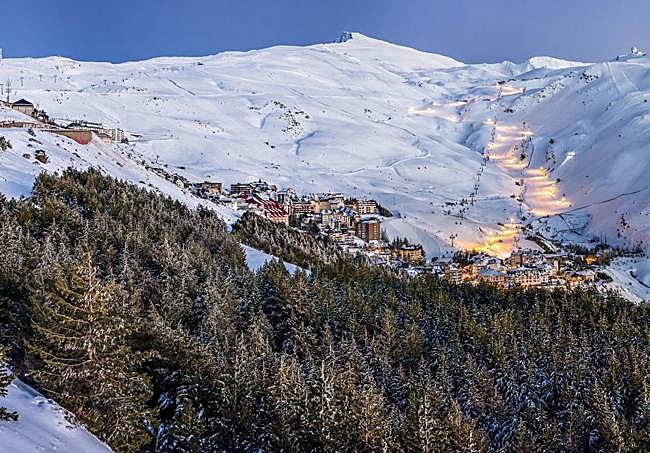
To the south-east of the city rises the Sierra Nevada. In winter, it becomes a ski resort with more than 100 kilometres of pistes, and on some evenings skiers can carry on under the stars.
Once the snow melts, the slopes open up to hikers, whose trails lead past mountain lakes and across alpine meadows, and to paragliders and wildlife watchers too. The villages of the sierra are the place to refuel afterwards, with hearty mountain cooking and a warm welcome.
On the far side of the range, the Alpujarra spills down the southern slopes. Villages such as Pampaneira, Bubión and Capileira cling to the hillside, while irrigation channels still carry water to the terraced fields below. The mountain air here has long been used to cure ham, most famously in Trevélez.
After the conquest, the Alpujarra also became the last stronghold of the Moriscos, Muslims who had been forced to convert to Christianity, and their influence lives on in local traditions, many of them bound up with legends handed down through the generations.
Down to the coast
On the way from the city to the sea, the road passes through the Lecrín Valley, a quieter corner of citrus groves and old mills. Its reservoirs are good for a paddle or a walk, although many people stop simply to enjoy the calm.
And then there is the Mediterranean. The Costa Tropical runs for 73 kilometres, alternating between cliffs, small coves and longer beaches, and takes its name from a mild climate that allows avocados and custard apples to grow here.
Divers come to explore the seabed, while castles keep watch over the water at several points, including Salobreña, where a Moorish fortress crowns a hill of whitewashed houses.
Food is a large part of the appeal. Motril, the largest town on this stretch of coast, gives its name to the local prawns, and sardines are grilled on ‘espetos’ on the beach. Further along, the other towns, from Almuñécar and La Herradura to Castell de Ferro, each have a character of their own.
From the Alhambra to the seafront, it adds up to a province that is hard to take in on a single trip, and one that gives visitors every reason to return.
More ideas for trips around Andalucía
