
Discover Andalucía
From tee time to tapas. A typical day on the Costa del Sol
A morning round of golf leaves the afternoon free for the beach and a fresh seafood lunch. Dinner is then a short drive away, whether in the hills, at a marina or in an old fishing village
Daryl Finch
Shortly after sunrise, the seafront promenades of the Costa del Sol belong to the locals. Joggers and dog walkers have them almost to themselves, a few fishermen cast their lines from the breakwaters, and tractors rake the sand smooth before the first sunbeds go out. On the roads heading inland, meanwhile, cars with golf bags in the boot are already on their way to the first tee.
It’s how many days begin on the 150-kilometre stretch of Mediterranean shoreline that runs through Malaga province from Nerja in the east to Manilva in the west. A round of golf in the morning leaves the rest of the day for the beach, and the evening for dinner somewhere with a view.
It’s a routine plenty of visitors fall into without planning it, and with mild weather for much of the year, it works almost as well in November as it does in June.
Early starts on the fairways
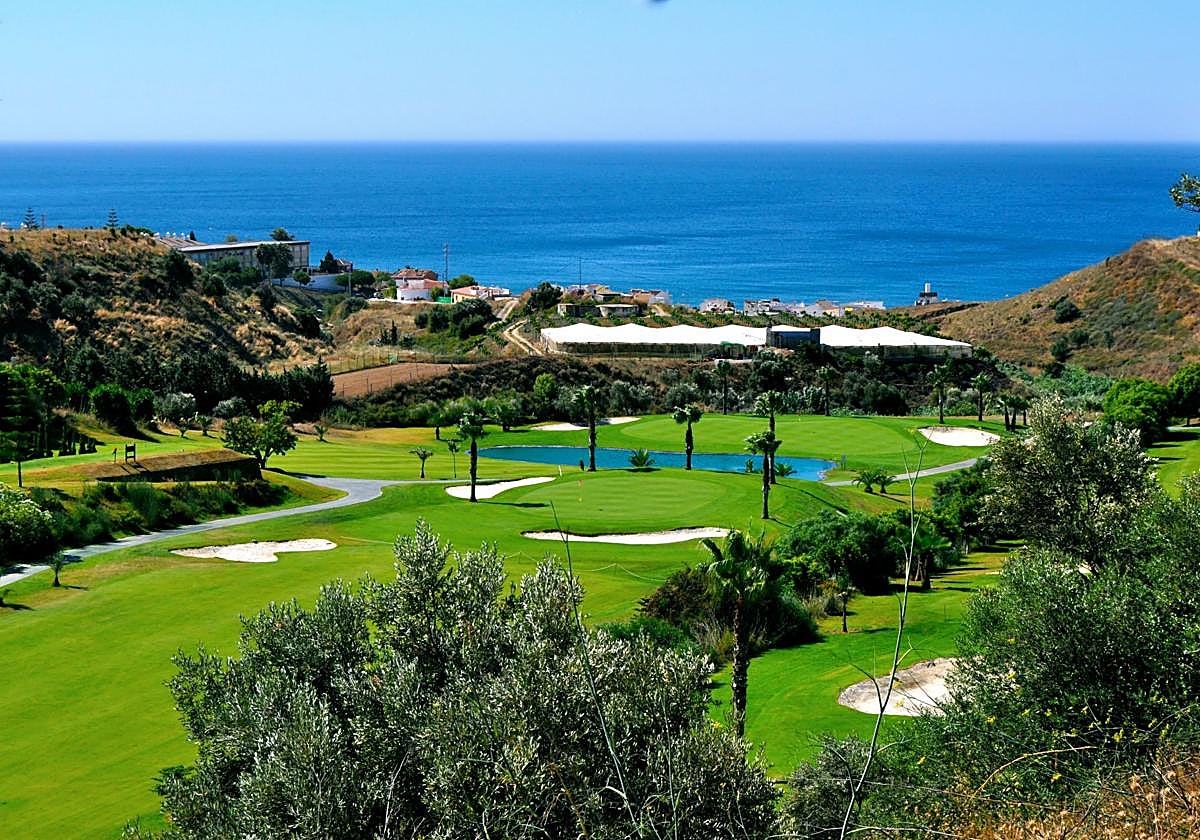
The Costa del Sol has long been nicknamed the Costa del Golf, and there are more than 70 courses between the Axarquía in the east and Sotogrande, just over the border in Cadiz province. Marbella alone has more than any other municipality in Spain, although the quieter eastern end has its own pair in Añoreta and Baviera, both designed by José María Cañizares, who played in four Ryder Cups for Europe.
Golfers here tend to tee off early. From October to April, the high season, northern Europeans swap frozen greens at home for mild, bright mornings, and many stay for weeks. In summer, when green fees drop, the first tee times of the day are the ones to book, before the heat builds.
Golf came to the coast early, but it was the tourism boom of the 1960s that made its name. That was when José Banús, the developer behind Puerto Banús, brought in the American architect Robert Trent Jones Sr. to design Las Brisas. It now shares the valley behind the port with Los Naranjos, another of his courses, lined with orange trees, and Aloha, the final work of the Spanish designer Javier Arana. Locals simply call the area the Golf Valley.
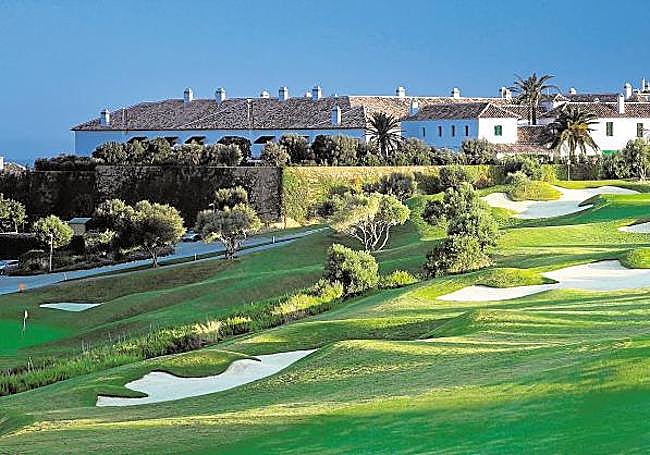
As a result, the coast has since become a regular stop on the international circuit. In 1997, Valderrama in Sotogrande staged the first Ryder Cup held in continental Europe, and in 2023 Finca Cortesín in Casares became the first Spanish venue for the Solheim Cup, the women’s equivalent.
Out on the fairways, though, it’s the setting that stays with most players. In the Golf Valley, La Concha, the rocky peak that rises behind Marbella, looms over the greens, while Finca Cortesín sits between the Mediterranean on one side and the mountains around Casares on the other. On a still morning, the only sounds are birdsong and the click of a well-struck drive.
Whichever course they choose, most golfers are back in the clubhouse by lunchtime, and that’s when the rest of the coast takes over.
An afternoon by the sea
By early afternoon, the beaches are filling up. This year, 45 beaches in Malaga province were awarded the Blue Flag, the international label for water quality and beach services, which is more than any other province in Andalucía. Marbella alone has eight and Malaga city seven, while Nerja, Torremolinos and Fuengirola have four each.
Which beach to choose depends on the kind of afternoon people have in mind. Families who want space tend to head for the long, flat sands of Torremolinos or Fuengirola, where a seafront promenade runs the length of the town. In Malaga itself, La Malagueta beach is a short walk from the historic centre, so a visit to the Picasso Museum, in the city where the artist was born, can easily end with a swim.
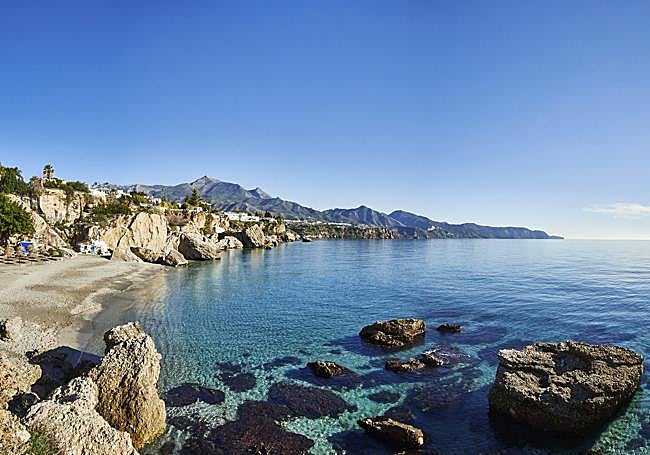
Those looking for something wilder go east instead, to the coves of Maro near Nerja. They shelter beneath cliffs in a protected natural area, and kayaks set off from nearby Burriana beach to reach the ones that can only be seen from the water, including a spot where a waterfall drops straight into the sea.
Near Marbella, the beach at Cabopino feels far quieter than those in town, as it’s backed by the Dunas de Artola, a protected dune system that walkers cross on wooden boardwalks. At the western end of the coast, meanwhile, the darker sand and calmer water at Sabinillas in Manilva offer a more relaxed alternative to the busier resorts.
Wherever they lay their towels, most beachgoers break up the day with a long, late lunch, often at a chiringuito, the beach restaurants found on almost every stretch of sand. La Carihuela, the old fishermen’s quarter of Torremolinos, is one of the best places to try freshly caught seafood. In the 1950s, it was where the Costa del Sol’s tourism boom began, and every 16 July, the local fishermen still carry a statue of the Virgen del Carmen, their patron saint, out to sea on a decorated boat.
After lunch, the hottest hours are spent in the shade. As the heat eases, some swap the sunbed for the Senda Litoral, a coastal path designed to link the whole shoreline from Nerja to Manilva. Wooden boardwalks carry it from La Cala de Mijas to Cabopino, and between Rincón de la Victoria and Malaga it hugs the cliffs and passes through old railway tunnels. The last gaps, such as the stretch between Casares and Estepona, are now being closed.
For many visitors, though, the best months for a day like this are those either side of summer. In spring and autumn, the days are warm without the heat of July and August, and the beaches are quieter.
Dinner with a view
The coast comes back to life in the early evening, when families head out for an unhurried stroll along the seafront. Dinner rarely starts before ten, so there’s plenty of time for a short drive first.
Some head uphill. Mijas Pueblo, a white village about 430 metres above Fuengirola, is at its best in the hour before sunset, when the gardens beside its old walls look out over the coast and, on clear days, across to the mountains of North Africa. Once the lights come on below, dinner is only a short walk away through its narrow streets. Benahavís, seven kilometres inland from Marbella, is a small town of around 6,000 people with an unusual number of restaurants for its size, which is why it’s known as the coast’s dining room. With eight golf courses in the municipality as well, it suits those who played there that morning.
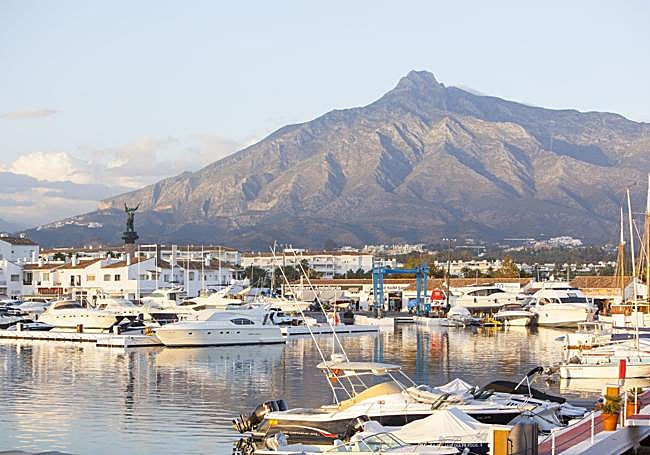
Others stay by the water. In Benalmádena, crowds gather around the bars and restaurants of Puerto Marina, while the exclusive, luxury Puerto Banús is the place to eat with the superyachts moored a few metres away. At the far western end, Puerto de la Duquesa in Manilva is smaller and calmer, with the Rock of Gibraltar on the horizon on clear evenings.
Many visitors, however, would rather spend the evening in an old town. Marbella’s whitewashed lanes lead to the Plaza de los Naranjos, a square lined with orange trees, and Estepona’s old town, nicknamed the garden of the Costa del Sol, has thousands of flowerpots on its walls, each street keeping to its own colour, and more than 50 large murals across town.
Back out east in Nerja, the evening crowd gathers on the Balcón de Europa, a promenade on a headland above the sea that is said to have been named by King Alfonso XII during a visit in 1885. Back in Malaga, the narrow streets around the cathedral are lined with tapas bars, and the terraces are rarely full before ten.
Wherever they end up, the only rush is to finish dessert before midnight, as the first tee is only a few hours away.
Read more about what to do around Andalucía
