
Malaga province
Copper forests and fireside feasts. The Costa del Sol shows its alternative side in autumn
Once the summer crowds have started to thin, Malaga province's interior comes into its own, from chestnut forests turning copper in the Genal Valley to wineries and mountain inns serving the flavours of the season
SUR
Most visitors know the Costa del Sol for its summer beaches, but autumn may be the best time to understand Malaga province. The days are still warm enough for lunch by the sea, yet the crowds have thinned, and a short drive inland reveals a different landscape, where chestnut forests change colour, the grape harvest has just come in and stews return to the menu.
On the coast, autumn brings a change of pace rather than an end to the season. The sea stays warm well into October, yet the beaches are quieter, and ‘chiringuito’ beach restaurants still serve ‘espetos’, sardines skewered on a cane and grilled over embers in an old fishing boat filled with sand.
The copper forest
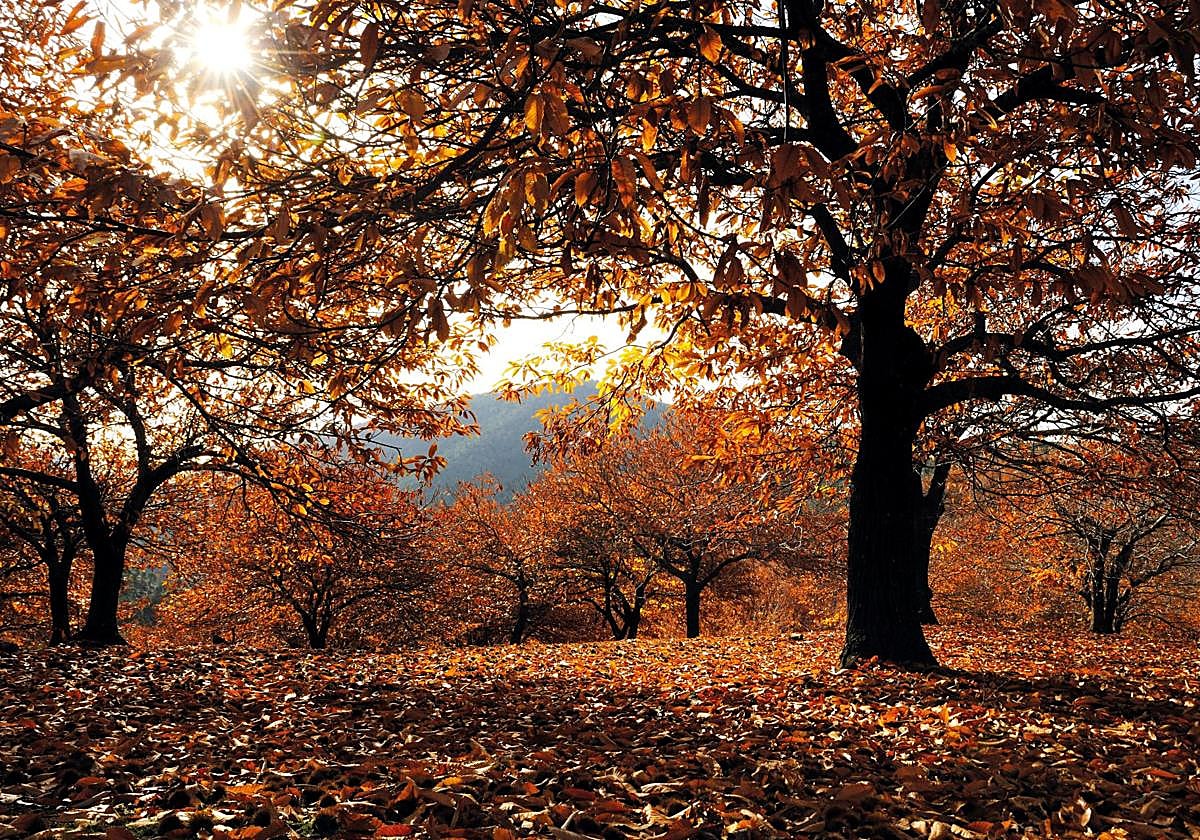
Inland, though, autumn transforms the landscape itself. In the mountains between Ronda and the western end of the Costa del Sol, the Genal Valley puts on one of the most striking displays in southern Spain from late October.
As temperatures drop, its chestnut trees turn shades of ochre and copper, giving the area its local name, the ‘Bosque de Cobre’, or copper forest. Walking trails link white villages such as Pujerra, Igualeja and Cartajima, and several viewpoints look out over the treetops.
Chestnuts are central to the local economy, with the valley producing up to four million kilos in a normal year, and in season they appear in local dishes and on sale in village shops.
Autumn rain also brings mushrooms. Júzcar and Cortes de la Frontera hold mushroom days in November, and Júzcar has its own mushroom reserve, where foragers can gather with a permit from the town hall.
Wine country
A little further north, Ronda is the gateway to the Serranía de Ronda. The town itself, with its old quarter perched on either side of a deep gorge, deserves a day of its own, but the surrounding mountains have plenty to offer at the table.
Here, local cooking revolves around ‘platos de cuchara’, or spoon dishes, as Spaniards call their soups and stews. A typical example is the potaje, a stew of chickpeas or beans with seasonal vegetables, served with a glass of mountain wine.
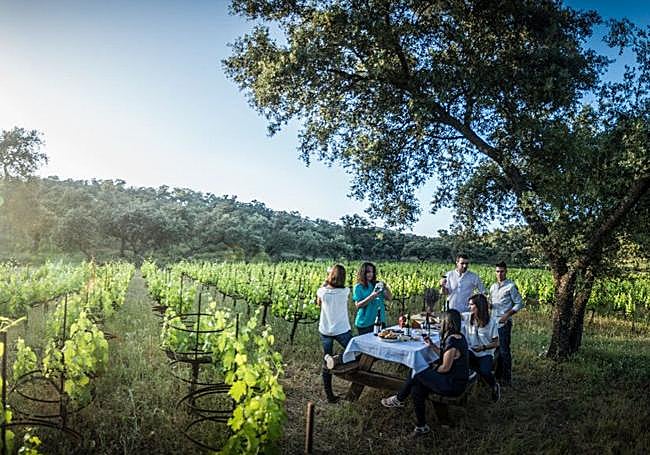
That wine is now a reason to visit in its own right. The Ronda and Malaga Wine Route brings together wineries across four production areas, from the Serranía de Ronda to the Axarquía, and with the harvest just over, autumn is a good time to go.
Visitors can tour vineyards and cellars, taste reds, whites and sweet wines, and pair them with local produce. Wines from the Serranía are sold under the DO Sierras de Málaga label, while the older DO Málaga has long been known for its sweet wines.
Heritage and outdoor adventure
Further north-east, Antequera is where the menu turns heartier as the weather cools. Kitchens here serve ‘guiso de habas con jamón’, a broad bean stew with cured serrano ham, and a hot soup of wild asparagus, potato and egg.
Mornings, meanwhile, start with a mollete, a soft, flat bread roll eaten with extra virgin olive oil and tomato or spread with manteca, a seasoned pork lard, before the walk up to the Moorish Alcazaba, which looks out across the plain. Nearby, the vineyards of Mollina, home to Bodega Tierras de Mollina, offer another stop for wine lovers.
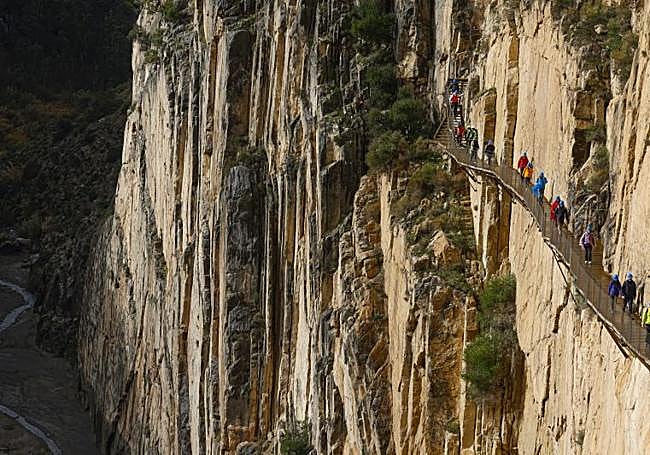
From here, the Guadalhorce river cuts south through the mountains towards Malaga city, creating one of the province’s best-known outdoor experiences: the Caminito del Rey.
This walkway, pinned to the walls of the Desfiladero de los Gaitanes gorge, has a new attraction this year in the form of a 110-metre suspension bridge, billed as the longest in Spain, which hangs around 50 metres above the gorge. Cooler autumn temperatures make this an ideal time to walk the route, although tickets must be booked in advance.
Nearby, the town of Álora, crowned by its castle, is the place to try ‘sopas perotas’, a thick soup of bread and vegetables that began as a way of using up leftovers. Elsewhere in the Guadalhorce Valley, cooking is homely and generous, and the best value is often the ‘menú del día’ set lunch most restaurants offer on weekdays.
Mountain inns and villages
Closer to Malaga city, the hills that rise directly behind it, the Montes de Málaga, form a natural park crossed by walking trails through pine woods. They are also home to one of the province’s most typical meals.
The ventas here were once roadside inns for travellers crossing the mountains, and on a cool autumn day people come as much for the atmosphere as for the food, eating off paper tablecloths beside an open fire. The dish to order is migas, breadcrumbs fried slowly with garlic and olive oil, which shares the menu with hearty stews and grilled meat.
The route ends east of the city in the Axarquía, where hills and vineyards surround white villages whose narrow streets recall nearly eight centuries of Moorish rule in Andalucía. Hilltop Comares, with the remains of its castle, has views across the whole area, while Cómpeta, Sayalonga and Almáchar are all on the wine route and known for sweet wines made from muscat grapes.
The same grapes are dried in the sun to make the area’s raisins, which have their own protected designation, and a bag of them or a jar of local honey makes a good souvenir.
Seasonal festivals
Autumn has its own festive calendar, too. At the start of November, towns across the province celebrate the chestnut harvest, handing out roast chestnuts in village squares at events such as Ojén’s Fiesta del Tostón and the chestnut festivals in Arriate and Alcaucín. In Malaga city, the smell of chestnuts roasting at street stalls is one of the first signs that the season has changed.
Many inland towns also celebrate their produce with food festivals held at different points in the year. Each tends to focus on what its area does best, whether that is wine, olive oil, cured meats or cheese from the Malaga goat, a native breed, with themed menus, tastings and dishes created by local chefs.
Thanks to good transport links, the interior is within easy reach of the coast, so a morning by the sea can just as well end with a walk through the copper forest or lunch at a mountain venta.
More ideas of what to see around Andalucía
