
Discover Andalucía
Andalucía. Something for every generation
The region welcomed 7.1 million family tourists in 2025, 4.5 per cent more than the year before, drawn by beaches, mountains, theme parks and monuments that cater for all ages
Daryl Finch
Planning a holiday that suits a four-year-old and a 15-year-old at the same time is hard enough. Add a set of grandparents who would rather see a cathedral than a water slide, and most destinations start to struggle.
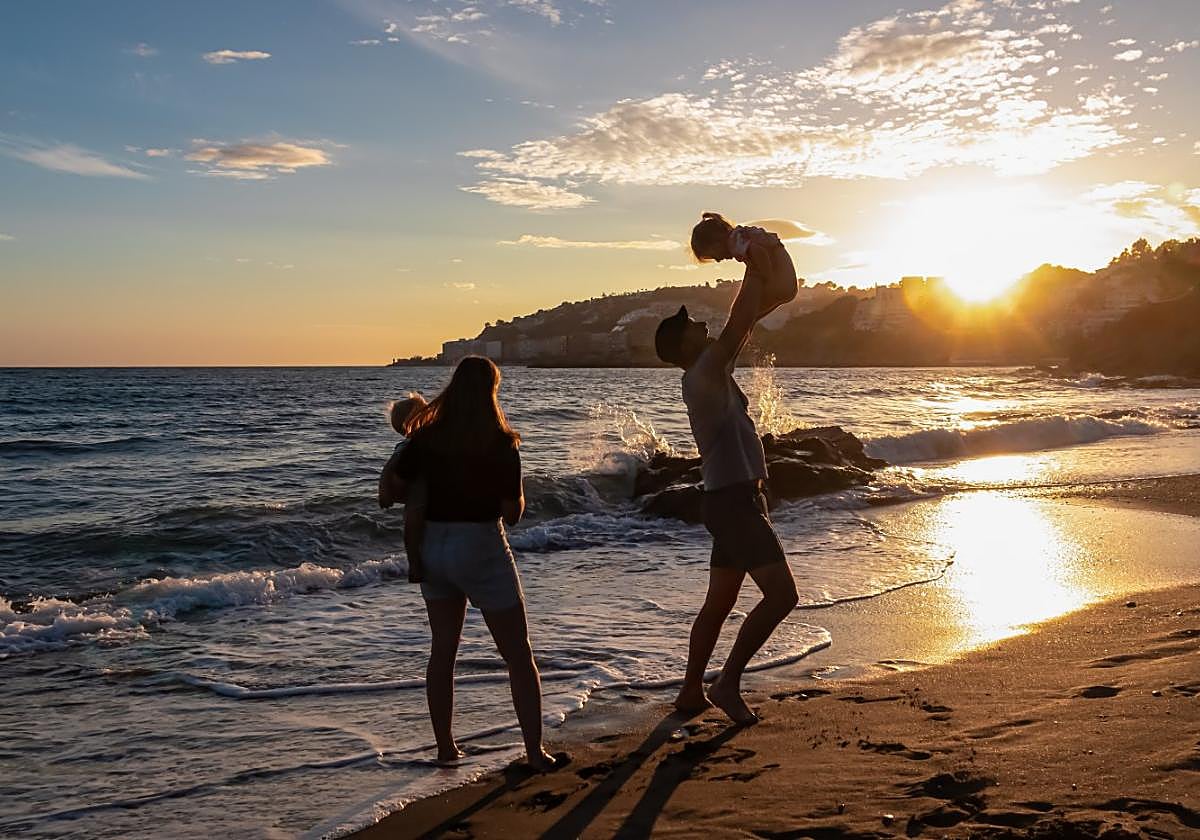
Andalucía is an exception. The region has established itself as one of Spain's leading destinations for family holidays, and the figures back that up: in 2025 it welcomed 7.1 million family tourists, 4.5 per cent more than the year before.
Families are demanding visitors. They need accommodation, restaurants, transport and activities that are geared to children, and they tend to come back only when all of that works. Children also have a big say in where the family goes, and their wish lists usually feature the beach, the countryside, sport and theme parks. Andalucía is strong in every one of those areas.
On top of that, the climate allows outdoor plans for most of the year. There are protected landscapes to explore on foot or by bike, white villages where families can stay in rural houses and leisure parks for every taste. For the adults, and for any children with a curious streak, there are also museums, monuments and cultural routes that lead into corners of the region full of tradition and good food.
Wherever a family chooses to base itself, there is something within reach for every member of it, from the youngest to the oldest.
Natural spaces
For a family that likes to spend the day outdoors, Andalucía's protected landscapes are the obvious place to start. The region has a large network of routes for walking, cycling and horse riding, and plenty of them are short enough for little legs.
In Cadiz, the Sierra de Grazalema is home to the pinsapo, a Spanish fir that survives in only a few mountain ranges, and griffon vultures can often be seen circling above its limestone peaks. Across the provincial border, the same rare trees cover the slopes of the Sierra de las Nieves in Malaga province. It was declared a national park in 2021, and its gentler forest trails suit families with younger children.
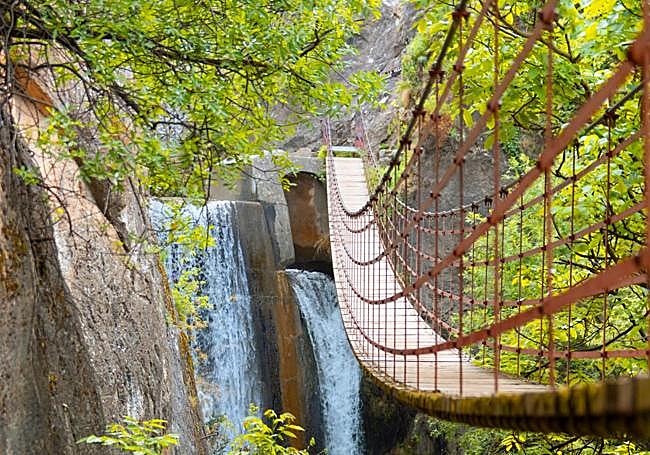
Teenagers looking for something more adventurous should head to Los Cahorros de Monachil, just outside Granada. Here the path squeezes through a narrow gorge, ducks under overhanging rock and crosses the river on a long hanging footbridge that sways underfoot.
Further east, the Sierra de Cazorla, Segura y Las Villas in Jaén is the largest protected area in Spain. Its best-known walk follows the Borosa river past waterfalls and along wooden walkways fixed to the side of a gorge, with deer and mountain goats as frequent companions.
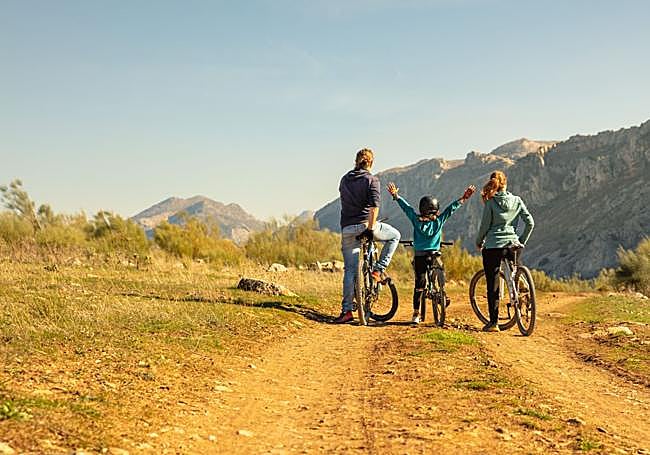
For grandparents, or anyone who would rather not climb, the Vías Verdes are ideal. These old railway lines have been turned into flat paths for walking and cycling, passing through tunnels and over viaducts, and several former stations now serve as rest areas. On the Vía Verde de la Sierra, between Olvera and Puerto Serrano, walkers and cyclists pass the Peñón de Zaframagón, a crag that is home to a large colony of griffon vultures.
After a day outdoors, the region's rural accommodation is the natural place to rest. The Pueblos Blancos of Cadiz are whitewashed villages perched on hilltops, while in the Alpujarras of Granada and Almeria, flat-roofed villages step down the southern slopes of Sierra Nevada. In Huelva, the town of Aracena in the Sierra de Aracena sits above the Gruta de las Maravillas, a cave of underground lakes that first opened to visitors more than a century ago, and the Sierra Norte de Sevilla offers quiet villages surrounded by oak woodland.
In the Serranía de Ronda in Malaga province, meanwhile, the village of Júzcar was painted blue in 2011 to promote the film The Smurfs, and today it offers plenty of activities aimed at children.
Doñana should also be on any family's list. Spread across Huelva, Seville and Cadiz, it is one of Europe's most important wetlands and a Unesco World Heritage site. Guided tours cross dunes and marshland into the pine forest, with a good chance of seeing flamingos and deer. Spotting an Iberian lynx is rare, but the possibility keeps children's eyes fixed on the window. Afterwards, the nearby village of El Rocío, with its sandy streets and horses tied up outside the bars, feels like a film set.
Younger children will also enjoy the farm schools and nature classrooms found across Andalucía, where they can feed animals and learn how bread or cheese is made. When night falls, the dark skies of the Sierra Sur de Jaén and Sierra Morena are ideal for stargazing, and local operators run sessions with telescopes for beginners.
Finally, there is the world underground. Besides the Gruta de las Maravillas, the Cueva de Nerja in Malaga province is famous for its vast chambers, while the Cueva del Tesoro in Rincón de la Victoria comes with a legend of hidden Moorish treasure. In Almeria, the Cuevas de Sorbas run guided visits with helmets and headlamps, which tend to win over even the most reluctant teenager.
Sun, beaches and snow
With two seas to choose from, Andalucía's coastline has the right beach for almost every family. On the Mediterranean side, the Costa del Sol, the Costa Tropical and the Almeria coast offer calm water and promenades lined with chiringuitos. On the Atlantic, the Costa de la Luz in Cadiz and Huelva has long, wide beaches backed by dunes and pine woods.
While the youngest members of the family might be happy with a bucket and spade, older children can try something new, as sailing, kayaking and paddleboarding schools along the coast run beginner courses designed for them. Around Tarifa, where the wind blows for much of the year, teenagers can take their first kitesurfing lessons at one of Europe's best-known spots for the sport.
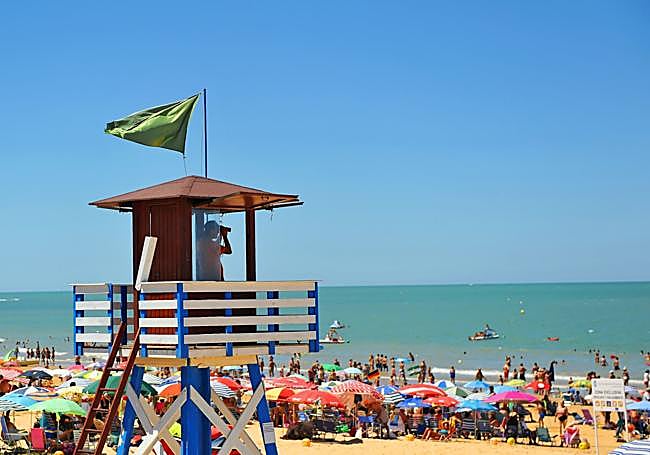
The coast offers more than just swimming, though. Some beaches allow horse riding at certain times, and a ride along the water's edge at sunset is the kind of memory children hold on to. In Sanlúcar de Barrameda, the horse races held on the beach every August have been running since 1845 and draw spectators of all ages.
From Tarifa, boats head out into the Strait of Gibraltar to watch whales and dolphins, with the mountains of Morocco on the horizon. Common and bottlenose dolphins and pilot whales are spotted regularly, and in summer there is a chance of orcas too.
Back on land, many hotels along the coast are built around families, with children's clubs, pools with slides and evening entertainment that gives parents a little time to themselves.
Winter brings a different kind of fun. Sierra Nevada, near Granada, is the southernmost ski resort in Europe, and it has made family skiing a priority, with ski schools for children and gentle slopes for beginners. Those who would rather not strap on skis at all can head to the Mirlo Blanco activity park, where sledging and snow tubing let everyone enjoy the snow. Grandparents, for their part, can take the cable car up the mountain for lunch with a view.
From Sierra Nevada, the coast is little more than an hour's drive away, so in spring it's even possible to ski in the morning and walk on the beach in the afternoon.
Leisure and theme parks
When the children want something louder than birdsong, Andalucía's leisure parks are ready for them, and several have as much to offer the adults.
The Parque de las Ciencias in Granada is a good example. This interactive science museum is designed to be touched and tested, and it sparks curiosity in visitors of every age. Children can wander through a tropical butterfly house, watch the night sky in the planetarium or meet animals from distant ecosystems in its Biodomo, while grandparents often find themselves just as absorbed as the youngsters. It's also a reliable plan for the occasional rainy day.
In Seville, Isla Mágica occupies part of the Isla de la Cartuja, the site of Expo 92. Its themed areas recreate the great voyages of discovery, with rollercoasters for thrill-seekers, gentler rides for younger children and live shows throughout the day. In summer, the adjoining water park adds another reason to stay until closing time.
For something completely different, the Tabernas desert in Almeria is the place. In the 1960s and 1970s its dusty landscapes stood in for the American Wild West in dozens of westerns, and two theme parks now keep that history alive. Oasys MiniHollywood combines a realistic western town, complete with saloon, sheriff's office and staged shoot-outs, with a zoo reserve that is home to animals from around the world. Nearby, Fort Bravo Texas Hollywood has the largest western film sets in Europe, and they are still occasionally used for filming today.
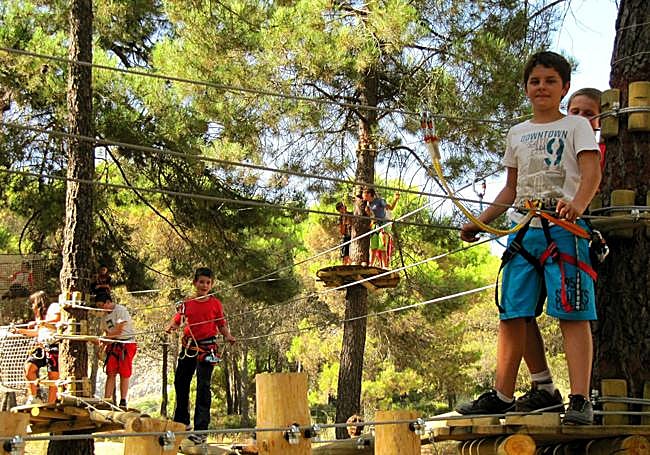
Elsewhere, active families can take to the treetops, where rope bridges, nets and zip lines are laid out in circuits of increasing difficulty. Younger children can start close to the ground, while teenagers and their parents test their nerve higher up. Among the best-known adventure parks are Aventura Amazonia in Marbella, Aventura Entrepinos in Víznar, near Granada, and El Bosque Suspendido in Bollullos de la Mitación, near Seville.
And on a hot day, few plans beat a water park. The region has plenty of them, including Aqualand in Torremolinos and Aquamijas in Mijas, both within easy reach of the Costa del Sol resorts.
Discovering the natural world
Andalucía's zoos, aquariums and botanical gardens bring families face to face with the animal and plant kingdoms, and they are often where younger children are happiest.
Nowhere are they more concentrated than in Malaga province, where the Costa del Sol has enough animal parks to fill a fortnight's holiday. Bioparc Fuengirola is the natural starting point. It recreates tropical forests from Africa and Asia, so animals are seen in settings close to their natural habitat. At Selwo Aventura in Estepona, meanwhile, visitors cross the reserve by safari truck, which gives older children the feeling of a real expedition.
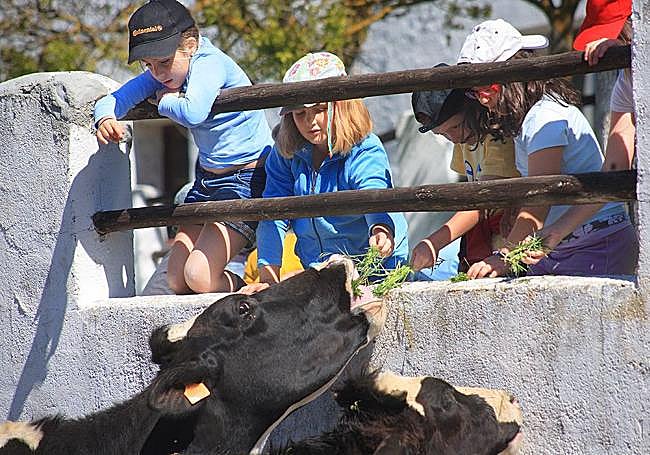
In Benalmádena, they've managed to fit three attractions into one town. At the Mariposario, hundreds of butterflies fly freely around visitors, while down at the marina Sea Life takes families beneath the surface. Selwo Marina, where sea lions and penguins are among the favourites, completes the set.
Next door in Torremolinos, the residents of Crocodile Park are as close as anyone would want them, while, for a calmer contrast, the Jardín Botánico Molino de Inca grew up around an old flour mill and its springs. There, children tend to make straight for its hedge maze.
Inland, Lobo Park near Antequera lets families see wolves in a large woodland reserve, with a farmyard of more familiar animals for the smallest visitors.
Across the provincial border in Granada, the seaside town of Almuñécar has a cluster of its own. The El Majuelo botanical and sculpture park surrounds the remains of an ancient fish-salting factory, so a stroll among the palms comes with a history lesson attached. A short walk away, the Loro Sexi bird park keeps colourful parrots in gardens at the foot of the town's castle, and the Acuario de Fauna Mediterránea introduces children to the creatures living just off the beach.
Further east in Almeria, the Aquarium Costa de Almería in Roquetas de Mar makes a good alternative to a day on the sand.
Seville offers two very different experiences. In the city, the Acuario de Sevilla follows the route of Magellan and Elcano's first voyage around the world, which set sail from the Guadalquivir five centuries ago. Out in the province, the Reserva Natural del Castillo de las Guardas can be explored by car, with animals roaming large open enclosures.
The age of exploration is also the theme in Huelva. At La Rábida, in Palos de la Frontera, the Parque Botánico José Celestino Mutis is filled with plants from the Americas, and it makes an easy pairing with the nearby Muelle de las Carabelas, where full-size replicas of Columbus's ships can be explored from deck to hold.
In Cadiz province, the Zoobotánico in Jerez de la Frontera and the Zoo de Castellar both combine animals with conservation work. And in Cordoba province, the hamlet of Zagrilla near Priego de Córdoba is home to the Jardín Micológico La Trufa, devoted to mushrooms and fungi, a subject that turns out to fascinate children far more than parents expect.
History
This is where the grandparents often take the lead, although the children are rarely far behind. Andalucía has been home to many cultures and civilisations over the centuries, and each left treasures behind.
Several of them are Unesco World Heritage sites, and three cities hold the best known: Granada (the Alhambra and Generalife), Cordoba (the Mezquita and Medina Azahara) and Seville (the cathedral, the Alcázar and the Archivo de Indias).
Elsewhere, the list takes in the Renaissance towns of Úbeda and Baeza in Jaén, prehistoric rock art in Jaén, Granada and Almeria, and the Antequera Dolmens in Malaga province, built more than 4,000 years ago.
There is no shortage of hooks for younger visitors. The Alhambra's fountains and courtyards feel made for exploring, and teenagers who have watched Game of Thrones may recognise the water gardens of Seville's Alcázar from the series.
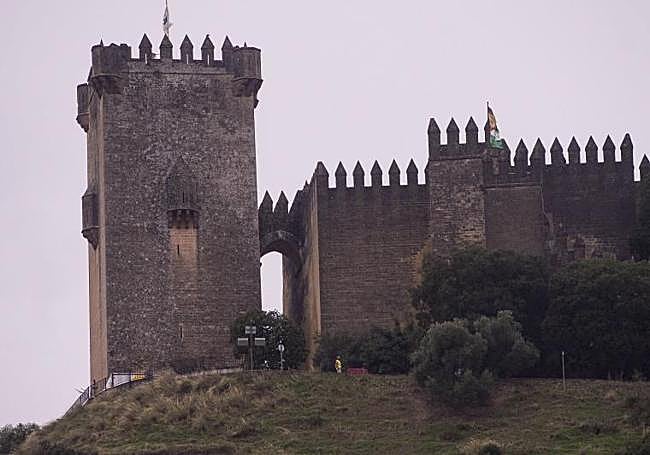
Castles are another sure success. With their towers, walls, dungeons and underground passages, Andalucía's fortresses carry families back to a time of knights and princesses, nobles and pirates.
The Castillo de Almodóvar del Río in Cordoba province, another Game of Thrones location, is a good place to start. Alongside guided tours, it runs theatrical visits in which costumed actors bring its past to life, and children can climb its towers for views over the surrounding countryside. The Castillo-Palacio de La Calahorra in Granada has a surprise of its own. From outside it looks like a plain fortress, but behind its walls lies an Italian Renaissance courtyard.
Other castles worth a visit include Segura de la Sierra in Jaén, which crowns a hilltop village, and the Castillo de Santiago in Sanlúcar de Barrameda, which looks out towards the mouth of the Guadalquivir.
Then there is the Castillo de Gibralfaro in Malaga, where families can walk the ramparts high above the city. Below lie the cathedral, the port and the beaches, and beyond them the coast and the mountains, a view that grandparents and grandchildren can enjoy side by side.
Which brings us back to that four-year-old, the 15-year-old and their grandparents. In Andalucía, nobody in the family has to compromise for long. With so much on offer, the hardest part of a family holiday in the region may simply be deciding where to begin.
With the collaboration of the Ministry of Tourism of the Regional Government of Andalucía.
