
Immigration
The White House blames Spanish PM Sánchez's migration policies for Ceuta crisis
Washington criticises Spain's immigration model, while Marco Rubio reaffirms his support for Moroccan sovereignty over Western Sahara
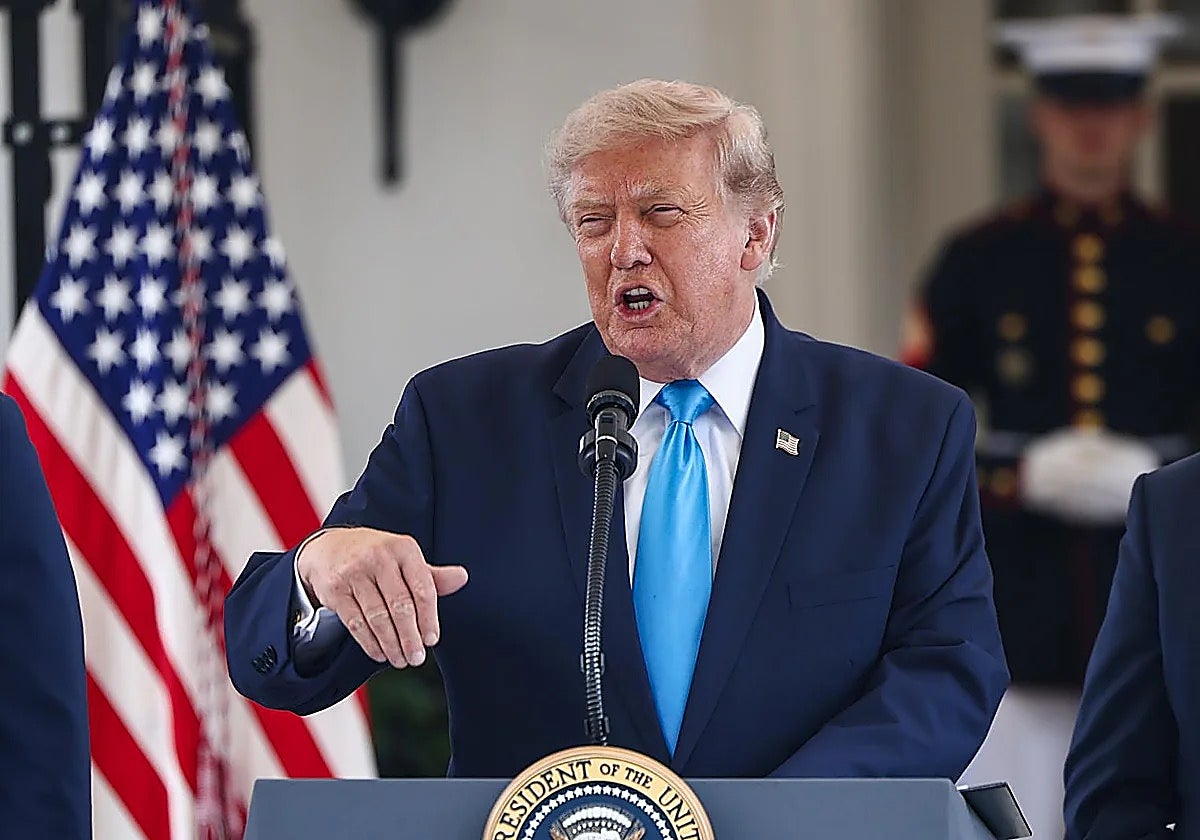

The White House has blamed the immigration policies of Pedro Sánchez's government for the mass influx of people from Morocco into Ceuta and has ... warned that Spain risks jeopardising its very survival if it does not change course.
"President Trump has long been warning Europe about the consequences of continuing to pursue far-left globalist policies, such as facilitating mass migration," White House spokesperson Anna Kelly said in an email response to ABC.
"Spain and other countries that have adopted this destructive philosophy should rectify their course immediately or risk their own demise," Kelly stated.
Related story

Some 49,000 migrants have managed to enter Ceuta, most by land, although another large group attempted to swim across, over the past few days. Spain's Interior Ministry has reported the discovery of 24 bodies in the sea. The Guardia Civil acknowledged the overwhelming workload of the operation.
The government announced that it was sending military units to reinforce the security forces. The regional government of Ceuta also asked the central government to close the border and declare a national emergency.
The White House's condemnation coincided with Throne Day in Morocco, the Alawite monarchy's main institutional celebration. Hours earlier, Secretary of State Marco Rubio had issued a message in which he was particularly complimentary of King Mohammed VI and Morocco's role.
Rubio congratulated the monarch on the anniversary of his accession to the throne and recalled that the US and Morocco have enjoyed a relationship spanning almost 250 years, the longest-standing in US diplomatic history.
He also took the opportunity to reaffirm one of Washington's key positions in support of Rabat: the recognition of Moroccan sovereignty over Western Sahara.
"Under President Trump's leadership, the US has been unequivocal: we recognise Moroccan sovereignty over Western Sahara," he stated.
Rapprochement with Rabat
The message confirmed Morocco's rapprochement with the second Trump administration, underpinned by military cooperation, security in the Sahel, the Abraham Accords and, above all, the issue of the Sahara.
Just this week, Trump announced that the 1,055-kilometre road between Tiznit and Dajla, which crosses much of the territory, will be named after him. The president thanked King Mohammed VI for the gesture and expressed his hope to travel along it one day, although the Moroccan authorities had not yet officially confirmed the name change.
The road, built at a cost of approximately one billion dollars, forms part of Rabat's strategy to integrate Western Sahara economically and link it with Mauritania and West Africa. It passes through El Aaiún and ends in Dajla, where Morocco is building a major Atlantic port with the aim of becoming a regional commercial and logistics hub.
The choice of the name 'Trump' carries clear political implications. In December 2020, during his first term in office, the president recognised Moroccan sovereignty over Western Sahara. In return, Rabat normalised its relations with Israel and joined the so-called Abraham Accords to recognise Israel.
The decision marked a break with decades of US policy and represented one of Morocco's greatest diplomatic successes. Since then, Rabat has been seeking to garner international support for its proposal for autonomy under Moroccan sovereignty, as opposed to the independence advocated by the Polisario Front and backed by Algeria.
This rapprochement with Washington also coincides with Morocco's bid to host the 2030 World Cup final alongside Spain and Portugal. Rabat is seeking support for the decisive match to be played at the future Hassan II stadium, near Casablanca, in competition with the bid from Madrid's Santiago Bernabéu.
The Moroccan stadium, designed to accommodate over 100,000 spectators, forms part of a broader strategy of investment and sports diplomacy through which King Mohammed VI aims to strengthen the country's international standing.
![[]](http://static.vocstatic.com/voc26/latest/assets/images/favicon/surinenglish/apple-touch-icon-57x57.png)