
Earthquake Venezuela
‘We’re here to rescue people alive’: the Spanish military emergency unit’s race against time in La Guaira
Sixty-one Spanish military personnel landed in a Venezuela plunged into darkness to search for survivors where the locals had long since given up hope of finding anyone alive. The urban search and rescue team from the Military Emergency Unit pulled two people from the crushed concrete

Jorge Benezra
La Guaira (Venezuela)
Alberto Vázquez Rodríguez did not sleep on the flight across the Atlantic. The sergeant from Spain's Military Emergency Unit (UME), attached to the Public ... Communications Office, spent the hours leading up to take-off at Torrejón Air Base scouring open-source information. He wanted to know what they were up against.
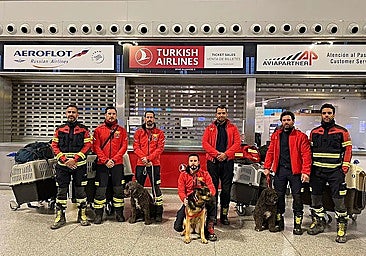
Sixty-one members of the Second Emergency Response Battalion, based in Morón de la Frontera, were travelling on an Airbus A330 to a country that had just been split in two by a double earthquake. They arrived in the morning at an airport three and a half hours from the disaster zone, but it took them nine hours to reach their destination due to gridlock on the roads. They slept for a few hours and by a quarter past four the following morning they were already above the rubble of La Guaira.
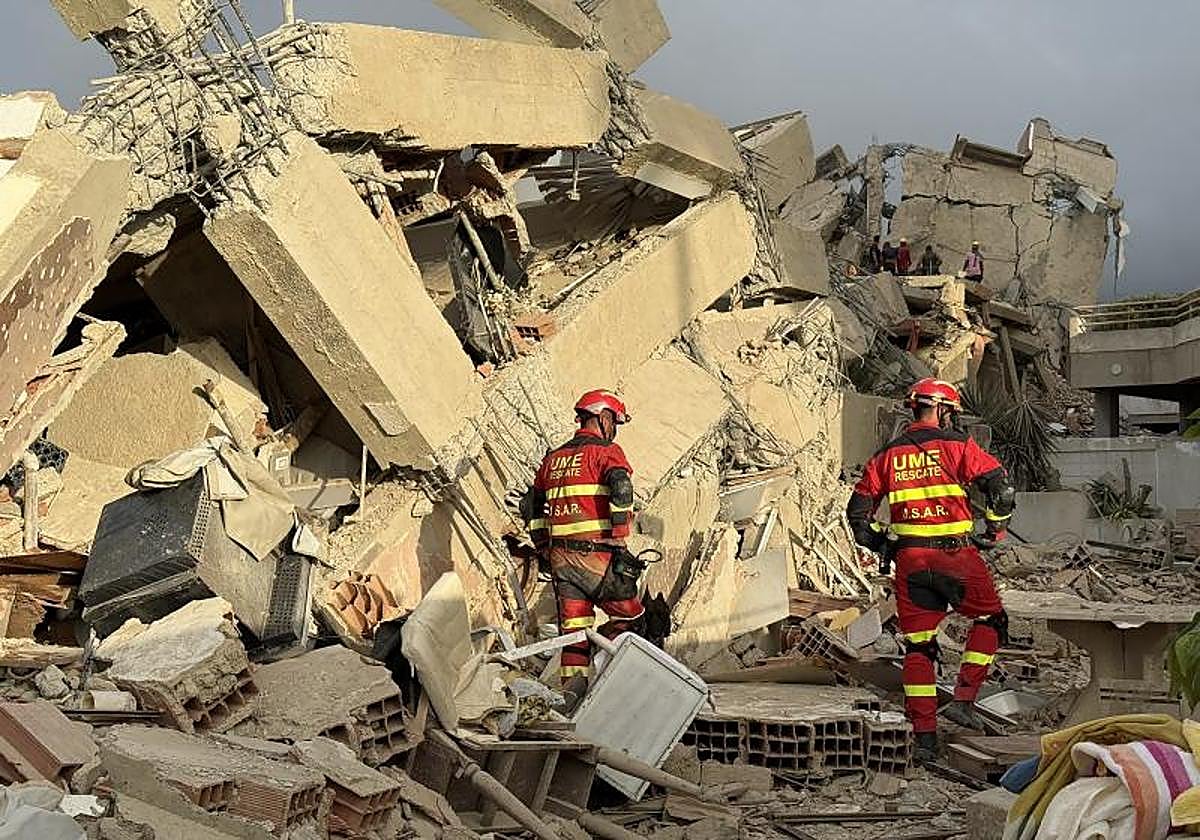
“Without rescuers, there is no rescue,” says Vázquez, his uniform covered in grey dust. All around him, collapsed sandwich-type buildings, concrete slabs piled high, leaving no room to breathe. The UME brought in canine units, rescue cameras, geophones, ultra-wideband sensors and drones.
Related story
They brought state-of-the-art technology to a place where local residents were digging with their bare hands. But, above all, they brought a strict protocol certified by the UN.
Two polytechnic engineers from the Army assess the structure and give the all-clear. Only then do the dogs go in. Then the sensors. Then the men. The Insarag certification they have held since 2011 is not just a piece of paper hanging on a wall in Seville. It is the guarantee that they know how to navigate hell without becoming victims themselves.
The contrast on the ground is stark. While the Venezuelan government took 48 hours to militarise the area, international aid organisations took charge of the operational side of things. Yakseel Contreras, a young man from Caracas who arrived looking for friends’ relatives, views the Spanish deployment with both relief and frustration.
“The local rescue efforts were completely inefficient in the early days,” he says. “Many firefighters, due to a lack of equipment, supplies and instructions, don’t know how to assess a building. The Spanish team arrived and their work has been impeccable. They are well-trained military personnel who know what they’re doing.”
Sergeant Eloy Caballero, a firefighter from Caracas with 35 years’ service who volunteered despite having retired in 2018, acknowledges the limitations.
“The situation has been precarious. We’re working with our bare hands,” he admits. “Thanks to the organisations that came from other countries, we’ve saved more lives than we expected through our joint efforts.”
Caballero, who experienced the 1999 mudslide in the same area, knows that this time the enemy is not water, but the dead weight of the buildings. The lack of a culture of earthquake preparedness has taken a very heavy toll. People headed down to the coast on the first day looking to help, but ended up blocking the access roads and hindering the passage of heavy machinery.
“Thanks to the organisations that came from other countries, we have saved more lives than we expected through our joint efforts”
In the Marina Grande residential area, the Mi Club building was reduced to a pile of rubble. José Antonio Villarreal Nieto, aged 74, lived there with his wife Sonia and his son Jesús. The local rescue workers who were there on the first day were categorical.
“There’s no one alive in there, absolutely no one,” they told them. Yoandys Villarreal, José Antonio’s daughter, travelled from Caracas on an odyssey only to hear that verdict. “They took away all my hope yesterday,” she says, surrounded by her aunt Francis Cueva and her cousin Peggy. “They told me: ‘There are no survivors, madam, that’s why there’s no machinery there anymore'.”
But the UME never gives up until the sensors indicate otherwise. The Spanish team deployed their listening equipment and detected what no one else had been able to hear. Four storeys down beneath concrete slabs, in a small corner that had once been the house’s bar, José Antonio was still breathing. He had survived thanks to a five-litre water bottle. His wife and son were not so lucky.
“When I arrived this morning, they told me there was a video - which, as we already know, is true - showing that he’s alive,” says Yoandys, her voice hoarse with thirst and exhaustion, as she asks passers-by for some cold water. “I don’t know how the rescue went, I don’t know how they got him out, because apparently there were no safety triangles. But my father is alive.”
Luis Miguel Ortiz Baeza, a non-commissioned officer with twenty years’ service in the UME and a veteran of missions in Haiti, Ecuador and Nepal, sums it up clearly. “Saving just one life means the objective has been achieved. When you save a life, you’re filled with the deep satisfaction of a job well done. Disasters strike those with the fewest resources. The pain is always the same in Haiti as it is in Ecuador.”
‘Saving just one life is enough to fulfil the objective. When you save a life, you are filled with the deep satisfaction of a job well done’
The first person to be rescued was Adelaida Terán, a 70-year-old woman trapped in the Edificio Arnedillo complex, located in the same area. Captain Javier Cruzado, a paramedic with the UME medical team, was the one who received her as she was brought to safety. His work begins where that of the rescue workers ends: stabilising, assessing and keeping people alive. For him, this is his third international earthquake deployment, following Turkey in 2023 and Mexico in 2017. “Saving lives is why we’re here,” says Cruzado. “More than any medal, any course, any recognition.”
Rescue of minors
But Cruzado is also familiar with the dark side. “The children are the hardest part,” he admits. “It takes a lot of training and a lot of psychological preparation, but as a parent and as a citizen, the children are the hardest part.” “It’s important for families to have their loved one and to bring closure to the grieving process,” adds Vázquez from the other end of the work area.
The biological clock is relentless. Once 72 hours have passed, the chances of survival plummet. The stench of decay hangs heavy over La Guaira. But Vázquez refuses to accept defeat. “There are always those small and great miracles that give us the confidence to keep fighting. The hope of finding survivors never fades.”
The local people have taken them to their hearts. “They never stop hugging us and thanking us,” says Vázquez. “The other day we stopped for a moment and people came up to us with tequeños. With everything they’re going through, they still find time to go out of their way for us.” Cruzado agrees: “We feel at home. Venezuelans are our brothers and sisters in every sense. They’re funny, cheerful and friendly. They’re just like people from Seville and the Canary Islands.”
“We feel right at home. Venezuelans are like brothers and sisters to us in every sense. They’re cheerful, lively and friendly. They remind us of people from Seville and the Canary Islands.”
Night falls over La Guaira and the streets are transformed into makeshift camps. Thousands of people are sleeping in the open, terrified by the aftershocks. Amid the darkness, the UME’s floodlights remain on. The dogs continue to sniff. The sensors continue to search for the faintest heartbeat beneath tonnes of rubble. The Spaniards came to search for life at the Caribbean’s largest ground zero. No one forced them to cross the ocean. And until they have lifted the very last stone, they will continue to search for the living.
![[]](http://static.vocstatic.com/voc26/latest/assets/images/favicon/surinenglish/apple-touch-icon-57x57.png)