
Employment
Technical jobs defy summer seasonality with higher salaries and greater stability than tourism
Maintenance roles account for 30 per cent of technical vacancies, as companies face increasing difficulties finding skilled workers

Tourism remains the undisputed driver of job creation in the summer. However, technical jobs are gaining ground and are beginning to defy the seasonality that ... characterises Spain's labour market.
Spain is facing a skills shortage affecting a number of occupations. Although the services sector has the largest shortfall of workers, according to data from the INE national institute of statistics, labour-market experts say that more than 100,000 industrial vacancies have gone unfilled since 2023 because of a shortage of skilled technical workers.
Maintenance technicians account for 30 per cent of unfilled technical positions, according to a report by thePower.
Tourism added 87,830 workers in June, a three per cent increase on the same month last year, taking total employment in the sector above three million. Tourism accounted for 13.7 per cent of all registered workers at the end of the first month of the summer season, which is less favourable to other sectors such as education, where employment falls year after year during the summer.
However, some activities that are not necessarily linked to tourism experience a rise in demand during the peak holiday months, particularly for technical workers.
Summer generally brings increased demand from factories for maintenance work to get infrastructure ready and ensure that it remains operational throughout the rest of the year. This drives demand for maintenance technicians and electromechanical technicians, whose annual salaries average around 30,500 and 25,000 euros respectively, according to Randstad.
However, these are just two of the seven occupations that thePower and Randstad have identified as resilient to the summer slowdown. Refrigeration and cooling technicians, who can earn up to 25,000 euros a year, are also seeing increased demand because of the ongoing heatwaves.
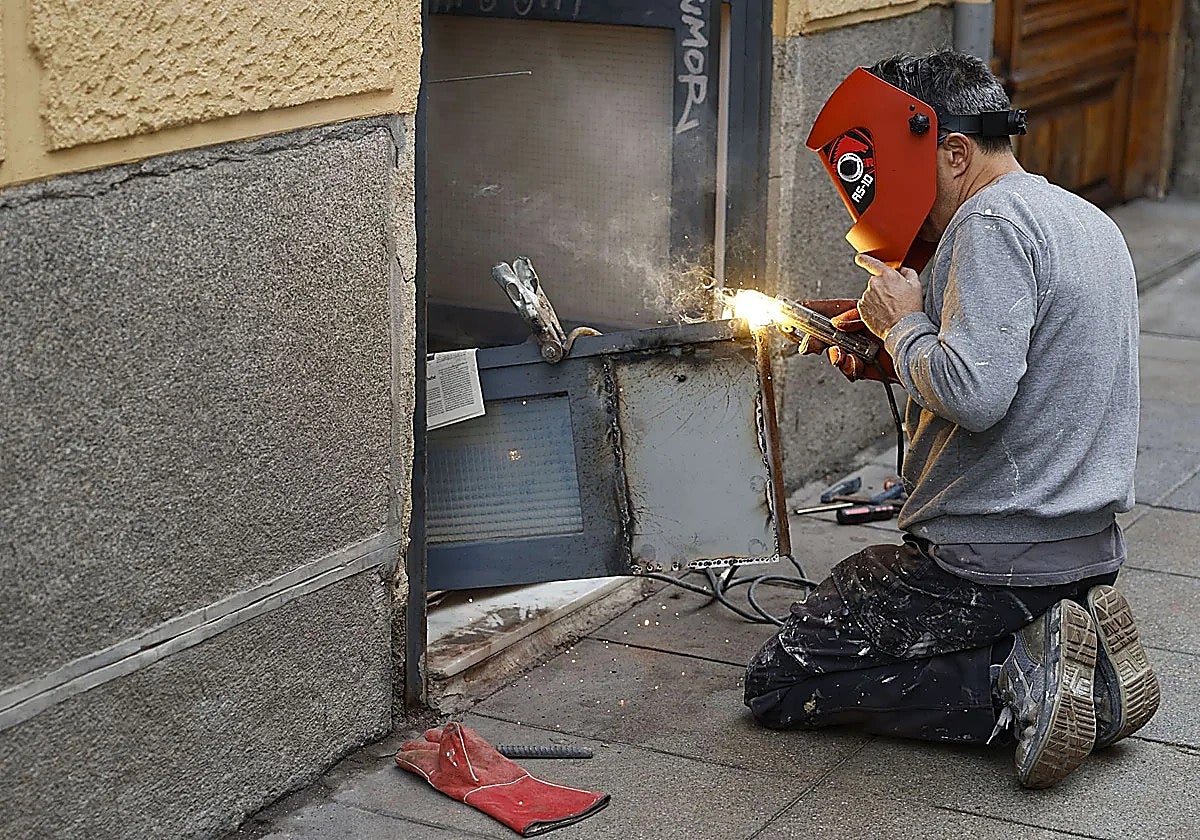
Welders, mechanics, electricians and machine operators, earning around or more than 2,000 euros a month, round out the group of occupations that continue to see strong demand during the hottest months of the year.
Professional drivers also feature on the list. Increased logistics activity during the summer, driven both by tourism-related consumer spending and by industry's supply needs, creates greater demand for these workers. The group includes bus, taxi, private-hire vehicle and private drivers, with salaries varying considerably. The usual starting point is a basic salary of 1,250 euros a month, supplemented by travel allowances and overnight expenses. Companies such as Vecttor, which provides hire services for Cabify, offer salaries of around 1,400 euros a month.
The figures contrast sharply with average salaries in tourism-related occupations such as waiting staff, who typically earn less than 19,200 euros a year, and checkout operators, whose jobs are closely linked to retail, a highly seasonal sector, and who earn less than 16,000 euros gross a year.
Vacancies
Spain’s labour shortage is concentrated in six sectors where the number of advertised vacancies exceeds 100,000: sales and commercial roles; purchasing, logistics and warehousing; skilled trades and manual occupations; customer service; tourism and hospitality; and quality, production and R&D, according to a report by InfoJobs and Esade.
Electrician vacancies alone accounted for around 8,000 positions on the digital employment platform in 2025. There were also 7,900 unfilled maintenance jobs, while employers were unable to find candidates for 4,400 welding positions and more than 11,000 vehicle mechanic vacancies.
Some trades also have a particularly low ratio of applicants to vacancies. The construction sector recorded more than 8,000 vacancies, with an average of 46 applicants per job, below the 56-applicant average across all unfilled positions on InfoJobs. The same applies to plumbing, where competition falls to just 18 applicants per vacancy, despite 5,200 positions being advertised.
Labour-market experts also expect the demand for technical occupations requiring vocational education and training to grow significantly in the coming years. Antón Adanero, chief executive of Tecnio, says training in these fields has become one of the main routes into stable employment, with strong prospects for securing a job at a time when companies need to recruit skilled workers.
AI unlikely to replace skilled tradespeople
Traditional trades are not only experiencing a resurgence; they are also emerging as occupations that artificial intelligence (AI) is unlikely to replace. Several experts share this view, including Denis Machuel, chief executive of The Adecco Group, who considers it unlikely that AI will replace workers in manual trades such as carpentry, electrical work and plumbing.
Workers whose jobs require critical thinking and creativity are also unlikely to face easy replacement. Although it remains unclear which jobs will disappear and which new ones will emerge as AI becomes more widespread, Machuel says that technology will not necessarily replace workers. Instead, the difference will be made by workers who know how to use it effectively.
![[]](http://static.vocstatic.com/voc26/latest/assets/images/favicon/surinenglish/apple-touch-icon-57x57.png)