
Crime
Spanish Interior Minister calls for crackdown on 'narco-logistics'
Grande-Marlaska advocates for tougher EU-wide laws against boat manufacturers and fuel suppliers during the 6th meeting of the Coalition of European Countries Against Organised Crime in Paris
Dilip Kuner
Malaga
In a strategic move to dismantle the infrastructure of international drug cartels, Spanish Interior Minister Fernando Grande-Marlaska has called on the European Union to act with "greater firmness" against the logistical networks that sustain maritime drug trafficking.
Speaking at a high-level summit in Paris this Monday, the Minister urged for a coordinated European response to criminalise the entire supply chain used by smuggling networks.
Targeting the logistical facilitators
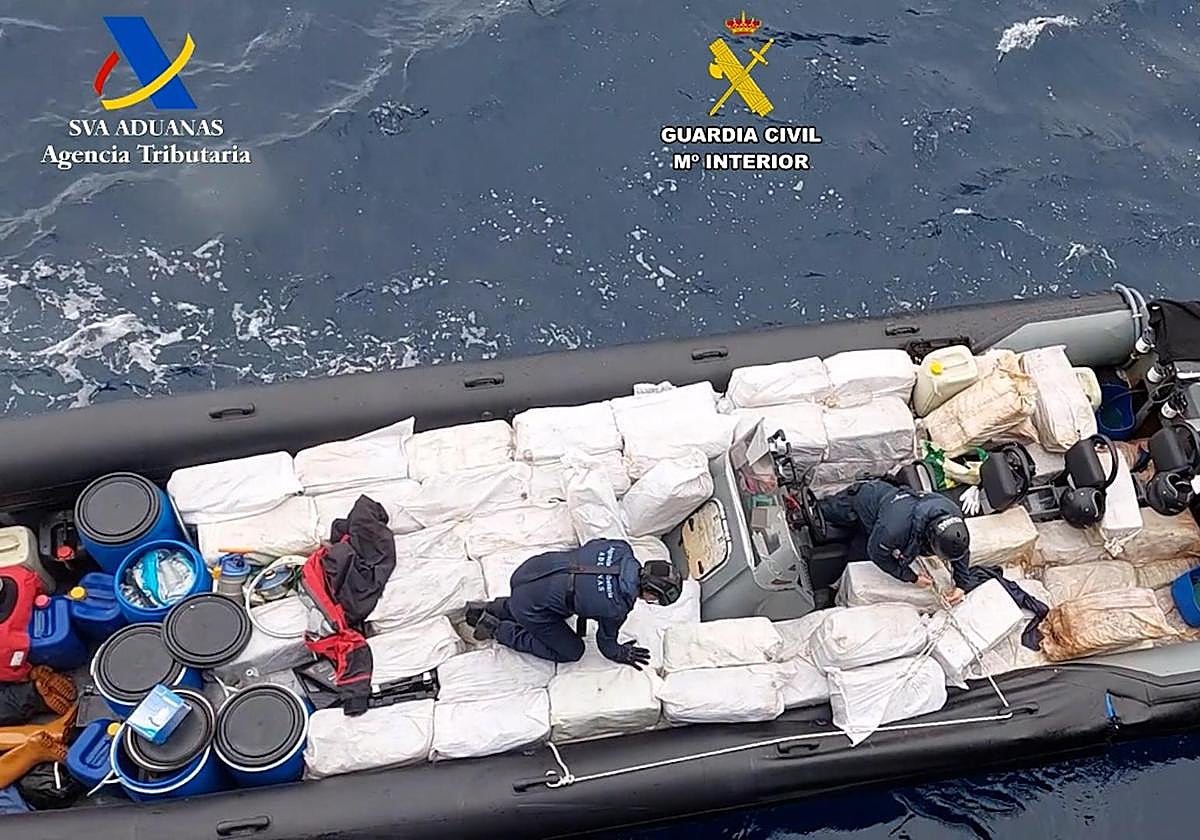
Grande-Marlaska requested that the European Commission include specific measures against "logistical facilitators" in its upcoming 2026–2030 EU Drugs Strategy. These facilitators provide the essential tools for smuggling operations, including high-speed "go-fast" boats, semi-submersibles, and large-scale fuel supplies.
The five pillars of the 2028 action plan
-
Alongside Minister of Justice Félix Bolaños, Grande-Marlaska and his European counterparts adopted a joint declaration in Paris outlining an action plan through 2028. The strategy focuses on five key priorities:
-
Dismantling International Networks: Focusing on the "high-value targets" within criminal hierarchies.
-
- Resilient Logistical Hubs: Strengthening the European Ports Alliance to prevent the corruption of port staff and the infiltration of shipping infrastructure.
-
- Seizing Illicit Assets: Attacking the financial flows and laundering operations that allow cartels to grow.
-
- Prevention: Reducing the social impact and preventing the recruitment of minors into criminal gangs.
-
- International Cooperation: Expanding operations with Latin America and the Caribbean, which the Minister designated as "priority regions."
"We must act more decisively against the logistical facilitators that sustain the activity of these networks," the Minister explained. This approach mirrors Spain's domestic policy, where a 2018 decree banned the use and manufacture of high-speed rigid-hull inflatable boats (RHIBs) typically used for drug runs in the Strait of Gibraltar.
Spain now seeks to export this "administrative prohibition" model to all EU member states to prevent traffickers from sourcing equipment in neighboring countries with more relaxed regulations.
Portugal: the strategic missing link
A central theme of the summit was Spain’s formal request for Portugal to join the Coalition of European Countries Against Organised Crime. The group currently includes France, Germany, the Netherlands, Spain, Italy, Belgium, and Sweden.
Grande-Marlaska described Portugal as a "key geostatistic node" between Europe, Africa, and the Americas. "Portugal is an essential hub in maritime and logistical flows, highly relevant for the early detection and disruption of illicit routes in the Atlantic," he noted. The inclusion of Portugal would bridge a critical gap in Western European intelligence, particularly given Lisbon's historical and linguistic ties with Brazil and West Africa - two major transit zones for cocaine heading to European markets.
Five years of growing cooperation
The Coalition was founded in 2021 in Brussels, spearheaded by the Netherlands in response to escalating violence and record-breaking cocaine seizures in the ports of Rotterdam and Antwerp. What began as a four-nation initiative (Belgium, France, the Netherlands, and Spain) has rapidly expanded as the "Atlantic route" and "Mediterranean route" have become more sophisticated.
The Paris summit marks the sixth major meeting of the group, following previous sessions in Amsterdam, Antwerp, Hamburg, and Cádiz. The transition from the 2025 Cádiz summit to today's Paris meeting signals a move toward more integrated policing, with a specific focus on "real-time operational coordination" through centers like the Maritime Analysis and Operations Centre-Narcotics (MAOC-N) based in Lisbon.
![[]](http://static.vocstatic.com/voc26/latest/assets/images/favicon/surinenglish/apple-touch-icon-57x57.png)