
History
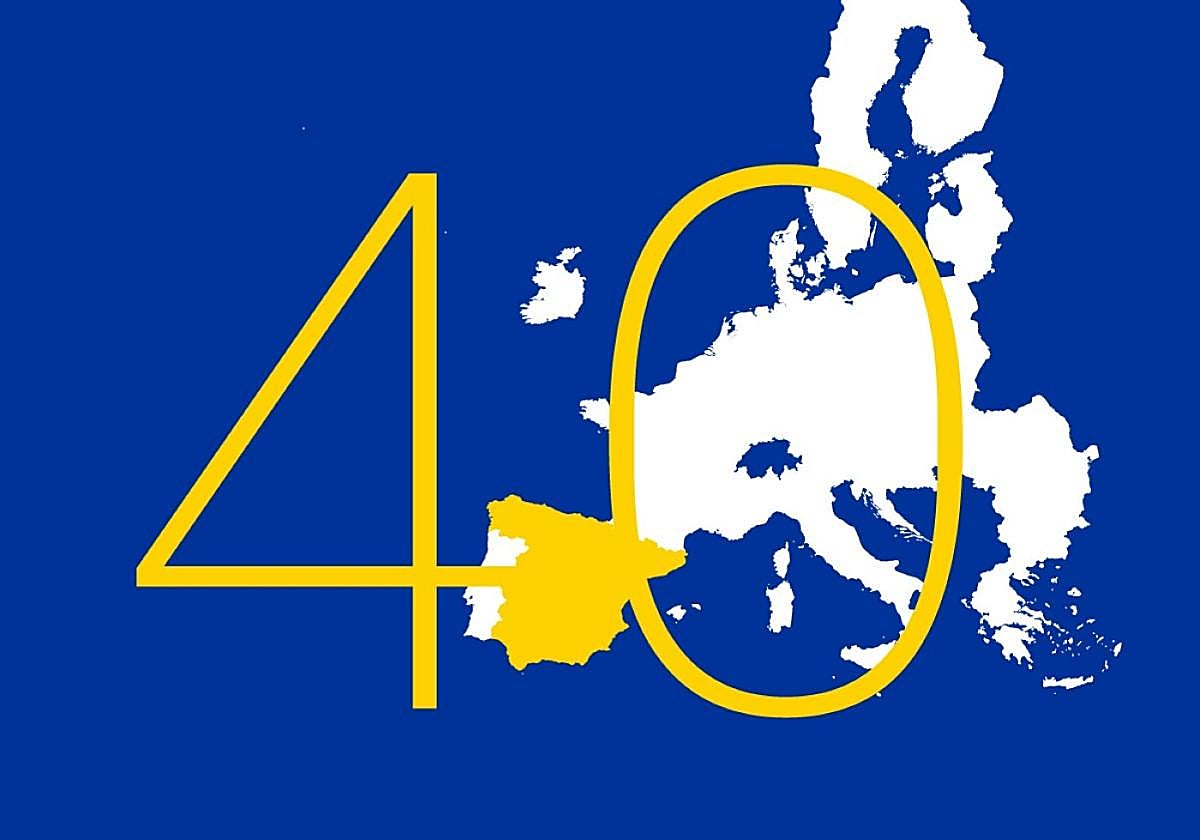
Spain marks 40 years in the European Union
Four decades after its historic accession to the European community, the country has improved its socioeconomic indicators and its citizens continue to feel comfortable being part of the EU
Miguel Ángel Alfonso
January 1st, 1986, 40 years ago, will be forever engraved in the history books as the day Spain took a decisive step to modernise itself. This country, whose GDP (gross domestic product) was then six times smaller than it is today (from 243.38 billion euros to nearly 1.6 trillion euros in 2024) joined the European Economic Community (EEC), the precursor to the European Union (EU), as a full-blown member. This select club, known then as 'the Europe of the Twelve', as there were only 12 member states at the time, now 27, was one that Spain had aspired to join ever since the final years of the Franco regime.
Four decades later, the benefits have made themselves felt in citizens' daily lives, from the elimination of the mandatory passport for travelling to Paris or Rome to freedom of movement within the Schengen area. From the emergency telephone number 091 to 112 and from special tariffs for calling from other countries to free roaming. And 74% of Spaniards continue to believe they can better face the future within the EU, according to the latest Eurobarometer.
Twice as many jobs
Entry into the EU also generated new opportunities for workers, from access to cross-border employment to expanding national industries. The total number of jobs has increased from 10.8 million in 1986 to 21.1 million in 2024.
Multi-million euro exports
Since joining the EU, Spain has gained access to the single market, one of the largest economic blocs in the world. The country's exports to Eastern Europe have increased substantially. Spanish products are in high demand in both agriculture and food, including those that are crucial to the national economy such as olive oil, citrus fruits, tomatoes and wine. Currently, 67% of agricultural exports go to other countries in the Union.
The expansion of broadband
Since joining the EEC, Spain has benefited from more than 150 billion euros in cohesion funds. This investment has been felt not only in large infrastructure projects, but also in homes. In recent years, more than seven million households have gained access to broadband internet thanks to regional funds. And since 2007, almost 6.7 billion euros has been allocated to high-speed rail infrastructure.
1.6 million Erasmus students
Bologna, Coimbra, Prague, Krakow... Today, it is impossible to visit any European university city without encountering a colony of Spanish Erasmus students. Since the creation of this EU programme in 1995, more than 1.6 million young people have had the opportunity to study abroad in other EU countries. Spain, in turn, receives 40,000 foreign students annually.
Life expectancy of 83 years
In 1985, the year Spain signed the treaty to join the EEC, the preliminary step to membership, the country had a population of 38.4 million. The latest census puts the figure at 49.1 million, but with a population that is older than it was 40 years ago. In 1986, 12.6% of Spaniards were over 65, a percentage that reached 23.7% in 2024. Life expectancy has risen from 76 to 83 years.
Three billion for the storm
Spain has received EU aid for forest fires and floods, with more than three billion euros allocated to Valencia following the 2024 storm.
Since that year, the country has participated in the strategic pre-positioning of EU firefighters, hosting teams from Estonia and the Netherlands during the summer months. This has helped to tackle fires across the country in recent times.
And Spain's contribution?
Since 1986, Spain has contributed to the European project by providing political leadership whenever possible and strengthening the social and citizenship agenda. Its institutional weight has resulted in three presidents of the European Parliament: Josep Borrell (Socialist Party), between 2004 and 2007; José María Gil-Robles (European People's Party), between 1997 and 1999; and Enrique Barón, another socialist, between 1989 and 1992. It has also produced nine commissioners and two High Representatives - Borrell and, before him, Javier Solana-for Foreign Affairs and Security Policy.
In addition, Spain is home to the Joint Research Centre in Seville and five European agencies: Fisheries Control (Vigo), Occupational Health and Safety (Bilbao), the Intellectual Property Office (Alicante), Fusion for Energy (Barcelona), and the Satellite Centre (Torrejón de Ardoz).
![[]](http://static.vocstatic.com/voc26/latest/assets/images/favicon/surinenglish/apple-touch-icon-57x57.png)