
Housing
Spain is no longer country of homeowners as large landlords absorb housing
Households that own their homes have dropped from 79% to 63.9%, while rent is consistently growing in an increasingly tight market
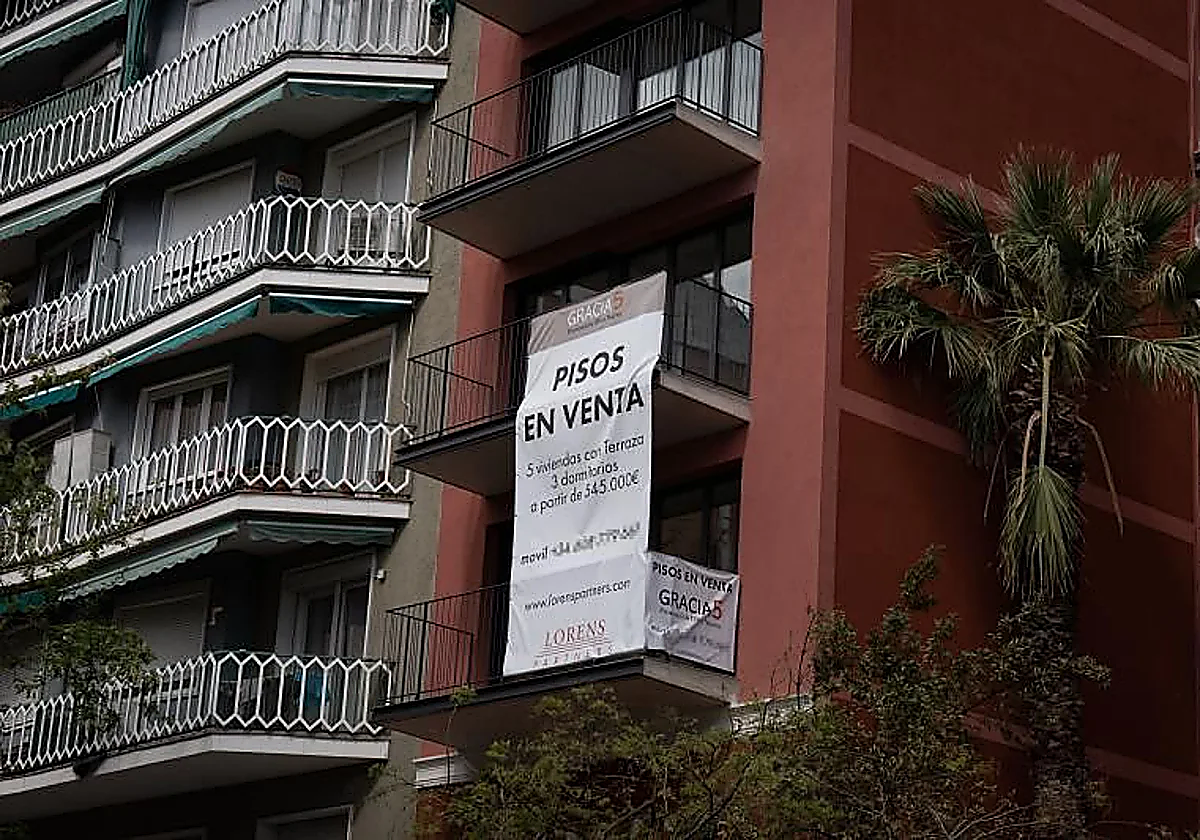
José A. González
Spain has more homes than before the crisis, but fewer owners. A report by the Ministry of Social Rights and the Spanish national research council (CSIC) confirms a change in the nature of the real estate market over the last 14 years: the housing stock has grown by around two million properties, but this increase has not translated into greater access to homeownership. On the contrary, large property owners dominate the housing market.
The most extreme case is that of owners with more than ten properties. This group has quadrupled its assets since 2008, going from around 138,000 homes to nearly 626,000 in 2025. This is not an isolated case, but rather the most intense manifestation of a general trend: the larger the initial assets, the greater the subsequent growth. Market growth has not been spread out: it has been concentrated.
The data shows an almost step-like progression. While owners of a single property have seen their share fall by 3.7%, those with two properties have seen theirs rise by 8.1%. From there, the growth accelerates: 22.5% for those owning three properties; 32.2% for those with four; 43.1% for those with five; and 51.6% for those with between six and ten. Even within the group of large property owners, their relative share has increased by 35.3%.
This pattern reflects a shift in the logic of the real estate market: housing has gone from being a commodity to an investment and accumulation asset. The consequence is an increasingly hierarchical internal redistribution, in which the growth of the housing stock consolidates existing positions rather than expanding them.
The turning point is in the very structure of property ownership. For the first time in history, multiple property owners are in the majority: 51.7% own two or more properties, compared to 48.3% who own only one. In 2008, the relationship was reversed (53.9% versus 46.1%), confirming a structural rather than a temporary change.
Tension in the rental market
This transformation is not limited to home ownership, but extends to the rental market. Fewer than four in ten rented properties belong to small-scale landlords: around 39% of the market is in the hands of landlords with a single property, compared to 61% controlled by multi-property landlords, large property owners, companies and public bodies. Even if the latter are excluded, private landlords with two or more properties account for more than half of the market (52.8%).
This is even more pronounced in large cities, especially those with the greatest price pressures. In Barcelona, multiple landlords represent 60.8% of the total; in Madrid, 56.4%; and they exceed 60% in cities like Palma or Las Palmas de Gran Canaria.
The rise in rentals has also been accompanied by increased pressure on the market. Demand is growing faster than supply, with over 100 interested parties per property in the first few days after listing it and average prices exceeding 1,200 euros per month, in many cases above the average mortgage payment.
There is also a slight slowdown in sales. February saw 59,689 transactions, 0.5% fewer than a year earlier, marking the second year-on-year decline this year, according to the Ine (national institute of statistics). Despite the drop, activity remains at high levels following the strong rebound in 2025, when over 714,000 transactions were recorded, the highest since 2007.
The trend is not uniform and reflects a two-tier market: transactions are falling in several regions, but continue rising in areas under pressure, where a shortage of supply is keeping prices high. Against this backdrop, demand outstrips available supply, making it difficult to access housing, particularly for households with lower purchasing power.
In the hands of a few
Access to homeownership has steadily declined: households living in their own homes have fallen from 79% to 63.9% in 14 years, while renting has increased from 11.9% to 19.2%. At the same time, the number of households earning income from rentals (the so-called landlords) has almost tripled, from 3.4% to 9.8%.
The result is increasing polarisation. On the one hand, the number of households without property ownership is rising: those with no property have increased by 63%. On the other hand, the number of households with multiple assets is expanding, with a 54% increase in households with two or more properties. Between these two extremes, the central group (households with only one home) has shrunk by 22%.
For decades, homeownership served as a mechanism for social integration and wealth accumulation. That link has weakened: having a job and income no longer guarantees access to property, while housing is increasingly seen as a source of income and wealth accumulation.
The growth of the housing stock does not act as a corrective factor. Far from expanding the base of homeowners, it has consolidated the accumulation capacity of those already involved, especially multiple property owners.
If this trend continues, the gap between homeowners and those without homes will widen. The market is not only making access to housing more expensive, but also changing who can afford to own property.
The lower house votes on Tuesday on the future of the rental decree
This Tuesday, more than 2.6 million tenants will have their eyes on the lower house of the Spanish government, which is voting on the extraordinary extension of rental contracts included in the royal decree of economic measures.
The law aims to extend contracts expiring during that period until the end of 2027, for a maximum of two years, and to limit annual rent increases. The measure seeks to mitigate the impact of more than one million contracts expiring before 2026, many signed during the pandemic at lower prices, whose renewal could further strain the market.
The law requires approval from Congreso, where it currently lacks the necessary majority to pass. "We are aware that there is not yet a parliamentary majority to ratify it, but that will not deter us from addressing the housing emergency impacting a large part of the Spanish population," PM Pedro Sánchez has stated. The main opposition parties have all expressed their rejection of the decree-law.
![[]](http://static.vocstatic.com/voc26/latest/assets/images/favicon/surinenglish/apple-touch-icon-57x57.png)