
Work
The regularisation of foreign nationals has led to the sharpest rise in unemployment since 2008
By the end of July, 262,475 legalised immigrants have been recorded, and the number of people registered with social security has been pushed to record highs
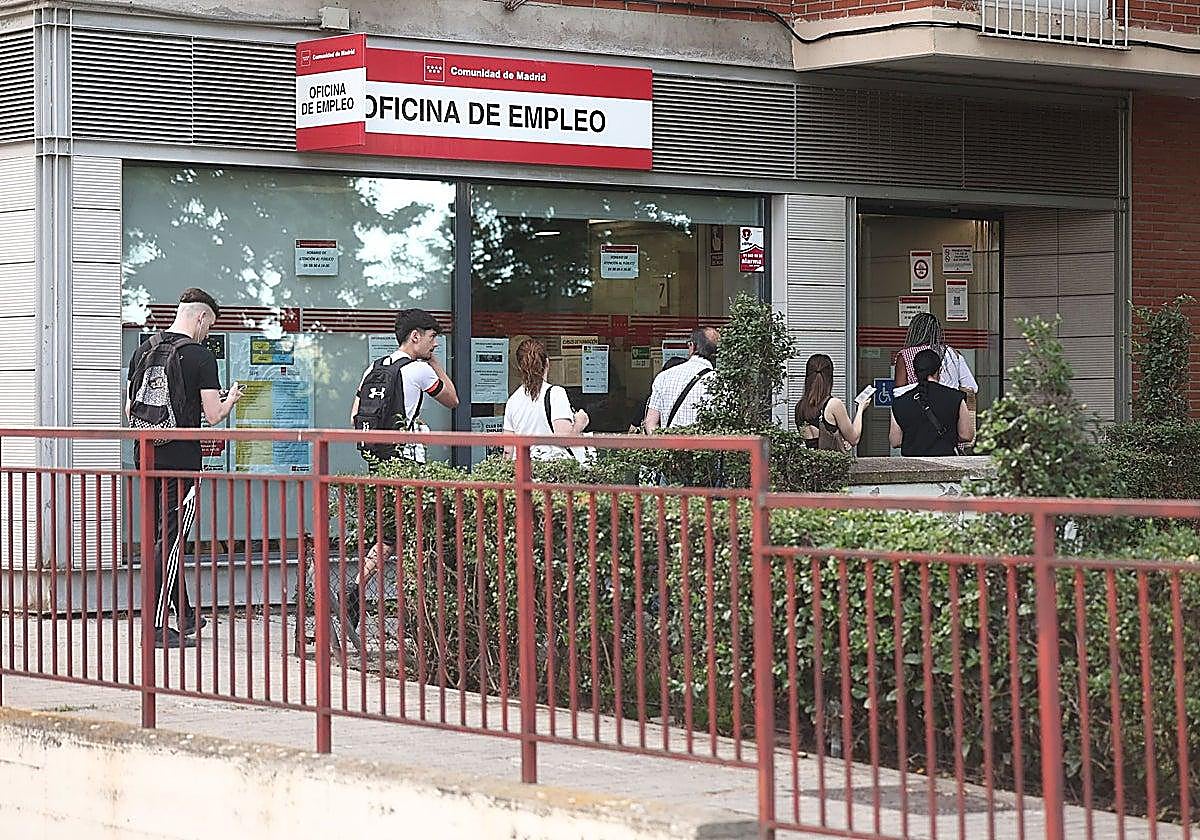

The decline in Spanish unemployment showed clear signs of fatigue in July as an extraordinary regularisation process for foreign workers pushed registered jobseekers up, even ... as overall employment hit a record high.
Registered unemployment rose by 19,517 people compared with the previous month - a 0.85 per cent increase and the largest July rise since 2008. Foreign nationals accounted for eight out of every ten new jobseekers, adding 15,535 individuals to the register. The ministry of labour attributed the majority of these additions directly to the regularisation process.
Despite the increase, the Minister for Labour and Social Economy, Yolanda Díaz, dismissed concerns, describing the trend as positive news because it grants formal rights to foreign workers previously in informal employment. Ministry officials emphasised that registration at employment offices is a necessary precursor to formal job placement, noting that foreign workers registering for employment are not entitled to receive unemployment benefits.
Joaquín Pérez Rey, Secretary of State for Labour, pointed out that similar administrative spikes occurred during the 2005 regularisation drive, which was subsequently followed by historic lows in unemployment.
The increase marks an unusual month for the Spanish labour market. July unemployment has only risen five times since records began, following previous increases in 2005, 2007, 2008, and 2022. Nevertheless, the total number of registered unemployed stands at 2,311,499 - the lowest figure recorded for July since 2007.
The monthly increase in jobseekers was primarily driven by the services sector, which added 8,221 unemployed people, and first-time jobseekers, which grew by 8,268. Increases were also recorded across construction (+2,433), industry (+473), and agriculture (+122).
Concurrently, Social Security affiliation reached an all-time high of 22,508,065 active workers after adding 41,727 net contributors in July. Foreign workers led job creation, adding 66,046 active contributors to reach a record 3,512,223 foreign workers - representing 15.6 per cent of Spain's total workforce. Over the past 12 months, the country has gained 420,875 foreign employees and 30,959 foreign jobseekers.
Sectoral growth was led by healthcare, social services, retail, and hospitality, which collectively added 131,545 jobs. These gains offset seasonal contraction in education, which shed 124,506 roles ahead of the summer break, alongside a loss of 4,773 positions in professional and scientific activities. The temporary contraction in education primarily impacted female employment, which dropped by 42,437 workers.
As of 30 July, 262,475 foreign workers regularised under the extraordinary process were registered as active contributors out of 642,500 total jobs created over the past year.
The majority entered salaried employment (81.5 per cent), followed by agricultural work (8.3 per cent), domestic service (5.4 per cent), and self-employment (4.8 per cent). Men accounted for 60.3 per cent of regularised workers (158,171), whilst women comprised 39.7 per cent (104,304), with Madrid and Catalonia registering the highest numbers.
Government ministries expect the ongoing regularisation process to boost state tax revenue through increased Social Security contributions whilst curtailing informal labour. Inspection officers uncovered 11,000 undeclared foreign employment relationships in the past year alone.
Self-employment under the RETA scheme contracted slightly by 103 contributors to 3,472,357. The fall was driven by a reduction of 2,766 self-employed women, offsetting a gain of 2,663 self-employed men, with education suffering the largest sectoral drop (-4,073).
Broader figures show sustained long-term growth among older and younger demographics since 2018. Employment among workers over 55 has grown by 51.7 per cent to nearly five million, while employment among workers under 30 has risen 33.6 per cent to 3.9 million. Full-time permanent contracts remain above 10 million, while active jobseekers on discontinuous fixed-term contracts stood at 97,606.
![[]](http://static.vocstatic.com/voc26/latest/assets/images/favicon/surinenglish/apple-touch-icon-57x57.png)