
Society
Bilbao radical youths wreak havoc and take over city centre with burning barricades
It took the Ertzaintza police more than an hour to intervene while the rioters were setting fire to cars and waste bins
David S. Olabarri e Iñigo Fernández de Lucio
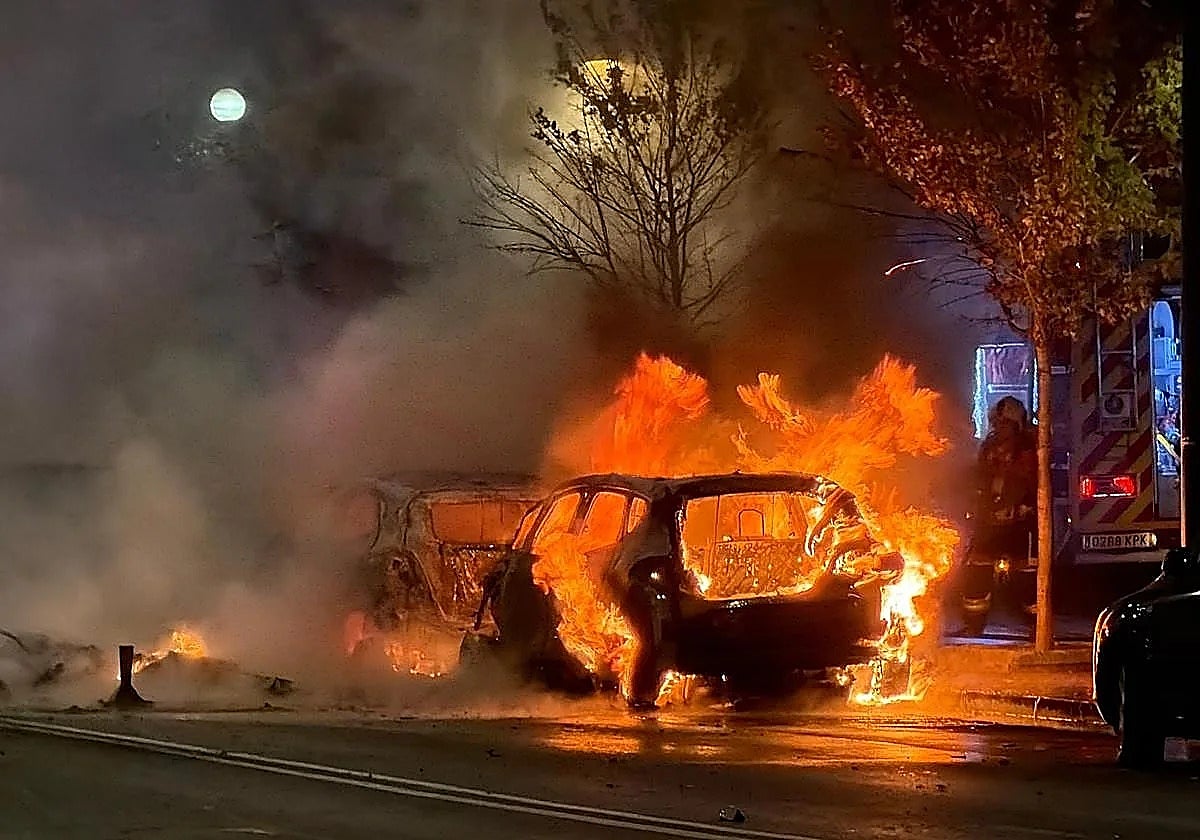
The city of Bilbao saw its streets on fire during a radical youth riot on Monday, reminiscent of street terrorism. Several cars, motorbikes and waste ... bins went up in flames over several hours in which hundreds of radical youths ran through the Deusto district and the city centre.
The rioters needed no excuse to sow chaos, attack passersby and unleash a spiral of violence reminiscent of the scenes in Paris, Milan and Barcelona.
During the day, thousands of students had been demonstrating peacefully "against fascism" and to prevent the far-right agitator Vito Quiles from organising a rally outside the University of Deusto. Quiles himself contacted the Ertzaintza (Basque Country police) to try to relocate the event to a safer area, but the regional police advised against it, according to a statement from the department of security.
Related story

Quiles then announced that he was cancelling the event and his decision was met with loud applause at the rally taking place at that very moment outside the university, organised by anti-fascist groups and the IAS student union.
Then chaos broke out. Despite having achieved their objective, hundreds of young radicals dressed in black began throwing flares and firecrackers. They were carrying slogans that read "Long live military Eta", "Spanish bastards", "Where is Vito Quiles?" and other messages of a similar nature.
There was no sign of the Ertzaintza police. According to internal sources, the police had been ordered not to intervene in order to avoid further trouble.
The radicals made no secret of their desire to clash with the police. In fact, the handful of municipal police officers who were monitoring the demonstration near the Ugasko bridge were forced to flee in the face of a real threat of being attacked by the mob.
The rioters then set up three burning barricades, made of overturned containers and also burnt a municipal police motorbike. The flames engulfed half a dozen cars.
The sight of hundreds of young people dressed in black walking calmly through a burning district, taking "selfies" in front of the fires, was shocking. As the department of security later revealed, the rioters even attempted to storm the Ertzaintza police station with stones, chanting slogans against the police.
Playing cat and mouse
A full hour passed until the regional police finally turned up with a modest contingent that gradually grew in numbers. Meanwhile, the youths were spreading panic in their wake. They overturned and set fire to more bins at the entrance to Plaza Euskadi as they fled from the police.
The rioters intimidated journalists and clashed with the few passersby who dared to reproach them for their behaviour. They split a local resident's head open for confronting them. Shops pulled down their shutters as the riot passed by.
By mid-afternoon, the police had identified a group of 20-30 very young men wearing balaclavas, gloves and rucksacks. The destruction was not improvised: there was a certain degree of organisation. During the chaotic hours, the radicals played cat and mouse with the Ertzaintza, who were chasing the youths.
At around 9pm, regional security minister Bingen Zupiria, reported that "around 20" people had been arrested, many of whom were minors. Institutional reactions followed. "It is unacceptable. Enough is enough, we don't want them in this country," Imanol Pradales said.
The mayor stated that what had happened "is not anti-fascism, but pure fascism". María del Río, EH Bildu's municipal spokesperson said that these "regrettable" events had overshadowed the "exemplary, peaceful and democratic public response" of the preceding hours. The PNV, PSE, PP and Podemos also condemned the serious incidents.
