
Politics
Spain's PM does not rule out bringing the elections forward and running again if his party approves
Pedro Sánchez says that there is no viable alternative that does not involve a coalition government with opposition party PP, subject to the "demands" of Vox
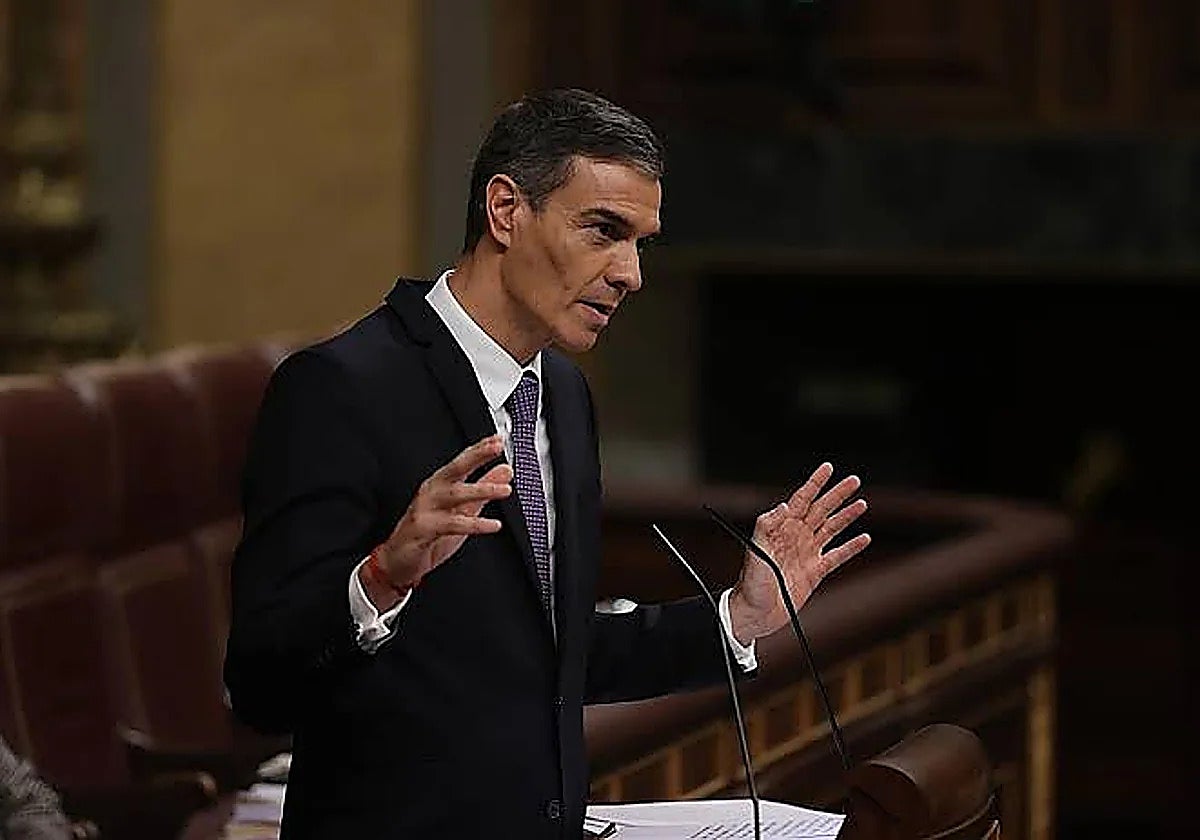

The start of the political term has given Prime Minister Pedro Sánchez the opportunity to make it clear that his immediate focus remains on serving ... out his term in office, categorically setting the next general elections in 2027.
However, he has left the door open to a possible "technical" early election within the same electoral year, using the available timetable to align the vote with the government's budgetary and parliamentary needs.
With this announcement, Sánchez has explicitly ruled out the scenario in which the general election would coincide with the local and regional elections due to take place in May 2027.
Moncloa, the seat of the Spanish government, has identified two possible windows: bringing the general election forward to the first months of the year to distance it from the political fallout of the regional and local elections or making full use of the flexibility allowed under Spain's general electoral regime act (LOREG) and pushing the election back to the latest legally permitted date in summer 2027.
Alongside setting out the electoral timetable, the PSOE leader has also sought to put an end to rumours that he could step down as party leader and stand aside as the candidate for prime minister. Sánchez has made clear that he is prepared to lead the PSOE again in 2027. "If the PSOE wants me to and chooses me again, I will be the candidate," he stated.
No one within the PSOE or Moncloa has considered in recent months the possibility of Sánchez stepping aside, as he threatened to do in April 2024 after his wife, Begoña Gómez, was placed under investigation. But the prime minister's statement appears intended to put a definitive end to the speculation sparked last week by controversial remarks from Transport Minister Óscar Puente, which opened a debate about generational change within the PSOE ranks.
"Conservative wave"
To justify remaining in office after almost a decade as the party's secretary-general and two successful investiture votes, Sánchez stated that the social-democratic project is "more necessary than ever" to consolidate the economic progress and social advances achieved in recent years.
In his argument, the prime minister stressed that there is currently no viable alternative that does not involve a governing agreement between the PP party and Vox, subject to Vox's demands. He presented himself as the only counterweight capable of containing the "advance of the conservative wave".
Asked about the fact that three ministers are expected to stand as candidates in next year's regional elections (Diana Morant in Valencia, Óscar López in Madrid and Ángel Víctor Torres in the Canary Islands), Sánchez said he had "absolutely no intention" of reshuffling his government.
On his relationship with Junts (the regional government of Catalonia), he acknowledged that there are no contacts "at the highest level". Asked whether he would like to see former Catalan regional president Carles Puigdemont return to Spain in the coming months, he declined to give a direct answer. "That will depend on the decision he takes," Sánchez said.
![[]](http://static.vocstatic.com/voc26/latest/assets/images/favicon/surinenglish/apple-touch-icon-57x57.png)