
Crime
Basque Country taxi driver killer served seven years in prison for possession of two kilos of amphetamine for distribution
The man, who the police are still looking for, was sentenced for drug-trafficking, alongside his partner
Jorge Napal
San Sebastián
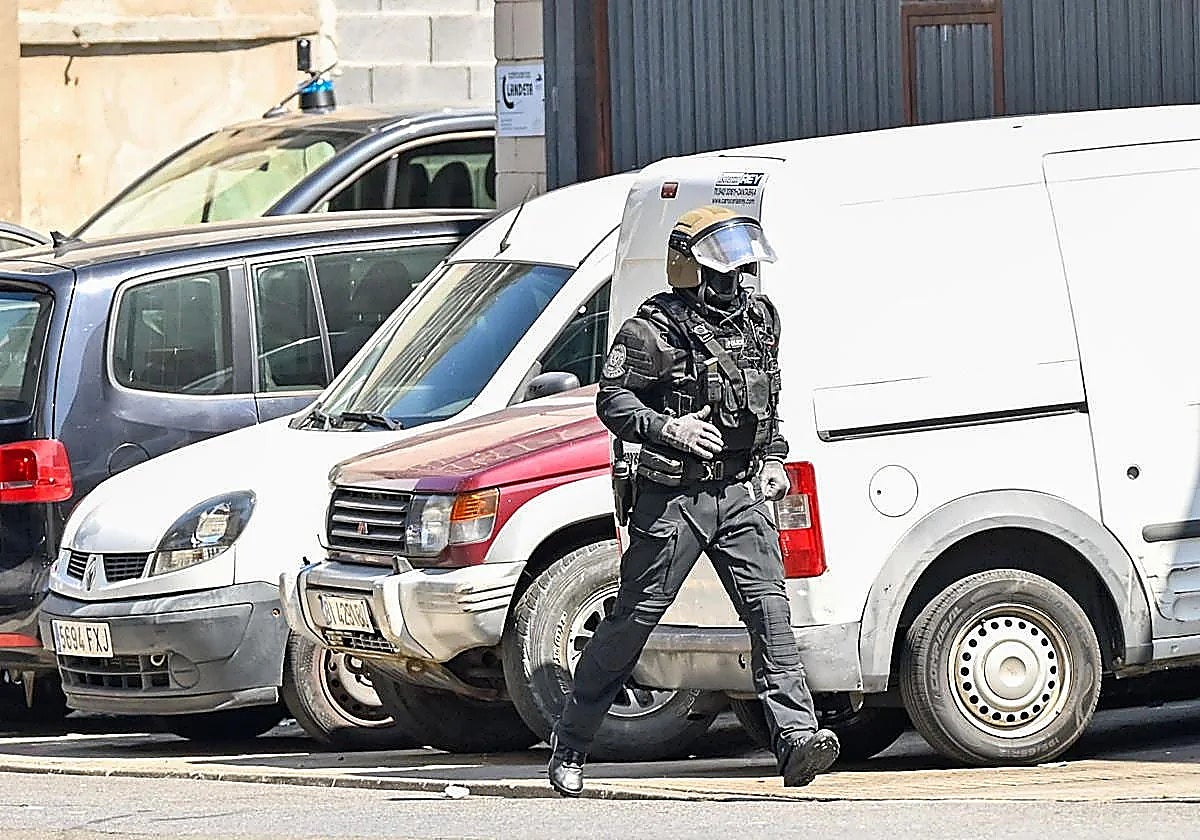
The police are still searching for the man who shot dead 30-year-old taxi driver Alex Azipuru in the town centre of Azpeitia, in ... the province of Guipúzcoa, on Tuesday.
According to criminal records, the suspect has previously served seven years in prison for a drug-trafficking offence, of which the provincial court of Guipúzcoa convicted him and his partner in 2009.
The ruling states that the couple were storing significant quantities of narcotics, intended for distribution, at their home in Azkoitia.
Related story
-
 Jon Agirre e Iraitz Vázquez
The investigation began following police reports regarding the couple's possible involvement in the distribution of illicit substances. In the early hours of 27 January 2008, the Basque Country's Ertzaintza police force intercepted the woman in her vehicle as she was heading to a nightclub.
The police found 20.53 grams of amphetamine, 16.86 grams of ketamine, 8.14 grams of which were divided into ten small bags, and 0.82 grams of cannabis concealed among her clothes.
The arrest led to a search of the home they shared in Azkoitia. There, investigators found over a kilo of cannabis and a cultivation room containing 400 plant pots and 144 small trays. They also found a digital set of scales with traces of amphetamine and caffeine.
Bags containing amphetamine
However, the largest quantity of the drug was not inside the flat. In a cupboard used to store cleaning equipment next to the door leading to the storage room, the investigators found two sealed bags containing 1,009.20 grams of amphetamine, with a purity of 13.88 per cent, and another 993.60 grams with a purity of 16.70 per cent.
The ruling states that the cost of these drugs amounted to 72,341 euros.
The investigators also found traces of around 800 grams of amphetamine mixed with caffeine in one of the toilets. According to the ruling, the man had tried flushing the substance down the toilet after realising the police were on their way and that his partner was under arrest.
The court found the defendant's initial statement to be credible, as opposed to his subsequent accounts, in which he progressively reduced the amount of drugs to 40 and finally to between 15 and 20 grams.
The court also concluded that the two large bags of amphetamine in the cupboard belonged to the couple, even though it was a communal area that was not part of the private living space. The ruling says that, faced with police surveillance, the suspect used that location to hide the drugs, after realising that flushing 800 grams down the toilet had proved impossible.
The court also rejected the defendants' claim that the police might have planted the drugs there. The judge stated that this hypothesis was neither logical nor reasonable and that the search had been carried out with a court order, in the presence of the judge, the court clerk, the defendants and their lawyer.
According to the court, the quantity of illegal substaces suggests their distribution purposes, not personal use.
The court concluded that both were guilty of the offence of possession of drugs with intent to supply, aggravated by the "notable quantity". In the case of amphetamine, the ruling notes that the Supreme Court had at that time set the threshold at 90 grams. The quantity attributed to the defendants exceeded 308 grams of amphetamine, which led the court to set the sentence at eleven years.
The court also banned the pair from holding public office for the duration of the sentence and ordered them to pay 250,000 euros.
![[]](http://static.vocstatic.com/voc26/latest/assets/images/favicon/surinenglish/apple-touch-icon-57x57.png)