
National Police Underground Unit
Patrolling the Valencia deep: the 'Moles' of the National Police
Beneath the streets of Valencia lies another city: a 900-kilometre labyrinth of tunnels and sewers. This is the domain of the 'Topos' (the Moles). From tracking the trail of notorious fugitives to recovering murder weapons from septic tanks, this specialist unit polices the world beneath our feet

Arturo Checa / Gorka Navaz
Valencia
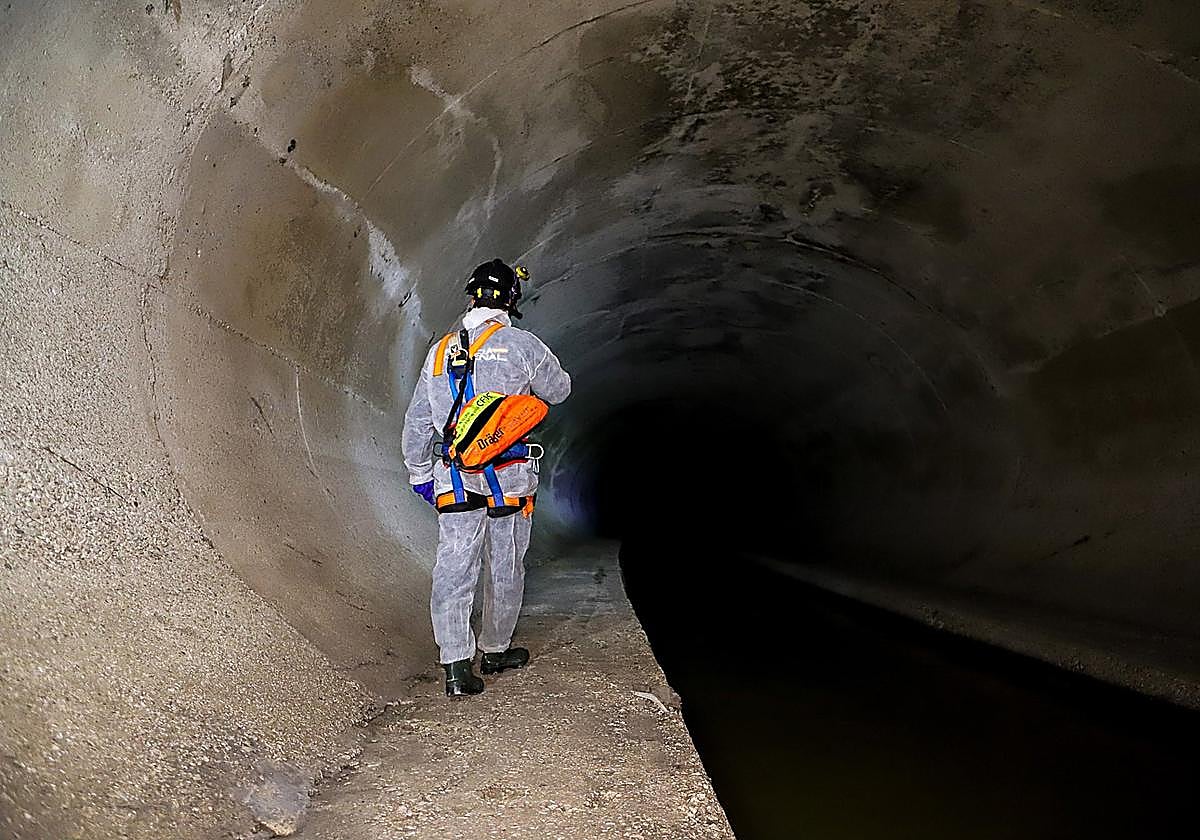
There is a city under Valencia. It spans no less than 900 kilometres - nearly three times the distance between Madrid and Valencia. It is a ... maze of accessible tunnels, chambers, and recesses. Some, like the storm drain beneath La Fe Hospital, are almost as high as a cathedral ceiling. This is the city's sewerage network, and it is here you will find the 'Moles'.
'Topo' is their official police callsign used over encrypted radio frequencies. «I'm Topo 1, he's Topo 2, and so on,» explains Manuel Gonzalvo, Chief of the Subsurface and Environmental Protection Unit. They are the guardians of the city that sleeps beneath the city.
«What dangers are down there? Anything from a terrorist hiding out to plant a device, to cable thieves, or drugs flushed down the loo to evade a police raid,» says Inspector Gonzalvo. Now in his 60s, the veteran commander previously patrolled Barcelona in 'Panda' cars and worked the pickpocket squads in Valencia. «I'm the old-timer now,» he jokes, «but my team are in peak condition. None of them smoke, they're all gym-goers and into their health foods.» He gestures to Fernando Torres, Vicent Chulvi, and Edu Palma - three 'Moles' currently kitting out a van with specialist gear.
The specialist kit
Descending into the deep requires more than a standard uniform:
• The 'escape' pack: A bright orange self-contained breathing apparatus. If they hit a pocket of gas, a pull of a tab provides 15 minutes of oxygen - the difference between life and death.
• Intrinsically safe torches: Specially designed to prevent any spark that could trigger an explosion in a gas-heavy environment.
• Gas detectors: Sensors that alert the team to hydrogen sulphide, carbon monoxide, or dangerously low oxygen levels.
• Steel-lined boots and helmets: Protection against punctures and falling debris.
Beneath the Turia
We are at the foot of the Real Bridge in the Turia Gardens. Journalists from Sur in English sister site Las Provincias are about to join the Moles on patrol. «We are down here every day,» the officers say. It isn't just for high-profile visits or sporting events; they are constantly monitoring the infrastructure.
Suddenly, a detector lets out a sharp 'Beep, beep, beep!' as a manhole cover is lifted. The gas levels are too high to descend safely. «Down there, you can encounter a cocktail of toxins,» an officer explains. They carry their sidearms, of course -«The pistol is always with us in case of a hidden threat» - but their most vital tools are their sensors.
The team navigates this labyrinth using maps from the City Council archives. However, hundreds of kilometres of the network are too narrow for humans. These are left to the vermin control teams, or dealt with by the Moles when they encounter «sewer cholesterol» - the massive «fatbergs» of wet wipes that block the system. «If people saw the damage these cause, they wouldn't be so quick to flush them,» they lament.
The hospital run
We move to the access points at La Fe Hospital. Unlike the narrow manholes in the city centre, here there is a large metal hatch with fixed ladders. In tighter spots, the team has to be lowered by a winch or spend hours crouching.
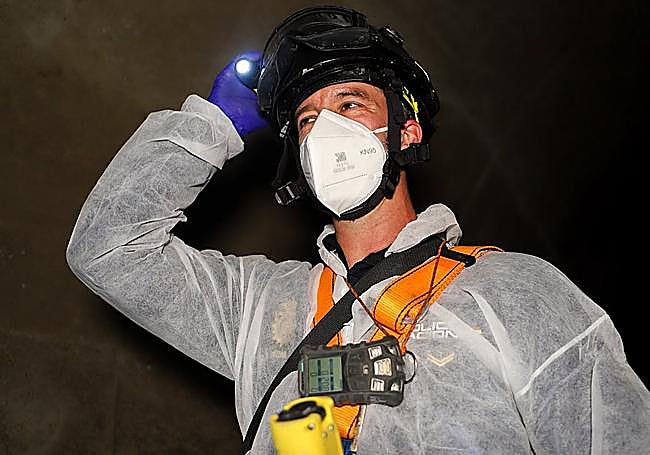
Joining them for a day, the weight of the gear becomes apparent. The boots are heavy, the helmet is cumbersome, and the stench is staggering. At the entrance, a sign warns: 'Danger: Risk of gas accumulation. Do not enter without breathing apparatus. Professional use only.'
Inside, the environment is ghostly. Beams of light cut through the gloom, reflecting off a river of effluent. Surprisingly, there are few cockroaches, but the smell is overwhelming. «You get used to it, just like your eyes adjust to the dark,» says Gonzalvo. He calls this stretch a «motorway» compared to the tighter tunnels.
High-profile cases
The unit's remit extends across the entire Valencian Community, and they have been involved in the region's most infamous cases.
«We even searched for the body of Antonio Anglés,» the Inspector reveals. Years ago, a prisoner claimed he had killed the fugitive responsible for the Alcàsser murders and dumped him in a well in Moraira. The Moles searched several shafts. It turned out to be a lie - a prisoner's ploy for attention - but it had to be checked.
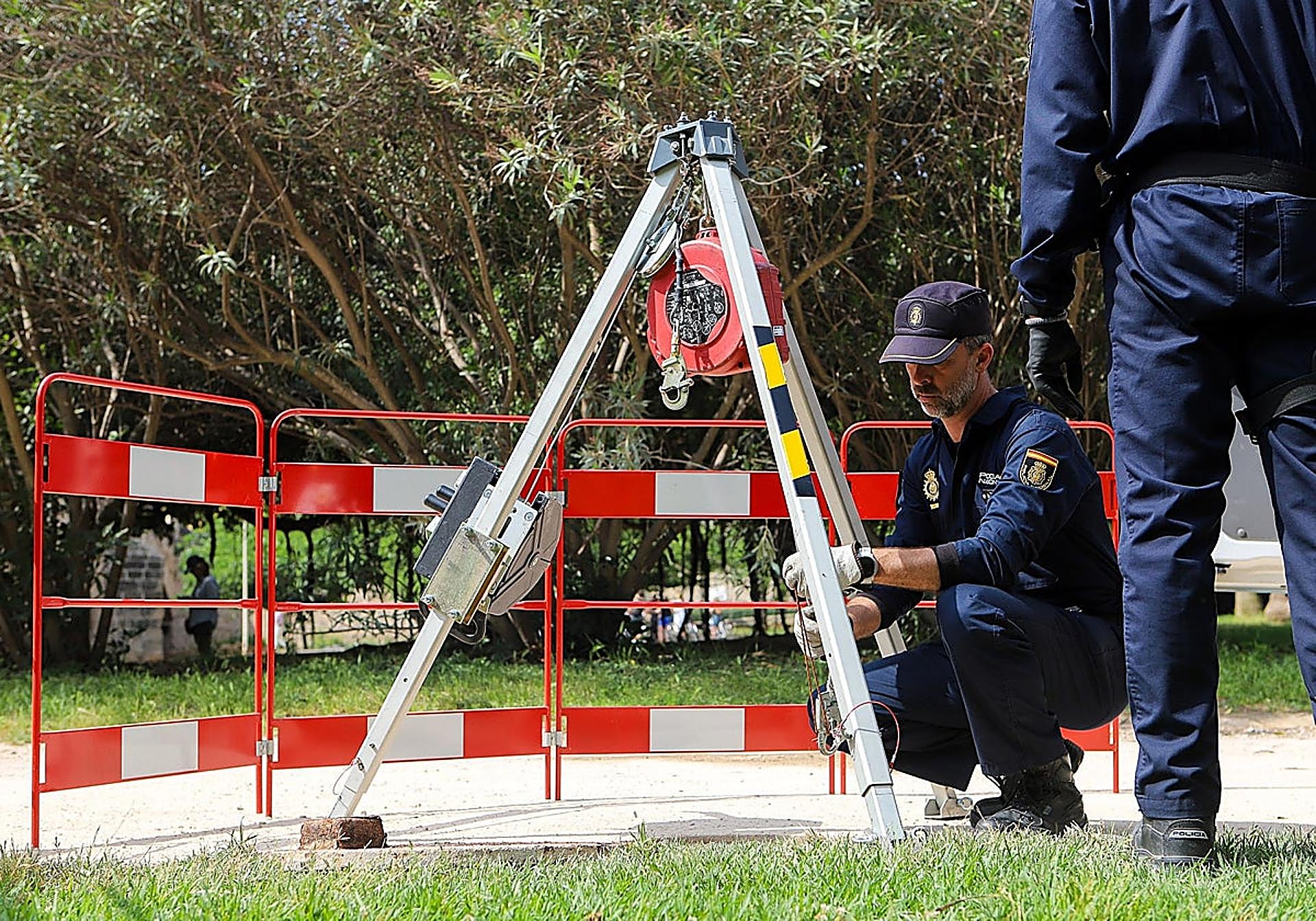
They were also instrumental in the 'Maje case'. During the investigation into the murder of Antonio Navarro, the killer confessed to throwing the murder weapon into a septic tank in Riba-roja. «It was inaccessible,» Gonzalvo explains. «We rigged up a system using ropes and magnets. We lowered it into the pit... and out came the knife.» That evidence was vital in securing a conviction.
Their next major task will be securing the network ahead of the Pope's visit next month. From scanning the sewers beneath the drug-riddled Casitas Rosa to recovering evidence flushed during raids, the Moles remain the tireless, invisible watchers of the city beneath the city.
.
![[]](http://static.vocstatic.com/voc26/latest/assets/images/favicon/surinenglish/apple-touch-icon-57x57.png)