
Spain
Major traffic law reform means change for all road users
From Thursday this week, regulations swing towards protecting vulnerable users more, with impact on drivers, bikers and pedestrians
SUR in English
A major reform of Spain’s road traffic regulations came into force on Thursday this week. The aim, said the government, is to strengthen protection for vulnerable road users by introducing new rules for cyclists, motorcyclists, pedestrians and users of personal mobility vehicles such as electric scooters.
The reform places people at the centre of road transport policy, moving away from thinking focused primarily on roads and vehicles and shifting to safe and sustainable mobility especially in urban areas.
Electric scooters and bikes
The new rules for personal mobility vehicles, such as electric scooters, include: a minimum age of 15 to ride them; the use of a protective helmet will be compulsory; and a reflective vest must be worn at night or in conditions of poor visibility. In addition, lights must be used at all times, including during the day.
For bicycles, on roads outside built-up areas, helmets will be compulsory for all cyclists, with existing exemptions being removed. When overtaking cyclists, drivers will have to: reduce their speed by at least 20 km/h below the speed limit for the road and leave a minimum side distance of 1.5 metres, changing completely into another lane when the road has more than one lane in each direction.
In urban areas, cyclists will be expected to ride preferably in the centre of the lane. A minimum safety distance of five metres will also be required between motor vehicles and cyclists travelling ahead in the same lane. Cyclists will also be permitted to travel in both directions on streets with a single lane where the maximum speed is 30 km/h.
Motorcycles and mopeds
Motorcyclists will also be permitted to use the right-hand hard shoulder in congestion, provided their speed does not exceed 30 km/h and the section of road is appropriately identified.
Professional riders
People using bicycles, personal mobility vehicles, mopeds or motorcycles for their jobs will be required to wear both a helmet and reflective vest at all times.
Pedestrians and giving way
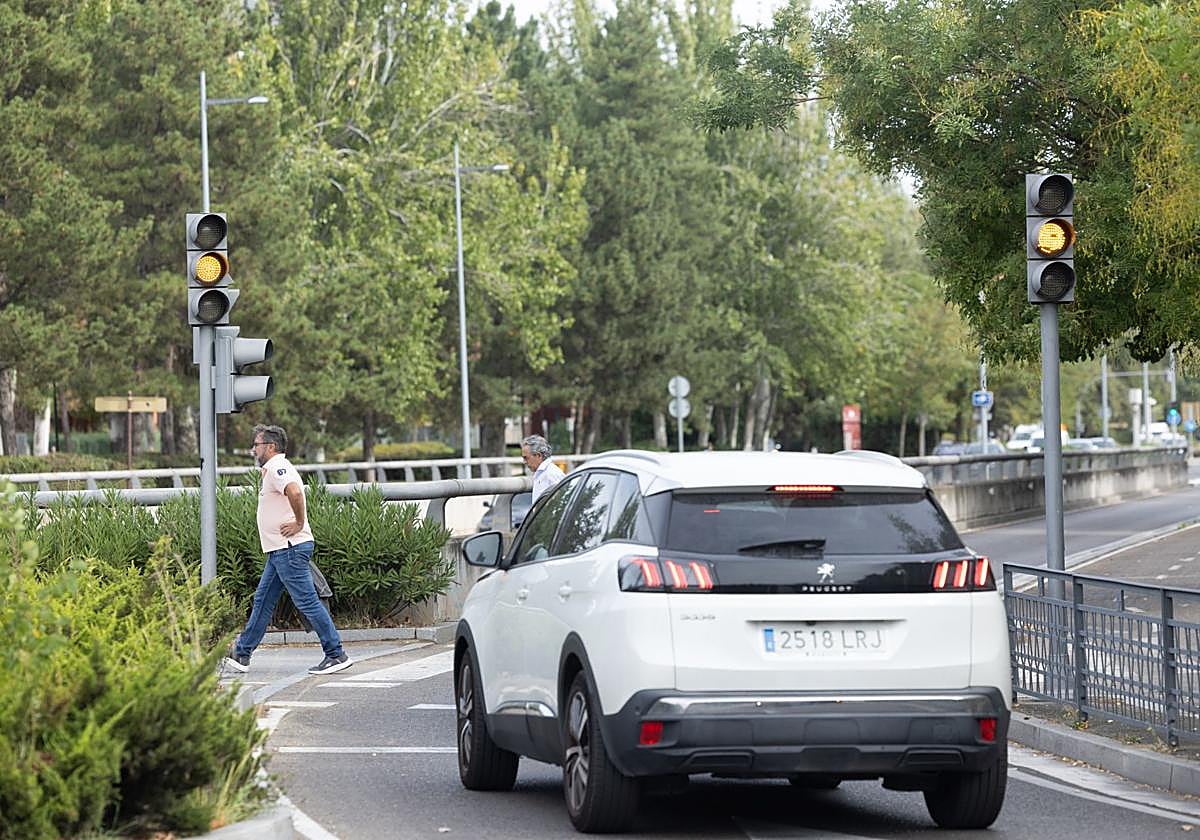
As a general rule, at pedestrian crossings controlled by traffic lights, a flashing amber light for vehicles will not be permitted to operate at the same time as a steady green light for pedestrians. Town halls will have to adapt their traffic lights from now. On streets with a single-level surface, pedestrians will have priority.
Other measures
The reform also gives legal status to safe school routes - routes adapted for children travelling to and from educational centres on foot, by public transport or by non-motorised means of mobility.
In traffic jams, when vehicles are moving at walking pace or are stationary, drivers will have to move to the sides of the road to create an emergency lane for emergency vehicles.
On roads with two lanes, vehicles should move towards both sides, leaving a clear space in the centre.
On roads with three lanes, vehicles in the left-hand lane should move to the left, while vehicles in the middle and right-hand lanes should move to the right. This creates a clear passage between the left and middle lanes.
Vehicles passing other vehicles that have been immobilised because of an accident, breakdown, rescue work, maintenance or traffic-control operations must leave a side distance of 1.5 metres and reduce their speed by at least 20 km/h below the road’s speed limit.
Exemptions from seat-belt requirements are being removed, meaning seat belts will be compulsory at all times for taxi drivers, drivers of goods vehicles and driving instructors.
Motorhomes will not be permitted to have elements extended beyond the vehicle’s perimeter.
They must remain supported on their tyres and will not be permitted to discharge fluids from the living area.
![[]](http://static.vocstatic.com/voc26/latest/assets/images/favicon/surinenglish/apple-touch-icon-57x57.png)