
Travel
Italy extends border controls for Spain for another 15 days, prompting Spain to respond with similar measure
Meloni's government has decided to maintain checks at ports and airports for passengers coming from Spain due to what it still considers a "complicated" situation in Ceuta

Roma
The Italian government is extending border controls at ports and airports on routes to and from Spain for a further 15 days. These restrictions, which ... Giorgia Meloni's government imposed following the outbreak of the migration crisis in Ceuta a month ago, were originally due to expire this Monday, but will now continue until at least 15 September.
According to Italy, the situation in Ceuta remains "very complicated" and "has not improved", as Interior Minister Matteo Piantedosi said a few days ago.
His Spanish counterpart, Fernando Grande-Marlaska, learnt of the Italian government's decision over a telephone conversation with Piantedosi, who said that "the factors" that informed the initial measures "remain in place".
The consequences of that conversation were not long in coming. Spanish PM Pedro Sánchez's government has decided to follow the example Italy has set and also extend border controls for two weeks for passengers entering the country from Italy.
Meloni's government has also taken into account the fact that the Spanish government responded to Italy's restrictions by imposing a similar measure on people travelling between Spain and Italy. Spain's measure is currently expected to remain in place until Monday, September 7.
Because countries often follow the principle of reciprocity, Italy felt it should extend its own restrictions for another week. It has, however, decided to extend them for two weeks instead, hoping that this will give the situation in Ceuta more time to improve and eventually return to normal.
The EU has been informed about Italy's extension of the restrictions. These measures are part of the growing political tension between the Spanish and Italian governments.
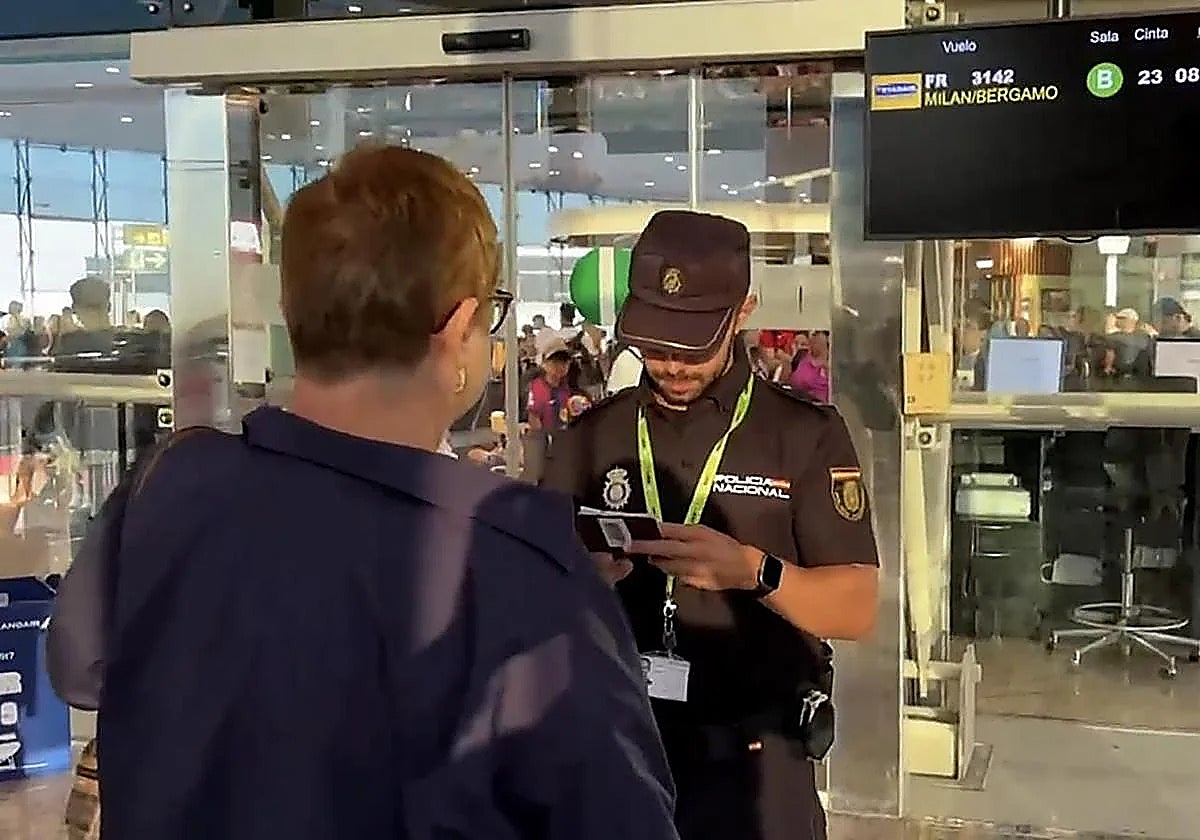
The restrictions are mostly symbolic rather than practically important. In practice, Italian authorities are simply carrying out random checks on passengers arriving from Spain at Italian airports and ports, asking them to show an identity document.
"It does not mean that entry is banned. It is about reintroducing controls, above all while striking a balance and taking care not to impede the movement of European citizens," Piantedosi said.
The Italian minister stated that the identity checks mainly concern "third-country nationals". In mid-August, Piantedosi said that the introduction of these checks on routes to and from Spain had led to three arrests and 21 refusals of entry for foreign nationals, including six Moroccans.
These controls, which temporarily suspend the free movement across borders provided for under the Schengen agreement, will be a key topic at the summit in Rome in September, presided over by Piantedosi, with the participation of the interior ministers of Spain, Greece, Malta and Cyprus.
The countries of the so-called MED5 (the usual entry points for migrants into Europe) hold regular meetings to address this issue. The entry into force of the European Pact on Migration and Asylum in June has prompted seven countries to announce the return to Italy of migrants who first entered European territory by crossing its borders.
![[]](http://static.vocstatic.com/voc26/latest/assets/images/favicon/surinenglish/apple-touch-icon-57x57.png)