
Economy
Spanish hotels warn of 15,000 job losses and €150m shortfall over government's 'low-cost' senior holiday scheme
Hosbec warns Pedro Sánchez's administration that VAT revenues will plunge by €15m as Benidorm faces total hotel withdrawal from Imserso programme


José Luis Fernández
Alicante
The hotel association representing Benidorm and the Valencian Community (Hosbec) has warned the Spanish government that its decision to freeze prices on the state-subsidised ... Imserso senior travel scheme has rendered it a "low-cost" operation running at a loss, threatening 15,000 jobs and €150m (£130m) in lost revenue.
Quantifying the economic and social impact on the region’s hospitality sector ahead of the 2026/27 season, Hosbec blamed the "passivity" of the Ministry for Social Rights, Consumer Affairs and Agenda 2030, alongside tariff rates that fail to cover basic operating costs.
Related story
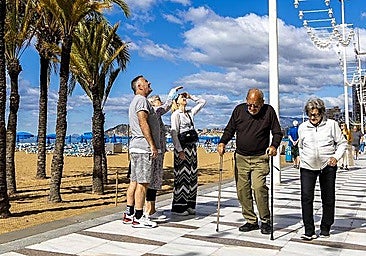
Benidorm senator Agustín Almodóbar highlighted the plight of the resort, which traditionally supplies the largest share of senior holiday places in Spain.
"Does the government consider it acceptable that its repeated refusal to modernise and update Imserso could leave Benidorm—one of its flagship and most popular destinations—without a single participating hotel next season, down from more than 60 just eight years ago?" the People's Party senator asked in a series of parliamentary questions.
Hosbec estimates that boycotting or withdrawing from the scheme would eliminate 15,000 direct and indirect jobs across hotel operations, supplier networks, and associated winter-season services, severely hitting seasonal resort towns.
Furthermore, the standoff poses a direct blow to public finances. Direct hotel revenue from the programme in the Valencian Community stands at an estimated €100m—an amount that "would be lost entirely if an agreement guaranteeing economic sustainability is not reached."
Added to this is a wider "ripple effect" across the local economy, which Hosbec values at an additional €50m in indirect spending across retail, catering, transport, and leisure services reliant on off-peak tourist footfall.
"We warn that this slump in activity will translate directly to regional public coffers, resulting in a tax shortfall of between €10m and €15m in VAT alone due to reduced economic activity and employment," the association added.
Ghost towns during winter months
The threat extends across the Valencian region's tourist map, including established Imserso destinations such as Jávea, Guardamar del Segura, Torrevieja, Denia, L'Alfàs del Pi (Albir), Peñíscola, Oropesa del Mar, Vinaròs, and Gandia.
For smaller coastal towns heavily dependent on low-season trade, the collapse of the scheme would trigger a severe slump, turning busy coastal hubs into virtual ghost towns. Streets, shops, and hotels would stand empty throughout autumn, winter, and early spring, risking temporary or permanent closures for businesses that rely on senior travel to survive.
Essential tool for year-round trade
Hosbec stressed that Imserso has historically served as a vital mechanism to combat seasonality, preserving trade and keeping hotel staff employed outside peak summer months.
The trade body reiterated its willingness to negotiate with the administration to find a workable compromise that balances affordable access for retirees with financial viability for hoteliers, demanding a price review that reflects real operational costs.
Current baseline operating costs - excluding capital depreciation - stand at €35 per person per day. However, Imserso currently reimburses hoteliers between €28 and €30. Hosbec added that several hoteliers have received contract offers as low as €26 per day.
Senator Almodóbar asked Pedro Sánchez's administration whether it was "reasonable" to maintain a framework that fails to cover operating expenses.
"How does the government justify its refusal to update economic terms when hoteliers report production costs rising by more than 30% in recent years?" he demanded.
He further questioned whether central government had evaluated how many hotels could be forced to shut during the off-season, how many workers would be affected, and whether ministers had engaged in direct talks with industry bodies.
He concluded by asking whether it was coherent for the government to champion off-season tourism under its national Tourism Strategy 2030 while maintaining unviable financial terms for the Imserso programme, which offers 879,213 subsidised places nationwide.
![[]](http://static.vocstatic.com/voc26/latest/assets/images/favicon/surinenglish/apple-touch-icon-57x57.png)