
Immigration
Spain's government to place buoys at sea to immediately return migrants without breaching Supreme Court ruling
The Supreme Court bans immediate returns when migrants arrive by swimming without encountering obstacles
Iñigo Goñi Davó
Madrid
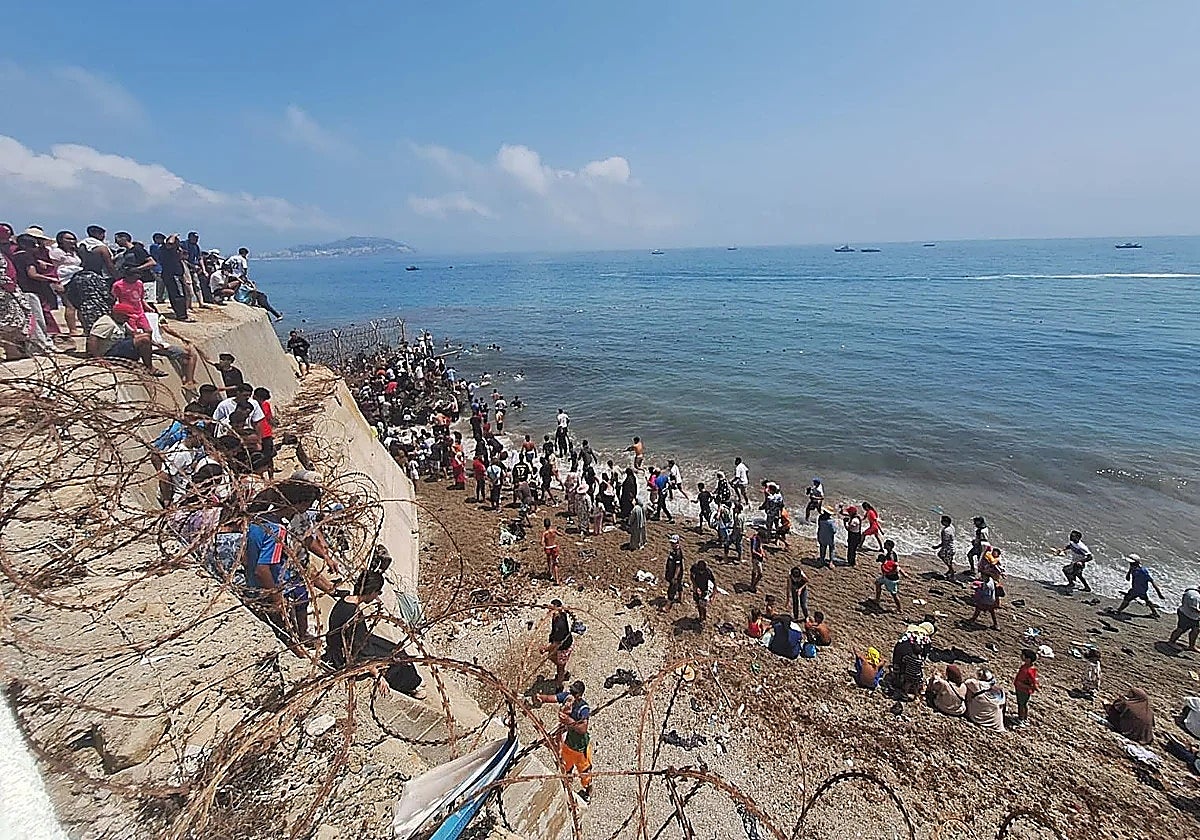
Spain's government is set to adopt an emergency measure at short notice in an attempt to curb the illegal entry of migrants swimming from ... Morocco to Ceuta.
During his visit to the autonomous city on Friday, PM Pedro Sánchez announced that the government will place buoys along the breakwater to create a sort of barrier in the sea, enabling the "immediate" return of illegal immigrants.
Sánchez said that the aim is "to comply with the Supreme Court's ruling and at least create a physical barrier (...) to facilitate repatriation at the border".
Related story
_20260731094602-Rndyfg82hLUtztZDItLNdCJ-366x256RC_20260731120017-U66653452371ojQ-620x434@Diario%20Sur.jpg)
On 8 July, the Supreme Court of Spain banned the immediate return of foreign nationals arriving on national territory without valid documentation. The ruling says that only those who attempt to breach man-made physical barriers such as fences, walls or barriers (obstacles which do not currently exist in Ceuta) may be turned back at the border.
The installation of buoys would replicate this premise and facilitate the repatriation of migrants who cross the border into the country illegally.
However, the absence of tangible barriers at the maritime border is not the only argument in the Supreme Court's ruling. It also states that, should the authorities turn away foreign nationals at the border, they would be acting unlawfully.
In other words, this would constitute an irregular act with no legal basis. This, therefore, infringes the rights of foreign nationals.
Another reason the Supreme Court cites in the ruling relates to the protection of vulnerable groups. The state has a duty to protect anyone who may be in a particularly vulnerable situation, such as minors, pregnant women, the elderly or those with a physical or mental disability. The ruling notes that immediate refusal of entry at the border is incompatible with the checks necessary to identify people in such a vulnerable state.
The main difference between the return procedure and refusal of entry at the border lies in ensuring the necessary administrative and judicial safeguards are in place and in bringing the migrant within the jurisdiction of the Spanish state, thereby removing them from a "lawless zone".
That is why the Supreme Court does not tolerate the practice of "immediate returns", except in exceptional circumstances.
Among the rights and safeguards that must be provided to migrants upon arrival at the border are legal assistance, the right to an interpreter to facilitate communication with the authorities and the right to effective judicial protection to ensure that no unlawful actions could leave them vulnerable.
At the same time, migrants have the right to apply for international asylum where appropriate, which prevents them from being returned to a territory where their life or physical integrity may be at risk.
![[]](http://static.vocstatic.com/voc26/latest/assets/images/favicon/surinenglish/apple-touch-icon-57x57.png)