
Ceuta
Spanish government downplays Moroccan warship incursions off Ceuta as 'isolated incident'
Moncloa defends two-month silence over July naval standoff that forced Spanish Navy deployment, while Royal Household confirms King Felipe VI was notified

Madrid
The Spanish government has defended its decision not to inform parliament or the public about the unauthorised entry of Moroccan warships into waters off Ceuta ... during the height of the July border crisis, describing the naval incursions as an "isolated incident."
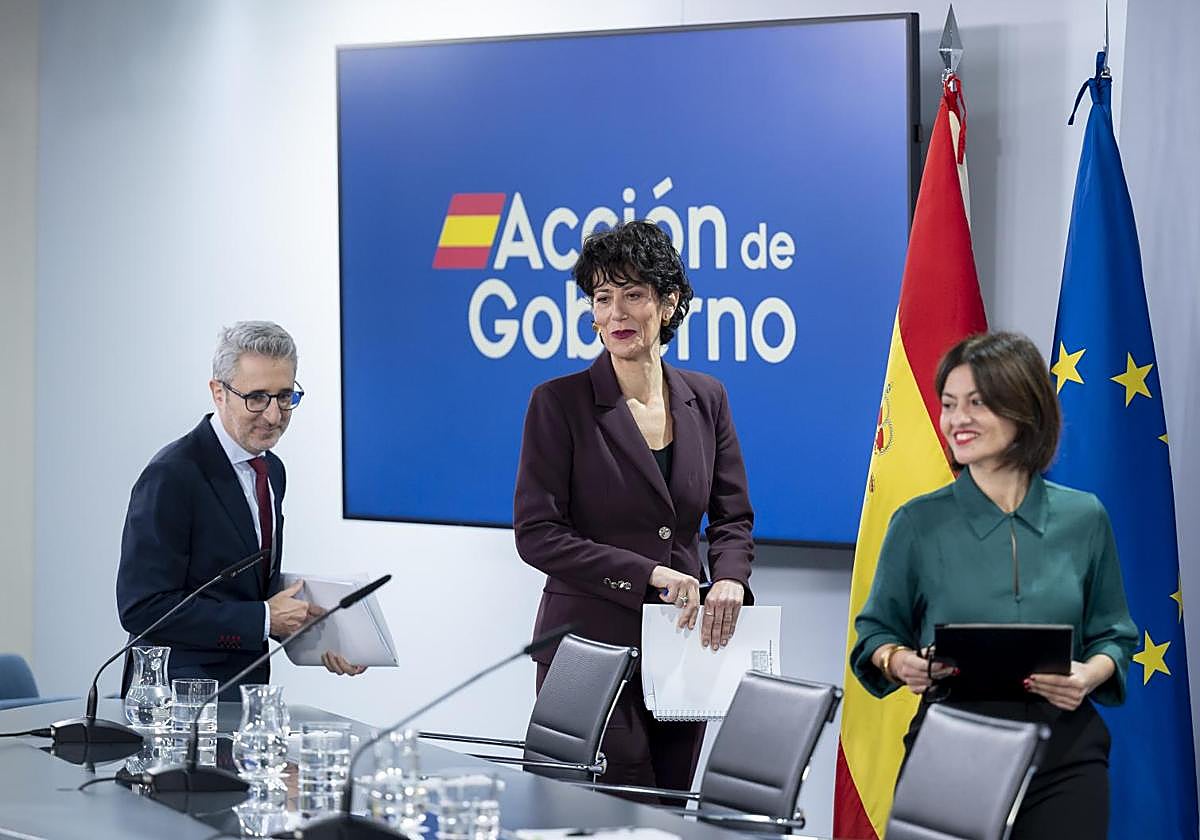
Government spokesperson Elma Saiz stated on Tuesday that the standoff was resolved "with complete normality within the framework of good neighbourly relations," answering repeated questions regarding the administration's two-month silence - a blackout that extended to Prime Minister Pedro Sánchez’s appearance in Congress on 3 September.
The statements follow revelations that at least one Moroccan Royal Navy frigate and several patrol boats navigated through Spanish territorial waters without authorisation on 30 and 31 July, coinciding with the mass crossing of tens of thousands of migrants at El Tarajal. The incursions continued into early August, nearly causing a collision between Spanish and Moroccan patrol vessels before the Spanish Navy deployed the maritime action ship Rayo and the frigates Santa María and Navarra.
Zarzuela Palace briefed as opposition demands accountability
Royal Household sources confirmed that the government informed King Felipe VI of the naval incursions, though Moncloa downplayed the urgency of the communication, suggesting Defense Minister Margarita Robles or Pedro Sánchez briefed the monarch during routine meetings rather than emergency channels.
The opposition Leader of the Popular Party (PP), Alberto Núñez Feijóo, sharply criticised the government's lack of transparency in Congress.
"Issues of national sovereignty are addressed in the seat of national sovereignty," Feijóo stated. "The Prime Minister must appear, tell the House what happened, and propose action. Territorial integrity is non-negotiable, and Morocco must know this."
Diplomatic balancing act with Rabat
Prime Minister Sánchez addressed the incident during informal discussions at the 12 October National Day reception, reiterating that "between two neighbouring countries, these types of isolated events happen." Sánchez avoided linking the naval presence directly to the border surge, emphasising ongoing bilateral cooperation in anti-terrorism and anti-narcotics operations.
Naval experts note that while minor friction with Moroccan Gendarmerie vessels chasing drug traffickers in contested waters is common, the unauthorised deployment of military warships into Spanish waters is virtually without precedent.
Despite the domestic controversy, Rabat has notably abstained from issuing formal diplomatic protests over King Felipe VI and Queen Letizia’s historic visit to Ceuta on Tuesday and Melilla on Wednesday - a stark contrast to 2007, when Morocco recalled its ambassador to Madrid following a royal visit by King Juan Carlos I.
![[]](http://static.vocstatic.com/voc26/latest/assets/images/favicon/surinenglish/apple-touch-icon-57x57.png)