
Cybercrime
Cybercriminals infiltrate genuine WhatsApp conversations in Malaga via unupdated iPhones
Police warn of a security breach allowing fraudsters to open invisible parallel sessions on victims' accounts and demand up to €1,000 from trusted contacts
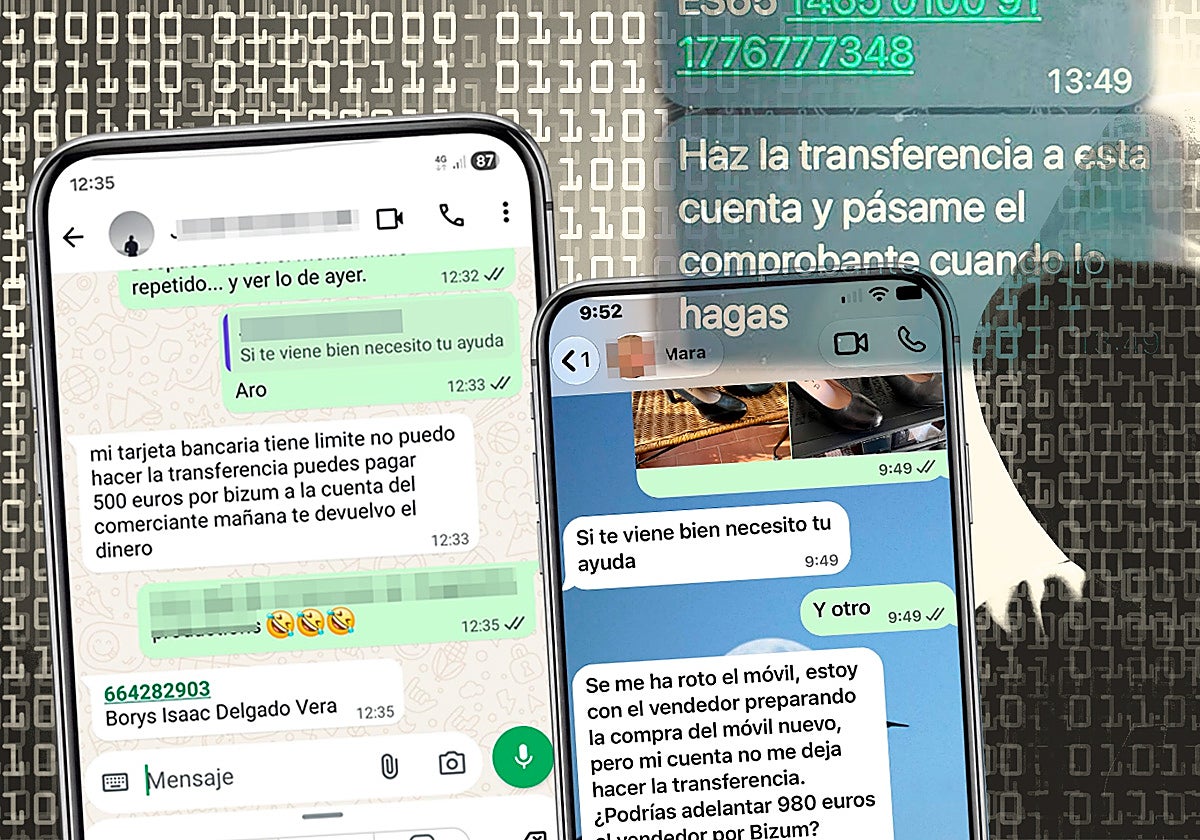

Imagine you’re chatting to your partner, your mum or a lifelong friend when, suddenly, you receive a message from their WhatsApp number urgently asking ... you for several hundred euros to cover an unexpected expense.
It’s not a fake profile or a stranger messaging from another phone: the message appears within the thread of your everyday conversations, with their actual name and previous chat history. This is the latest twist from cybercriminals, which is leading to a steady stream of reports in Malaga and is already being investigated by National Police officers specialising in cybercrime.
Félix was at work at eight o’clock in the morning when he received a call from his partner: ‘She asked me where I was and if I was all right.’ Someone was asking him for 1,000 euros via his WhatsApp account, claiming that his balance had dropped to zero and promising to pay it back the following day.
Related story
-
Cybercrime
Almudena Nogués
When he checked his phone, he realised there was no trace of that conversation on his screen. Convinced that his SIM card had been cloned, he decided to call his mobile provider to cancel the line. Since then, he has been going through an administrative nightmare: after changing his SIM card and phone number, his banks and even the National Insurance Office blocked his access for security reasons.
But how do cybercriminals manage to hack into someone else’s account without the owner realising? In this type of scam, the owner does not lose control of their phone nor do they need to click on any malicious links. The only vulnerability for those who fall victim to this attack is not having their iPhone’s operating system updated, as was the case with Félix and his iPhone 14 due to a lack of storage space.
As Chief Inspector Andrés Román, head of the Cybercrime Section at Malaga Provincial Police Headquarters, explained to SUR, the attackers exploit a dual vulnerability in WhatsApp and older versions of iOS (such as version 16 or earlier) to open a parallel session without the account holder realising.
Whilst the user continues to use their mobile as normal, the intruders access their chat list to send messages in their name from behind the scenes, without these messages being visible on the owner’s device.
‘Can you help me?’
Another woman from Malaga who was targeted and whom this newspaper has managed to contact began to suspect something was amiss when several relatives and friends started calling her, puzzled, after receiving a brief message from her number: ‘Can you help me?’. When someone replied, the fraudsters claimed that her mobile had broken, that she was in a shop buying a new one, that her card wasn’t working, and that she needed them to send a Bizum payment to the alleged shop assistant’s phone or make a transfer of 980 euros to an ING account, and they also demanded proof of payment immediately.
The cybercriminals managed to contact at least seven or eight people in her circle, but they were all suspicious. The victim, who was using an iPhone 12 that hadn’t been updated, went to report the incident to the National Police and then to a mobile phone shop, where she met another customer to whom exactly the same thing had just happened.
The authors are calling for reasonable amounts
Chief Inspector Román confirms that in Malaga there is a ‘steady stream’ of complaints regarding this issue, as is the case nationwide. The police commander explains that, on the one hand, the person whose identity has been stolen suffers a serious breach of their privacy and the security of their communications; and on the other, their contacts are the real target of the financial plunder.
To avoid arousing immediate suspicion, the perpetrators demand manageable sums, usually between 300 and nearly 1,000 euros.
The National Police are pursuing various lines of inquiry to track down those responsible, although Román emphasises that the root of the problem lies in a security breach by private service providers, and it is therefore up to companies such as Apple and WhatsApp to provide their customers with a definitive technical solution.
He also warns of the added risk faced by those who still use iPhone models so old that they are no longer supported and cannot install updates, as they remain exposed to this security vulnerability.
To nip any scams in the bud, the head of the Cybercrime Unit in Malaga emphasises a foolproof method: if you receive a request for money via WhatsApp, simply make a standard phone call to that contact, as the legitimate owner will still have their line active, will answer straight away and will deny the message.
What to do if someone hacks into your WhatsApp
The rise in these incidents has also prompted a specific warning from the National Cybersecurity Institute (INCIBE) following a surge in enquiries from iPhone users.
According to the organisation’s records, the majority of cases involve devices running versions prior to iOS 18, although incidents have also been reported on devices running versions prior to iOS 26.7. Both the National Police and INCIBE advise anyone who suspects that their account is being used in parallel to follow a strict protocol in the exact order specified, as altering the steps may prove ineffective:
—Raise the alarm and gather evidence: immediately warn the contacts by telephone or text message not to make any payments, and ask them to take screenshots of the fraudulent messages and the account numbers provided before deleting anything.
—Update iOS first: go to your iPhone’s settings and download the latest compatible version of the operating system after backing up your chats.
—Delete and reinstall WhatsApp: once the operating system has been updated, completely delete the WhatsApp app from your device - simply removing the icon from the home screen is not enough - and download it again from the App Store to log out of any parallel sessions.
—Enhance security: enable two-step verification using a personal PIN in the WhatsApp settings, regularly check the ‘linked devices’ section to log out of any unknown sessions and, if a contact has managed to transfer money, contact your bank immediately and report the incident to the police or seek free advice by calling INCIBE on 017.
