
Economy
Spain's economy will grow more than expected in 2026, but with high inflation, Brussels says
Spain remains the fastest-growing of the major EU economies, with GDP growth of 2.6%, but growth is set to slow in 2027 and 2028
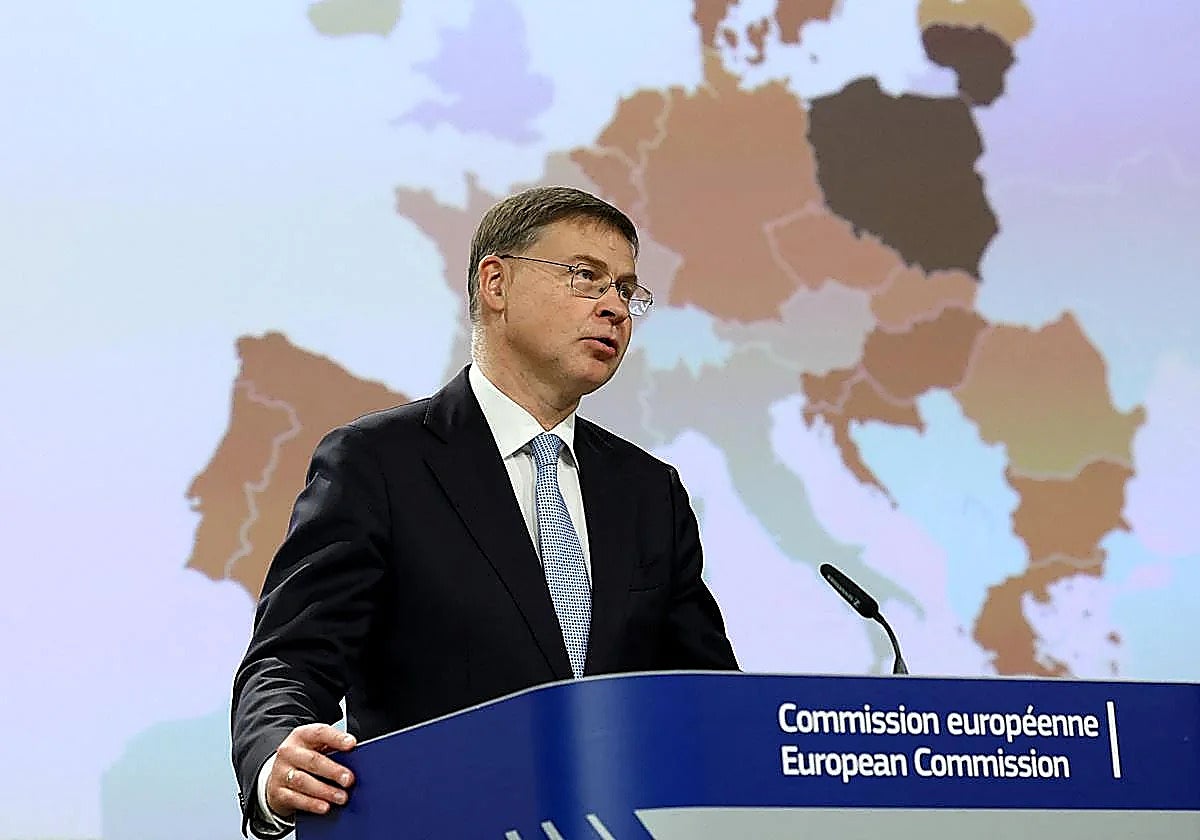

The European Commission has revised its growth forecast for the Spanish economy upwards for this year. Spain remains the fastest-growing economy among the major ... economies of the EU.
In its autumn economic forecasts, the European Commission highlights that Spain's GDP "will remain strong in 2026", at 2.6% (which is 0.2% higher than forecast in the spring economic projections) and is in line with the Ministry of Economy's forecasts. However, Brussels warns that the Spanish economy "will gradually slow down" over the next two years and that the country will face high inflation, which is set to rise to 3.9% this year.
The EU body notes that the Spanish economy's growth will lose momentum next year (2.1%) and in 2028 (1.9%), as employment growth and the boost from European recovery funds wear off. These figures are slightly more pessimistic than those of the Spanish government, which forecasts economic growth of 2.2% for 2027 and 2.1% for 2028. Against this backdrop, private demand, household savings and investment will continue being the main drivers underpinning the domestic economy.
Bottlenecks in the housing market are one of the "main risks" to the Spanish economy. "A persistent supply shortfall, relative to the formation of new households, would keep price pressures high and could increasingly limit labour development and the influx of workers," the European Commission notes. Furthermore, rising construction costs could further weigh on residential investment.
Brussels also forecasts that inflation will rise to 3.9% this year, due to high energy prices caused by the war in the Middle East, before falling to 3.3% in 2027. Meanwhile, the public deficit is expected to rise to 2.6% in 2026 and fall to 2.2% in 2028. The public debt-to-GDP ratio is also expected to fall to below 100% of GDP.
The Commission notes that, due to the snap election, the draft budget for 2027 has not yet been submitted and that its forecasts assume a continuation of current policies.
The Ministry of Economy highlights that the Spanish economy is "more than doubling the growth forecast for the eurozone", against a backdrop "marked by high uncertainty stemming from the war in Iran and volatility in the energy markets". On inflation, it says that "the response measures adopted by the government and the high penetration of renewable energy are helping cushion the impact of the energy shock on households and businesses".
European challenges
The EU faces significant economic challenges due to geopolitical instability and high inflationary pressures. Brussels forecasts that EU growth will average around 1.4%, a slight improvement over the spring projections. The European economy is expected to remain unchanged in 2027 before expanding modestly by 0.1% in 2028, reaching 1.5%. Inflation is projected to reach 3.3% this year, moderating to 3.2% next year and 2.3% in 2028.
The European Commission acknowledges that the rising cost of living continues to erode household purchasing power, which in turn slows consumption.
Germany, the EU's largest economy, will grow by just 1.3% this year (below the European average) and fall to 1% in 2027 and 0.7% in 2028. There are also concerns about the French economy, which will grow at a slow rate of 0.4% and 0.6% this year and next, before rebounding to 1.4% in 2028.
