
Immigration
Brussels offers further support to Spain by deploying Frontex to 'control the border' in Ceuta
The Commissioner for Internal Affairs and Migration has contacted Spain's Interior Minister Fernando Grande-Marlaska to find out about the situation in the autonomous city
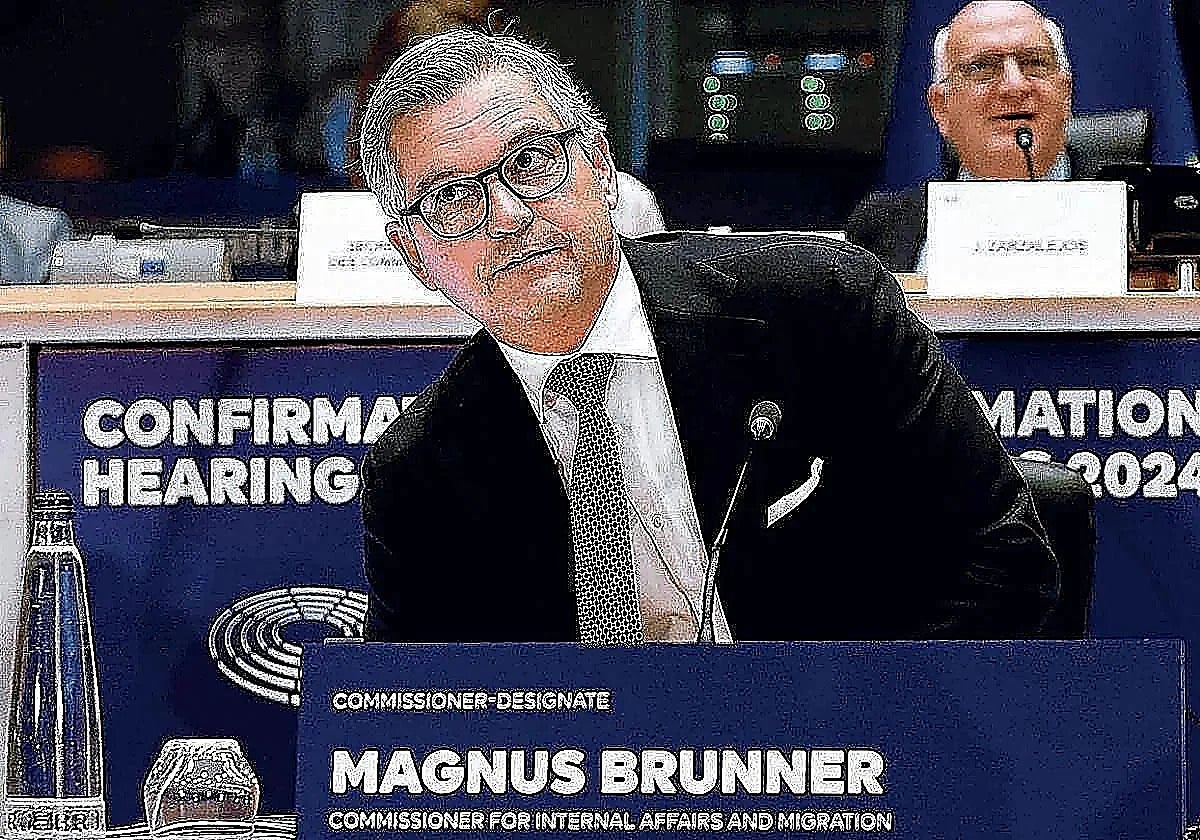

The European Commission is closely monitoring the situation in Ceuta amid the greatest migration crisis the city has ever experienced.
Commissioner for Internal Affairs and ... Migration Magnus Brunner stated on social media that he has been in contact with Spain's Inteior Minister, Fernando Grande-Marlaska, to convey Brussels' willingness to "increase support for Spain", including cooperation through Frontex to "bring the situation under control".
"Protecting the EU's external borders is a crucial part of our efforts to combat illegal migration," Brunner stated.
Related story
_20260731094602-Rndyfg82hLUtztZDItLNdCJ-366x256RC_20260731120017-U66653452371ojQ-620x434@Diario%20Sur.jpg)
The scale of this crisis has led Brussels to offer support through Frontex, the agency responsible for border management and the control of irregular migration into Europe.
The EU Commission is also in contact with the Moroccan authorities to prevent irregular arrivals in Ceuta. The mass arrival of migrants in recent hours threatens to escalate into an international crisis, particularly following the threat by far-right Italian Prime Minister Giorgia Meloni to close the Schengen area with Spain. Finland is also considering this measure.
Previous cases
This is not the first time the EU has faced threats of this kind from a member state. In September 2024, Germany imposed strict land border controls, which the German government justified on the grounds of the increase in migrant arrivals and the pressure on its reception centres.
This impacted the borders with its nine neighbouring countries, including France, Poland, Austria and the Netherlands. The European Commission criticised this measure and stated that border controls should be an exceptional measure of last resort, as they undermine the free movement within the Schengen area.
At the same time, Austria maintained border controls with Slovenia and Hungary, while Italy stepped up its own controls on the border with Slovenia, citing "security reasons". The government in Ljubljana stepped up land border checks on its borders with Croatia and Hungary.
In recent months, the EU has strengthened its common migration policy through the implementation of the Pact on Migration and Asylum and the amendment of the return directive, which in practice speeds up deportations and endorses the creation of migrant detention centres in countries outside the EU.
However, it still relies on third countries such as Turkey, Morocco and Tunisia to manage its external borders.
In fact, the EU's eagerness to speed up deportations has led the bloc to deal with authoritarian regimes. In June, representatives of the European Commission and 15 member states met with a Taliban delegation in Brussels to negotiate the return to Afghanistan of nationals who had committed serious crimes or posed a serious threat to security in Europe.
![[]](http://static.vocstatic.com/voc26/latest/assets/images/favicon/surinenglish/apple-touch-icon-57x57.png)