
Costa Blanca
Orihuela Costa: The 30,000-strong British-Spanish 'colony' seeking independence on the Costa Blanca
A newly formed political party argues that decades of chronic under-investment in schools, healthcare and public buildings justify breaking away to form Spain's newest municipality

José Luis Fernández
Alicante
A predominantly British-Spanish community, alongside residents of many other nationalities, has mobilised to demand independence for Orihuela Costa from the municipality of Orihuela.
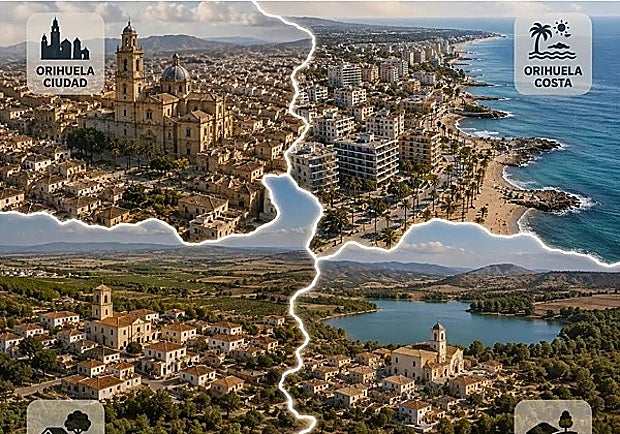
The ... coastal area lies more than 30 kilometres from the main urban centre and has developed into a substantial residential community in its own right.
Officially known as Orihuela Costa, the area has expanded rapidly along the coastline of Orihuela's vast municipal territory, which covers 443 square kilometres and is the largest municipality in the province of Alicante.
Residents have now established the PIOC, or Orihuela Costa Independence Party, which uses both English and Spanish across its online channels.
"We want to build an autonomous, prosperous and better managed future. For far too long, decisions about our community have been made in Orihuela without taking our specific needs into account," said PIOC president Román Jiménez in an online petition on Change.org.
The petition had collected 1,700 signatures at the time of publication and has a target of 20,000.
"We believe that independence for Orihuela Costa is essential to achieving a local administration that is closer to residents, more efficient and capable of managing our resources and priorities," Jiménez added.
PIOC says it is preparing a technical dossier, which it describes as "solidly built", to support the administrative separation of Orihuela Costa, backed by reports intended to demonstrate that the creation of an independent municipality would be viable. The group says it needs residents' support through its signature campaign to begin the process.
The party's stated goal is "an Orihuela Costa with greater autonomy, better services and the ability to decide its own future".
"Sign and help us make the independence of Orihuela Costa a reality," Jiménez and his supporters said in their appeal.
Registering ahead of the 2027 elections
A key part of the campaign is encouraging residents to register on Orihuela's municipal population register, known in Spain as the 'padrón', so they can meet the requirements to vote in the next local elections in 2027.
PIOC publishes information on its website about registration requirements for EU citizens as well as British and Norwegian nationals and people from Bolivia, Cape Verde, Chile, Colombia, Ecuador, Iceland, South Korea, Mali, New Zealand, Paraguay, Peru, Switzerland, Trinidad and Tobago and Venezuela, reflecting the international character of the coastal community.
"It's not just a paradise of sunshine, Blue Flag coves and golf courses. Today it's the scene of one of the most acute territorial, fiscal and social conflicts in the Valencian Community," the party said on social media.
"What centralist administrations treated for decades as a simple coastal holiday resort has been transformed into a permanent residential town with more than 30,000 permanent residents," it added, estimating that the area's transient population exceeds 100,000.
PIOC argues that the population boom has clashed with a model of municipal administration that neighbourhood groups openly describe as "a colonial relationship", citing what they describe as chronic institutional neglect. The campaigners say independence has therefore "ceased to be a political utopia and become a technical necessity".
They also claim that residents contribute substantially more in taxes than they receive in public services, with the resulting surplus allegedly being used to fund the town hall's day-to-day expenditure and, in particular, the restoration of historic heritage in Orihuela's town centre.
PIOC highlights the number of museums there, claiming it has more than any other Spanish town of a similar size and that its cultural provision is more typical of cities with populations over 500,000. By contrast, the party says coastal residential developments "don't have a single public library, theatre or museum".
The group also claims that healthcare provision is facing "total collapse" following the definitive cancellation of a promised expansion of the Aguamarina health centre. It says doctors are dealing with "unsustainable" ratios of almost 2,000 patients per doctor.
In education, PIOC says the situation is "close to a social emergency", with more than 600 children from the coast without a place at a suitable school. The party claims the authorities have responded by installing prefabricated metal classrooms and making promises that are years overdue.
The legal case for a separate municipality
PIOC says its technical dossier is designed to show that Orihuela Costa meets all the legal requirements to become an independent, self-sufficient municipality. The group points to its population, a geographical separation of around 35 kilometres and what it describes as financial solvency based on the area's own tax revenues.
The legal teams supporting what PIOC calls the "emancipation movement" say they are drawing on Supreme Court case law. They cite the municipal separations of San Antonio de Benagéber in Valencia and El Palmar de Troya in Seville, as well as the local precedent of Pilar de la Horadada, which successfully separated from Orihuela in 1986, arguing that these cases support the same legal doctrine.
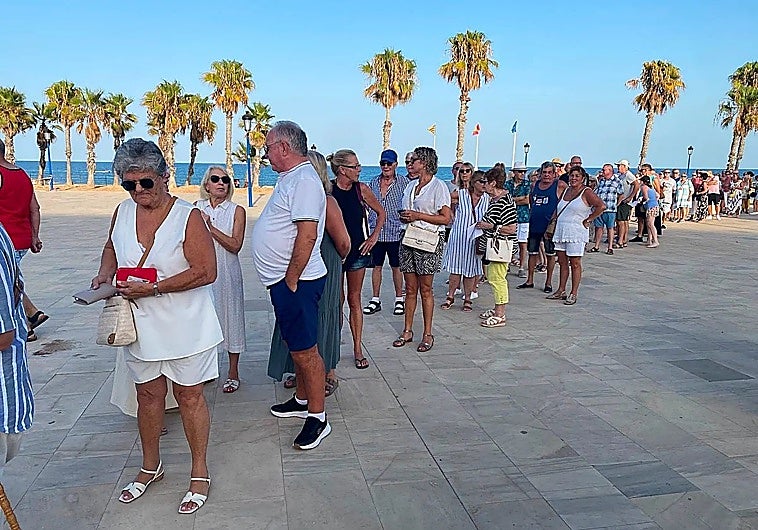
The campaign recently took to the streets with an exhibition marking the 40th anniversary of Pilar de la Horadada's separation, featuring photographs and documents from the period alongside a new signature-gathering drive.
PIOC leaders argue that Supreme Court case law establishes that a parent municipality cannot legally retain territory purely for tax revenue if it cannot provide the minimum services required by law. They cite notarial records that they say document inadequate waste collection, a lack of stormwater drainage during 'DANA' storms (a type of severe, slow-moving weather system that has caused deadly flooding in Spain in recent years) and shortcomings in emergency services.
The party concludes that "Orihuela Costa has reached a point of no return". "The debate is no longer about a political dispute or a sense of distinct identity. It's a matter of pure management efficiency," its leaders argue.
A geographically dispersed municipality
According to Orihuela's Department of Statistics, the municipality's registered population increased by 3.7 per cent in 2025 compared with 2024, adding 3,245 people and bringing the total close to 89,000.
"This population growth has been driven mainly by the increase recorded in Orihuela Costa, which has experienced growth of 7.7 per cent," the town hall says on its website.
The figures also highlight the municipality's geographically dispersed nature, with several outlying districts recording population growth of more than five per cent, including Barbarroja, Correntías Bajas, Correntías Medias, Los Huertos, Media Legua, Molino de la Ciudad and Torremendo.
Orihuela's town centre remains the largest single population centre, with 33,260 registered residents, although its population increased by only 1.1 per cent. Orihuela Costa, meanwhile, has 30,171 registered residents, a figure that does not include the area's transient population, which increases significantly because of its strong tourism presence.
![[]](http://static.vocstatic.com/voc26/latest/assets/images/favicon/surinenglish/apple-touch-icon-57x57.png)