
The Euro Zone
Mixed messages
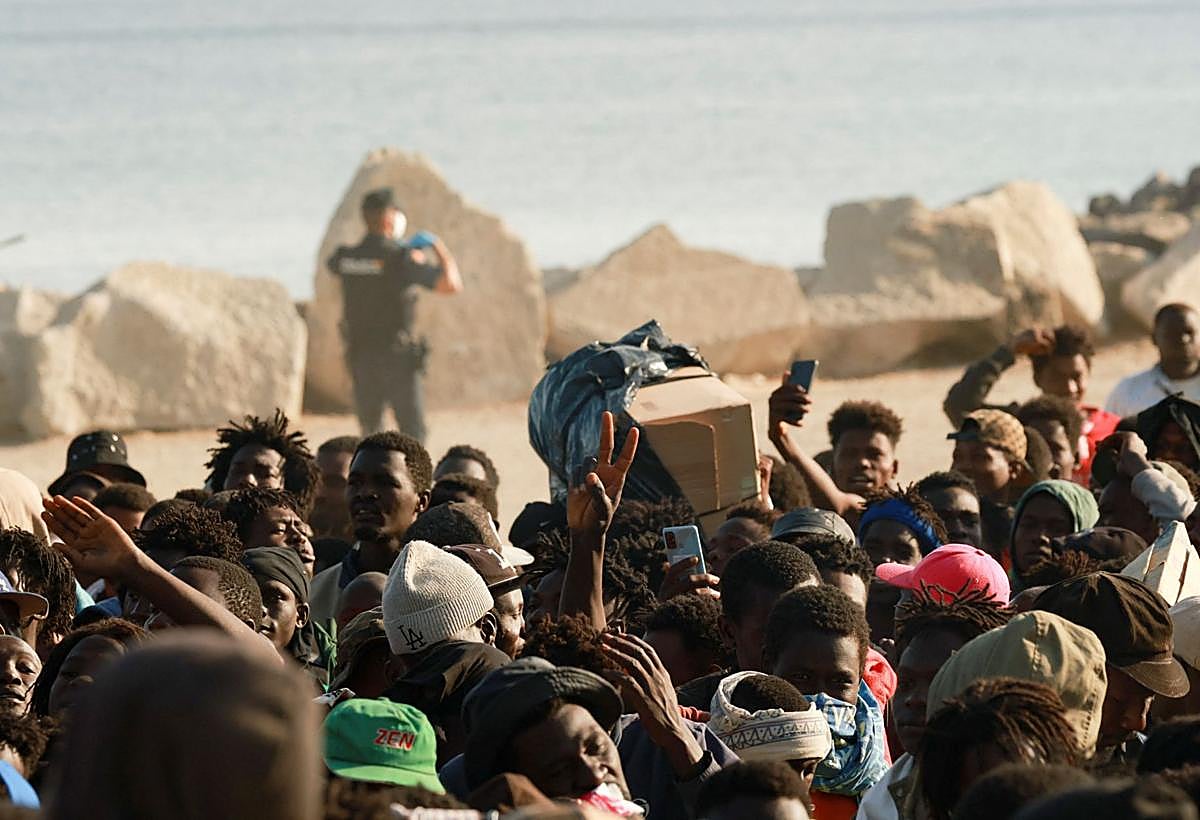
Columnist Mark Nayler argues that the Spanish government's decision to retain 500 Moroccan minors has shattered its consistency over the Ceuta border crisis, sending a dangerously mixed message to both the EU and potential migrants
Mark Nayler
Defending Spain against criticism from the EU leadership and other Euro governments over the Ceuta crisis depended on one key element of its stance - namely, consistency. So long as Pedro Sánchez stood firm on sending the migrants back to Morocco, any claims he was transmitting the wrong message over illegal immigration (i.e. a dangerously, indiscriminately welcoming one) could be rejected.
As late as 13 August, two weeks after the mass arrivals in the north African enclave, Spain’s interior minister Fernando Grande-Marlaska was saying: “Anyone who illegally enters Ceuta or Melilla knows they will be sent back because Spain and Morocco work together to this end.” He couldn’t have been clearer.
A rapid returns policy also made it possible to argue, as I did here a two weeks ago, that it was mistaken to cite Sánchez’s mass regularisation plan as a cause of the Ceuta crossings. The people who arrived in the enclave in late July belonged to one group of illegal migrants (those who cross the border in exceptional circumstances, prompting a crisis), the beneficiaries of the regularisation plan (who were already here and had to meet specific eligibility criteria) to another. Each was entirely separate.
Such a defence is no longer possible. The government’s decision to keep 500 unaccompanied minors (those under the age of 18) from Morocco in Spain, though probably the result of good intentions, has destroyed its consistency over Ceuta. That does send out the wrong message and makes it difficult to defend Sánchez against charges of excessive leniency over illegal immigration.
Considered by itself, the decision to keep these 500 unaccompanied minors in Spain seems misguided. Not necessarily for the reason given by Juan Bravo, the PP’s deputy secretary for finance, housing and infrastructure, who claimed that “It’s in the best interests of the child to be with their family”. That depends on what the family is like, assuming that one actually exists for a minor to be returned to (an assumption that is surely wrong in some cases). The most compelling reason is that the EU Commission has clarified that doing so is mandated by the bloc’s illegal immigration rules, which Spain has pledged to respect.
The message Spain is now conveying over illegal immigration goes something like this: “If we take a hard line on illegal crossings, and state that anyone who arrives in irregular circumstances will be returned to their country of origin straight away, don’t take it too seriously. We might reconsider.”
This is a message that other European governments can justifiably be concerned about. Meanwhile, it might provide hope for any other Moroccan teenagers tempted to swim over into Spain. The door there, it seems, is not closed but ever so slightly ajar.
![[]](http://static.vocstatic.com/voc26/latest/assets/images/favicon/surinenglish/apple-touch-icon-57x57.png)