
The Euro Zone
A hasty retraction
After demanding a tougher EU stance on Beijing's massive trade deficit, Madrid quickly performs a diplomatic u-turn to protect critical Chinese investments says columnist Mark Nayler
MARK NAYLER
Several European countries have called for a tougher stance on trade relations with China, putting Pedro Sánchez's government in an awkward position.
Ahead of an EU Commission debate last Friday, Spain joined Italy, the Netherlands and Lithuania in signing a document demanding that the EU take stringent measures to reduce its 360 billion-euro trade deficit with Beijing.
Last Friday's brainstorming session comes ahead of two high-level meetings in which trade imbalances with China will be top of the agenda: a G7 summit in Paris mid-June, immediately followed by an EU leaders' conference in Brussels.
Within a few days of signing the document, however, Spain had backtracked. Economy minister Carlos Cuerpo "explained" this apparent reversal with a classic piece of politico-speak: "There was no specific political support of any non-paper at this stage", he told a (presumably baffled) reporter in Berlin.
I think what Cuerpo meant was that the document signed by Madrid was not official or binding, just a collection of suggestions; and that the Spanish government would have to think carefully before formally backing any measures that could be perceived as hostile by Beijing.
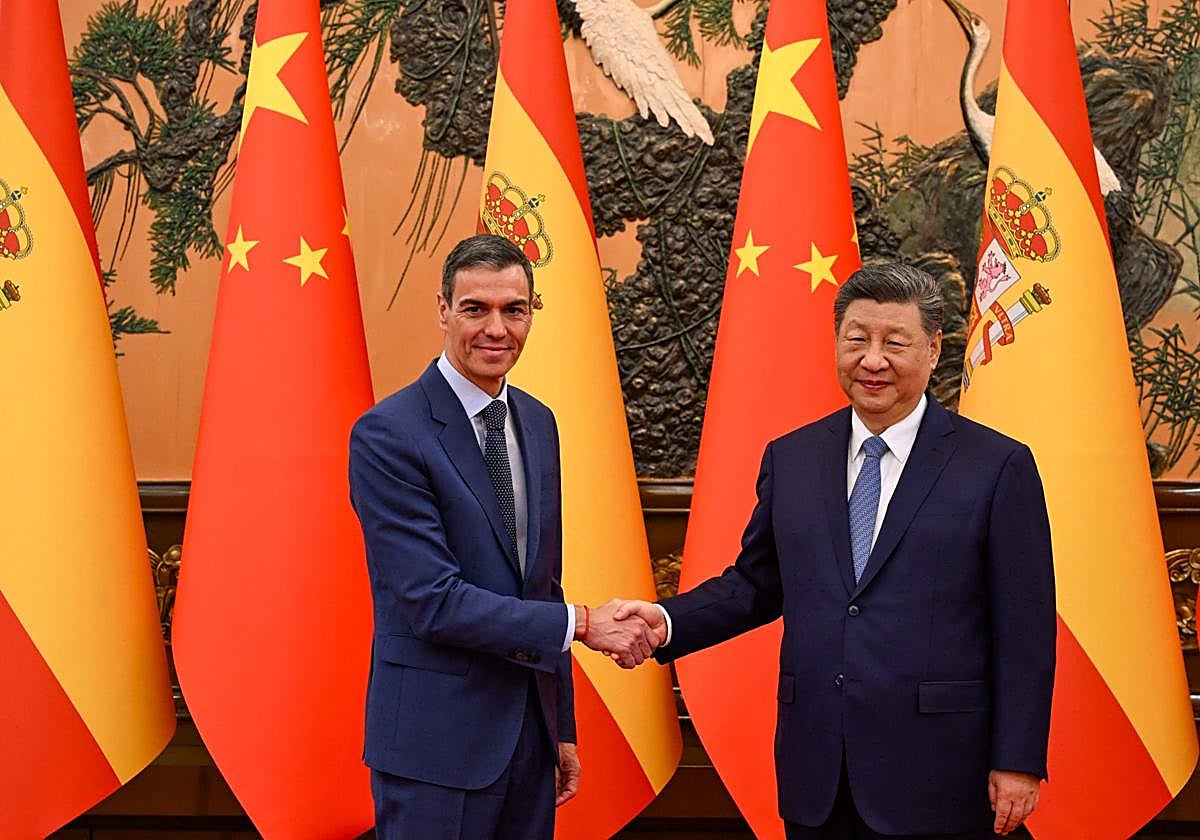
This is no surprise, given that Prime Minister Sánchez - who has visited Xi Jinping four times in as many years - is actively seeking closer economic ties with Beijing. China is already Spain's biggest trading partner outside the EU, accounting for 20per cent of its pork exports and the third-largest share of Spanish olive oil (behind Europe and the US).
Beijing is also investing heavily in Spain's renewable energy and automobile sectors. Most recently, its state-owned car manufacturer SAIC chose Spain as the destination for its first European factory, which will provide over 1,000 jobs in the Galician port town of Ferrol.
Still, Spain runs a 40-billion-euro trade deficit with China, described by Sánchez during his last visit to Beijing in mid-April as "unsustainable."
Waging a Trumpian tariff war, of course, is one way to try to reduce a trade deficit. But Sánchez is one of several leaders who seem to be opting for a healthier alternative - namely, increasing exports.
Already this year, the leaders of Ireland, Finland, Canada and the UK have also visited Beijing. All of them are trying to attract more Chinese business, in part to counteract the possible effects of US isolationism.
Last April, US treasury secretary Scott Bessent warned that any country seeking closer economic ties with China would be "cutting [its] own throat".
Sánchez is well aware of the risks posed to European competitiveness by China's state-owned behemoths.
But he requires smooth diplomatic relations to make Beijing a better customer - which is why Cuerpo made such a hasty retraction over that mysterious "non-paper".
![[]](http://static.vocstatic.com/voc26/latest/assets/images/favicon/surinenglish/apple-touch-icon-57x57.png)