
Opinion
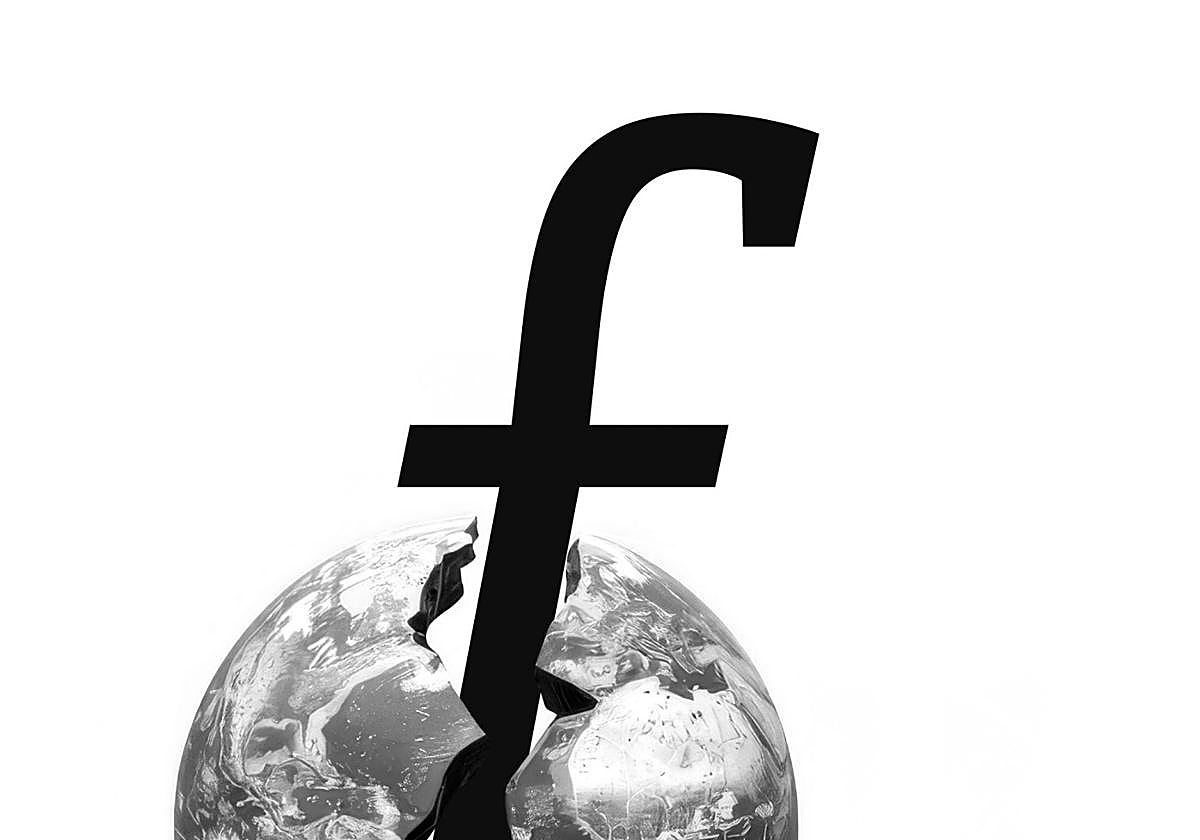
The fractures in our world
Humanity is facing an unprecedented combination of threats; our mechanisms for collective action are under increasing pressure
Francisco J. Carrillo, Real Academia de Ciencias Morales y Políticas
The United Nations General Assembly took place in New York, with a significant number of heads of state and government in attendance. It serves as ... a sounding board for the speeches delivered there, which reflect the contradictory realities of power. Alongside the public spectacle, bilateral talks between states take place behind the scenes - talks that are usually secret - quite apart from the picturesque photos, intended for domestic consumption, such as those of Venezuela’s acting president, Delcy Rodríguez, ‘spontaneously’ greeting the Spanish Prime Minister - complete with kisses on the cheek - which are amplified by the local press.
However, the warning issued in the opening address delivered by the UN Secretary-General has met with little response; he began it with the following sentence: "The rifts in our world are widening, and the cracks have turned into chasms", emphasising the devastating wars that have erupted over the past decade and continue with abject cruelty: civilians have been targeted; human rights have been trampled underfoot; hunger has been used as a weapon; humanitarian workers have been murdered; international law has been cast aside; geopolitical divisions have deepened; inequalities have been exacerbated; trust has been shattered.
And artificial intelligence (AI) has advanced at a pace that has taken even its creators by surprise. The UN Secretary General states: "These are not isolated crises, but chapters in the same story - the story of power: who holds it, who is denied it, how it is used and how it is changing".
In highlighting the emergence of new centres of economic, political and technological influence, he warns of an extraordinary transfer of power from governments to a handful of private companies and individuals - new actors present in politics, the economy, information flows, technological development and the civic space on which societies depend. In this context, human beings are ceding more and more power to machines, with AI agents becoming uncontrollable.
Lethal autonomous weapons are no longer the stuff of science fiction and are becoming a military reality, while our institutions and systems of governance continue to reflect the power dynamics and interests of an era that is largely behind us. The UN Secretary-General states that this is the decisive challenge facing us: humanity is confronting an unprecedented convergence of threats; our mechanisms for collective action are under increasing pressure.
"There is no doubt that we are heading towards a multipolar world. And that trajectory is irreversible," he adds verbatim. A trajectory on which we currently find ourselves: a world characterised by fragmentation, by growing tensions and ever-deepening mistrust, by fractured markets and weakened institutions, by dwindling cooperation and zero-sum calculations.
The UN Secretary-General proposes the alternative of interconnected multipolarity, built on the basis of interdependence and sustained by a dense network of economic, political, social and technological connections. A world in which multiple poles of influence coexist within a common framework of international law and shared norms, helping to prevent hegemonic tendencies and division into two rival blocs, with economic, technological and security systems different from those of today, where competition will remain a constant feature of international relations - competition that need not necessarily turn into confrontation. In building a networked future, the superpowers, above all, must recognise that their power is not as absolute as it seems: their power has limits.
Recent years have left no room for doubt: military might is not enough to consolidate peace; economic might alone is not enough to ensure stability; technological might alone is not enough to guarantee security.
The UN Secretary-General reaffirms the fundamental principles: the primacy of international law, the defence of human dignity and the pursuit of justice in all its dimensions - pillars of the effective, legitimate and responsible exercise of power in the 21st century. And he asks: "Will we do anything to ensure that power is governed by law rather than force? By cooperation rather than coercion? By a sense of responsibility towards young people and future generations rather than indifference to their fate?" It must be noted that progress remains out of reach for billions of people, who see prosperity all around them, but not for themselves, as they are deprived of basic necessities: food, clean water, education, decent work, healthcare and dignity.
There is no peace without development, there is no development without peace, and there is neither peace nor development without human rights
In today’s wars, civilians continue to be killed far from the front line. In armed conflicts, power spirals out of control; force takes precedence over diplomacy; defence budgets become a priority; and any semblance of accountability is lost.
However, world peace is essential to the survival of the human race. There is no peace without development, no development without peace, and no peace or development without human rights. "It is a fallacy," says the UN Secretary-General, "to pretend that peace can be separated from dignity, opportunities and rights."
![[]](http://static.vocstatic.com/voc26/latest/assets/images/favicon/surinenglish/apple-touch-icon-57x57.png)