
Employment
Malaga vocational training achieves 65.7 per cent job placement thanks to growing demand and social acceptance
Vocational training is also enjoying a more positive societal perception in Spain
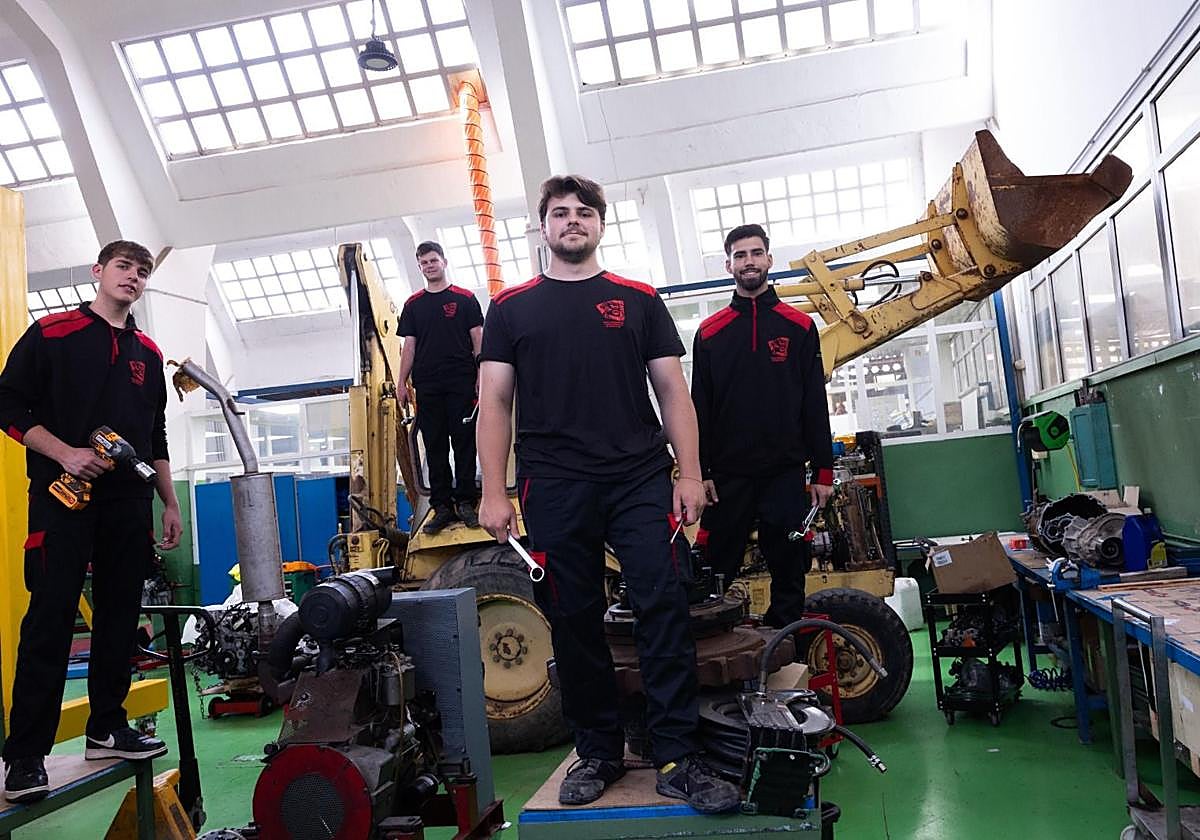

Vocational education and training (VET) has reached new heights in Malaga province over the past ten years.
According to the latest data from the regional government, 65.7 per cent of graduates obtain a job within four years of receiving their degree, which proves that society is more and more accepting of this type of education.
In addition, in less than a decade, the number of available places for vocational training has doubled in Malaga province, going from 10,500 students in 2018-2019 to 20,447 in 2024-2025. Demand keeps growing, both in the public and the private sectors, with an increase of almost 600 per cent in the latter in a decade.
By sectors, vocational training in the technology and communication sectors clearly stands out. Job placement rises to 75.2 per cent, followed by business, administration and law, with 69.9 per cent, and mechanics, electronics and other technical training, with 64.9 per cent. The sector with the 'worst' performance is agriculture, fishing and forestry, with 45.2 per cent.
At national level, placement is close to 70 per cent. This is a sign that companies value the dual model of vocational training, which combines theoretical training with work experience in companies. In many cases, these internships become a direct bridge to the first job.
The essence of dual vocational training is to understand that investment in training pays off for companies, even if it is not in the short term. The success rates of VET in Malaga province proves employers' change of mentality.
Social perception
SUR takes a look at a typical day at the IES La Rosaleda, where students train to become future car mechanics. Under the supervision of Miguel Galera, they are currently working on a 20-year-old car, which needs a brake pads change.
Galera tells SUR that he has witnessed firsthand how VET has evolved over the past few years, going from a back-up for students with lower academic results to a first choice that guarantees employment.

For Galera, social acceptance is just as important as employment, as the two factors are interlinked. While university students still achieve higher employment rates in the four years after obtaining a degree (73.8 per cent in Malaga), VET students are starting to stand out.
CaixaBank Dualiza has just published an ambitious report that focuses on the sociological aspect and how vocational training is perceived. It states that 69 per cent of Spaniards value vocational training positively, although a certain social stigma still persists.
Employers increasingly trust young people coming from a vocational training background, as confirmed by head of the Andalusian confederation of employers (CEA) Javier González de Lara. "VET is today an option of enormous value, both for young people and for companies," he said, highlighting the "wide range of courses adapted to the needs of companies".
Dual vocational training allows young people to join and train in the field from the very first moment, acquiring professional skills through practice. At the same time, it offers companies the opportunity to attract, develop and retain talent aligned with their own dynamics.
According to education delegate in Malaga Miguel Briones "vocational training has become a key tool for creating skilled jobs in Andalucía" and "responding, from an educational perspective, to the current demands of the labour market".
![[]](http://static.vocstatic.com/voc26/latest/assets/images/favicon/surinenglish/apple-touch-icon-57x57.png)