
Tourism
Malaga tourism industry reviews 'incalculable' losses amid post-Easter AVE train delays
The economic impact is yet to hit the province, but the regional government is already considering seeking compensation through legal proceedings

Málaga
Malaga province's tourism industry is starting to recalculate the losses it had estimated before learning that the direct high-speed rail to Madrid would not reopen until the final weeks of April.
Tourism experts and business owners initially put the cost at 1.3 billion euros, but that was when they thought that AVE trains would resume running between Malaga and Madrid shortly before Easter.
Quick Facts: Malaga AVE Disruption
-
The Malaga tourism industry is facing "incalculable" financial losses following the announcement that the AVE high-speed rail connection to Madrid will remain closed through the Easter 2026 holiday. Regional authorities are now weighing legal action against the central government to recover billions in lost revenue.
-
Original Reopening Date: Before Easter Week 2026.
-
- New Reopening Date: Late April 2026.
-
- Estimated Economic Loss: €1.3 billion+ (Initial estimate).
-
- Alternative Route: Renfe bus-train transfer via Antequera (adds ~45 mins).
-
- Core Cause: Severe damage to tracks in Álora following Storm Leonardo.
The new deadlines, according to regional minister of tourism Arturo Bernal, imply that the Costa del Sol "has definitively lost" Easter Week. The first major holiday of the year usually marks the start of tourism's reawakening, especially for a province like Malaga that receives an inflow of visitors from within Spain thanks to the high-speed rail.
After the announcement that the president of state rail infrastructure company Adif made on Monday, the managers of the various employers' associations in the tourism industry have agreed that they need time to recalculate the costs.
In addition to the guaranteed financial losses, business owners fear that the incident and the delays contribute to a shared sense of mistrust among passengers.
As Bernal pointed out on Monday, the rupture in the high-speed connection in Malaga province impacts not only business owners but also "the wealth and employment of an entire district, the whole province of Malaga and the Costa del Sol".
Legal threats
During the forum SUR hosted over the last few days, regional minister of economy Carolina España announced that the regional government (Junta) is considering taking the matter to the courts, where it would seek financial compensation for the losses from the central government.
España warned of this possibility while still hoping that the high-speed rail would be open by Easter. Following Adif's latest announcement, she maintained the threat.
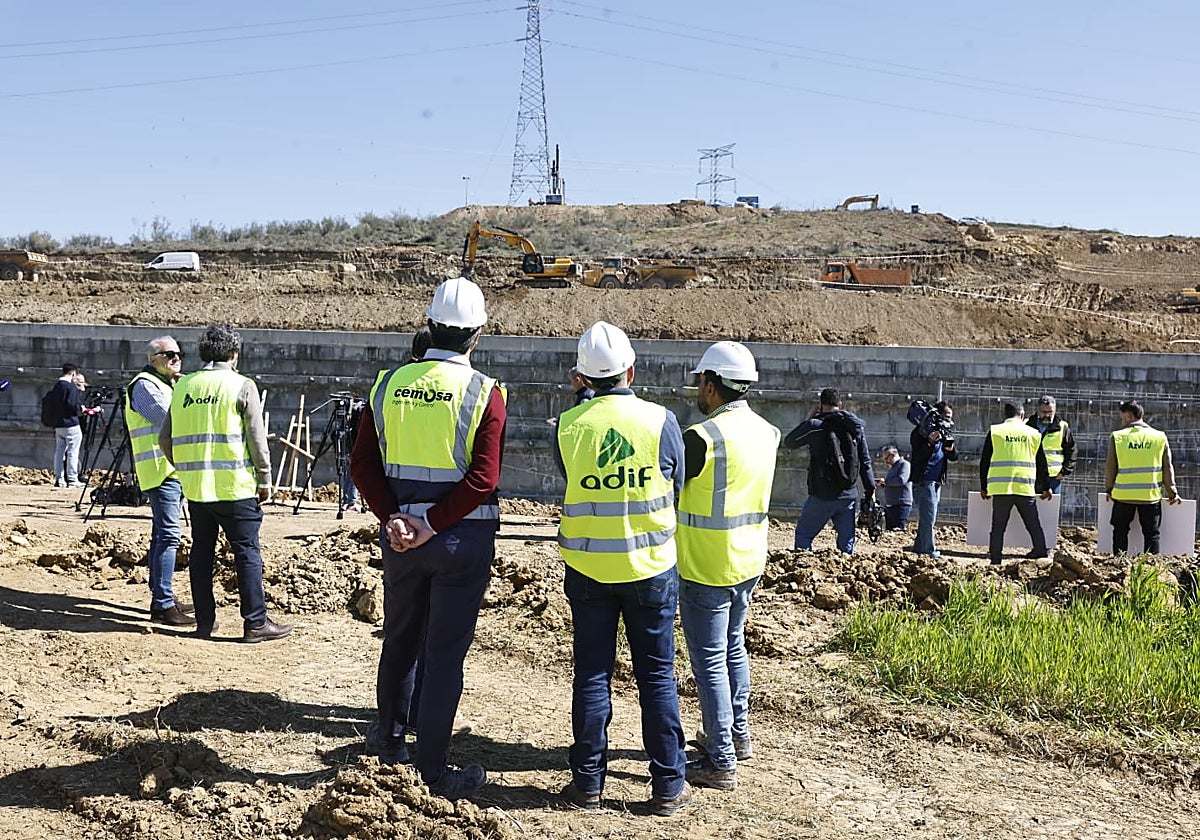
Asked about this possible claim for compensation, head of Adif Pedro Marco de la Peña said that the incident in Álora and the complexity of the work are "force majeure" circumstances.
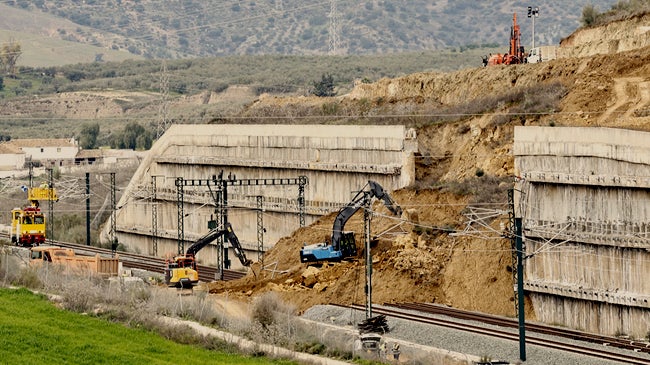
16 of March: after another 20 days had passed, repair efforts appear to have made little progress
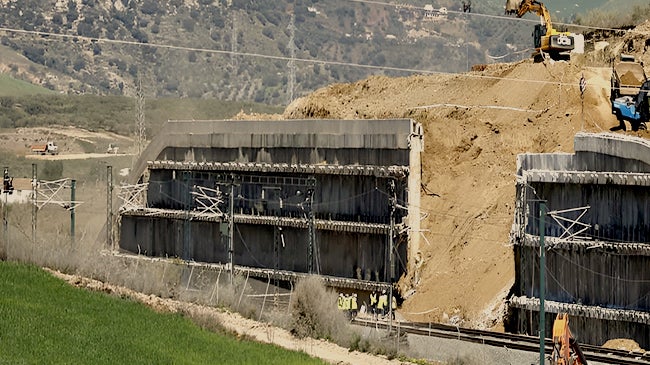
25 of February: 20 days after the Álora slope collapse, construction works were intensified
"There have never been rainstorms like this in Andalucía. I must remind you that we don't just have this line. We've had three other lines, of which we've only recovered one: the Zafra-Huelva line. We still have the Cordoba-Espelui and Cordoba-Bobadilla lines to operate under conventional rail service," Marco said.
The head of Adif assured the public that they are fully committed to the repair in Álora, with the workers' and passengers' safety at the top of their priorities.
As for Carolina España's warning, Marco said that the Junta has all the rights to do what it considers is best. "In my opinion, it would be a waste of time," he said, commenting on the possibility of legal proceedings.
Marco said that they are currently recalculating the costs of the emergency work alongside damage and stabilisation reviews. Generally speaking, recent storms in Spain result in combined expenses of over 300 million euros for emergency response.
A "catastrophe" for Malaga and the Costa del Sol
Upon hearing of Adif's latest update, head of the ruling party in Malaga and Andalucía Patricia Navarro and president of Foro de Turismo Costa del Sol José Luque expressed their surprise and indignation. They described the new delay as "catastrophic" for Malaga and the Costa del Sol.
Navarro immediately demanded that the central government activate aids to support the Costa del Sol and its main industry, including lifting the toll on the AP-7 motorway.
Luque said that the losses will be "incalculable", given that the train is one of the reasons many Spaniards choose to spend the holidays in Malaga and Andalucía.
"Seville, Cordoba and Granada have high-speed trains and these will be the alternatives," he said.
Head of the Andalusian tourist housing association (AVVA-Pro) Juan Cubo described the news as "very shocking". Although he didn't put a number on the losses, he said that "60 per cent of customers at this time of year are Spanish tourists".
In the same vein, president of the association of travel agencies Sergio Garcia said: "Travel agencies need help as soon as possible. Between the suspension of the high-speed rail, the Gulf War and the storms, we are facing a drop in sales of more than 30 per cent, which implies losses and a very vulnerable situation for employment and the definitive closure of many agencies."
According to these tourism experts, the lack of trains will now take an even heavier toll in view of the sharp increase in the price of petrol and diesel, which will make travel by private car more expensive.
![[]](http://static.vocstatic.com/voc26/latest/assets/images/favicon/surinenglish/apple-touch-icon-57x57.png)