
Traffic
Almost 50,000 fines in five months for crossing Ronda's historic Puente Nuevo bridge
Of those, over 38,000 remain unpaid and the town hall estimates it will only collect 35 per cent of the fines, as most are issued to rental vehicles and foreign drivers, making it difficult to trace them
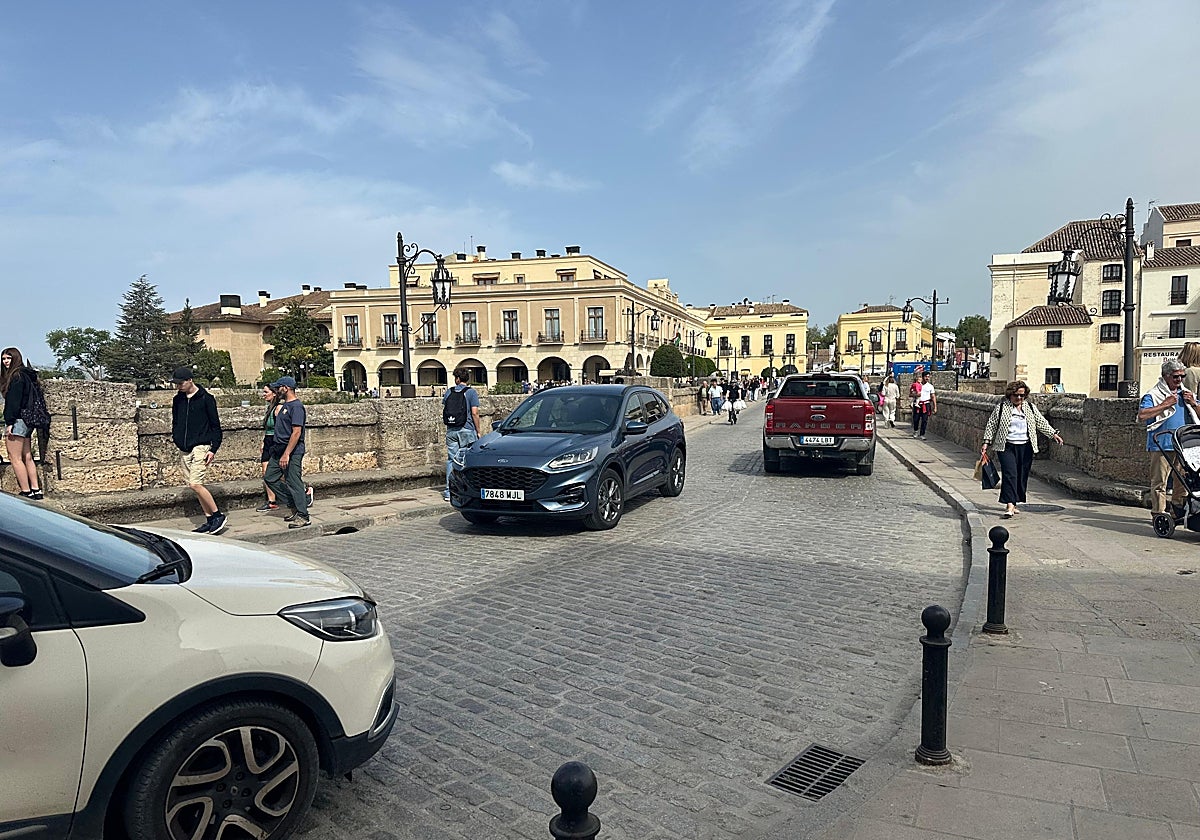

Ronda
The traffic management system around the Puente Nuevo bridge in Ronda has now produced its first batch of figures regarding penalties for unauthorised crossings: almost 50,000 fines in just five months. Since its implementation on 1 August 2025, the system has generated 49,698 fines, although only 11,517 have been paid and signed off. The remaining 38,000 or more were still 'in progress' as of the end of 2025.
This particular traffic regulation affects the axis connecting two streets (Virgen de la Paz and Armiñán), plus the Puente Nuevo bridge crossing itself, one of the town's most congested traffic locations. Since its implementation, passage over the bridge has been restricted to vehicles registered for road tax in Ronda. This was a council decision, made as part of its mobility strategy to reduce traffic in the town centre and protect its heritage.
The impact on traffic is one of the main arguments made by the local government team. According to municipal data, the daily volume of vehicles has gone down from around 9,000 to around 6,000. This drop in volume, argues Ronda council, alleviates the strain on the historic bridge and improves traffic flow in the old town.
However, the economic impact of this change presents a more complex picture. Total revenue amounts to 406,245 euros, of which 268,041 euros went to municipal coffers and 138,204 euros to the public agency that's in charge of processing all fines. Each fine is 70 euros, reduced to 35 euros for prompt payment, but the volume of outstanding fines affects the final balance.
Ronda council itself admits that only around 35 per cent of all fines are expected to be collected. The explanation lies in the profile of the vehicles being ticketed. Nearly 80 per cent are rental cars or are driven by foreigners, which complicates identifying the responsible party and slows down, or even prevents, the collection of fines.
Nearly 80 per cent are rental cars or driven by foreigners, which complicates identifying the responsible party and slows down, or even prevents, the collection of fines
In this regard, the town council insists that the revenue obtained through this system is not merely for punitive purposes, but is reinvested in the town itself. Among the projects planned or already completed with these funds are road resurfacing, maintenance of signage and improvements to the road network, all part of the municipal strategy to strengthen urban services and mobility.
Even so, the governing team at the town hall insists that the measure has had additional positive effects. Among them is the increase in the number of vehicles now registered in Ronda, with approximately 500 more cars registered in the town. This is in addition to the aforementioned road improvements.
Criticism
The socialist opposition, however, questions both the approach and its consequences. Their spokesperson, Paco Cañestro, describes the situation as "outrageous" and focuses on the volume of fines issued in such a short time. "We're talking about almost 50,000 fines in five months," he says, while also questioning the legality of the restriction. "You can't restrict traffic in a town for not paying the road tax," he adds.
The local PSOE group also warns of the impact on daily mobility and economic activity. Cañestro claims that some drivers have accumulated dozens of fines and warns that the measure could hinder access from other towns in the Serranía de Ronda, a key area for local businesses. In his opinion, the restrictions could ultimately drive regular customers towards other municipalities.
The governing team has responded to these criticisms by defending the measure's coherence and questioning the opposition's stance. The council points out that similar regulations are applied in other large towns and cities and also that, during previous administrations in Ronda, systems were also implemented that generated significant revenue from fines. As such, they maintain that the current regulation is based on traffic management and environmental protection criteria, in contrast to what they describe as "incoherent" criticism from the socialist group.
![[]](http://static.vocstatic.com/voc26/latest/assets/images/favicon/surinenglish/apple-touch-icon-57x57.png)